Consumers in India may have noticed that Diet Coke has become more expensive in recent weeks. The price increase is linked to disruptions in the global supply chain caused by the ongoing conflict in the Middle East, which has affected the availability of aluminium cans used for packaging the beverage.
The shortage has prompted Coca-Cola to source larger aluminium cans from Southeast Asia, increasing packaging costs and resulting in higher retail prices for Diet Coke in the country.
Middle East Conflict Impacts Aluminium Can Supply
The recent increase in Diet Coke prices follows supply chain disruptions connected to the ongoing conflict in the Middle East. According to people familiar with the matter, Coca-Cola has been forced to change its sourcing strategy after its regular supply of aluminium cans was affected.
The disruption has reportedly led the company to import larger aluminium cans from Southeast Asia, a move that has raised procurement and logistics costs. Coca-Cola has not made any public announcement regarding this change in sourcing or pricing.
Strait of Hormuz Disruptions Add to Logistics Challenges
A key factor behind the shortage is the disruption of shipping through the Strait of Hormuz, one of the world’s most important maritime trade routes. The passage plays a significant role in transporting aluminium cans and related raw materials to India.
Commercial shipping activity through the route has been affected amid renewed tensions following the collapse of an interim truce in the Iran conflict. The uncertainty surrounding shipping operations has disrupted the movement of essential materials, forcing companies dependent on imported aluminium packaging to seek alternative suppliers.
As regular supplies became difficult to secure, Coca-Cola turned to other international markets to maintain product availability, increasing its overall packaging costs.
Also Read: Ashneer Grover Launches Fund My Staff to Enable Employer-Backed Employee Loans
Shift to Larger Cans Pushes Up Retail Prices
Diet Coke in India is primarily sold in aluminium cans, making it more vulnerable to the ongoing supply shortage.
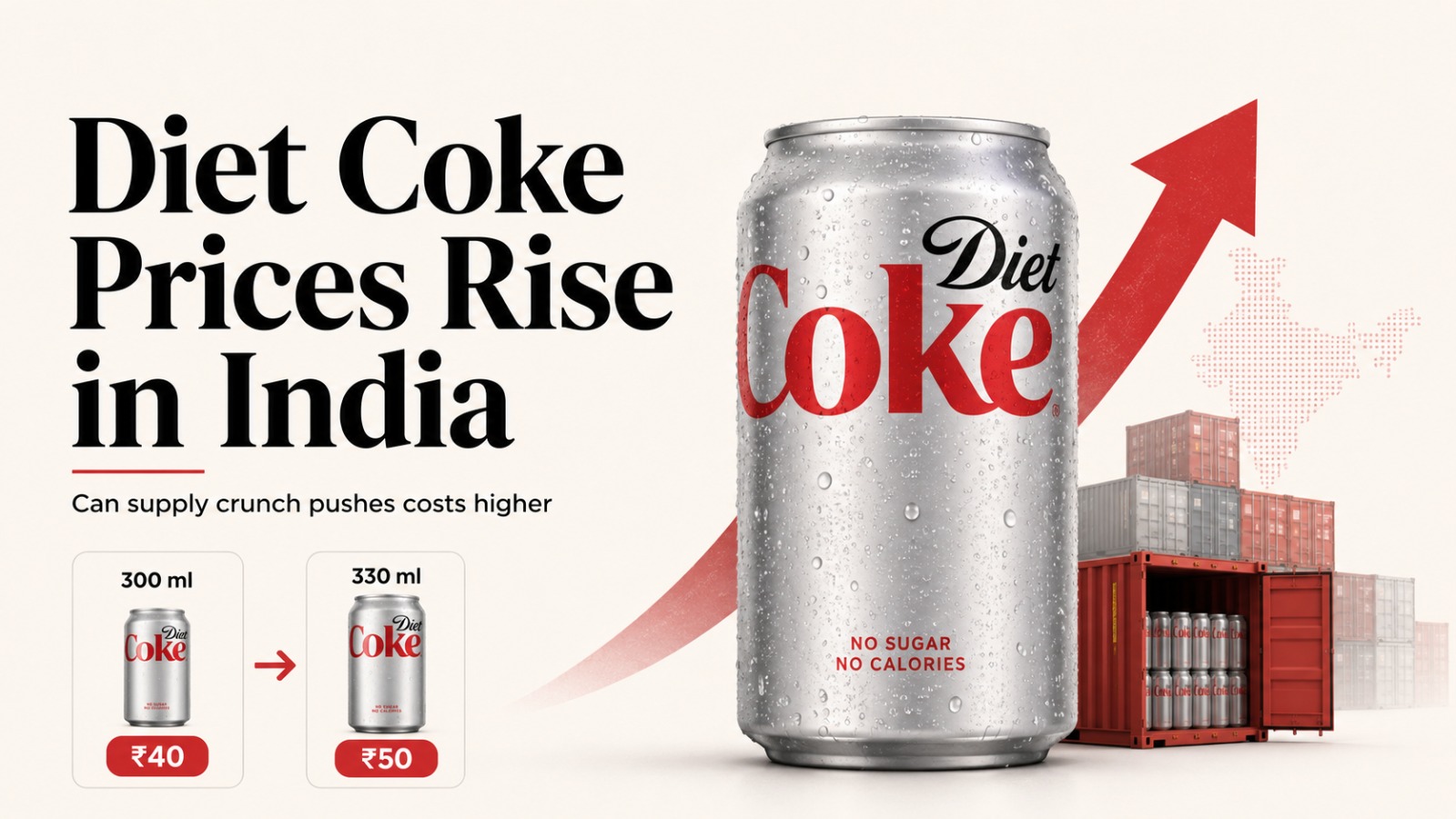
The company’s widely available 300 ml can, which was priced at Rs 40, has reportedly become difficult to source under the current circumstances. To address the supply issue, Coca-Cola has introduced a 330 ml can priced at Rs 50.
Although the new can offers a slightly larger quantity, the price increase translates to an approximate 13.6 percent rise on a per millilitre basis compared with the earlier 300 ml pack.
The pricing change has not been officially announced by the company.
Glass Bottles Introduced as a Temporary Alternative
In addition to the larger aluminium cans, at least one of Coca-Cola’s Indian bottlers has begun offering Diet Coke in 200 ml glass bottles for a limited period.
The glass bottle option provides an alternative while aluminium can supplies remain constrained. However, these bottles are priced higher than the earlier canned version, reflecting the additional costs associated with the current supply situation.
The move appears to be aimed at ensuring continued product availability until the aluminium can supply stabilises.
Why Diet Coke Has Been Hit More Than Other Soft Drinks
The impact of the aluminium can shortage has been more pronounced for Diet Coke because the product is predominantly sold in canned packaging in India.
By contrast, Coke Zero is available in both plastic bottles and aluminium cans. This broader packaging mix has helped reduce the impact of supply disruptions, allowing the product to remain available without facing the same level of pricing pressure.
Similarly, most beverages sold by Coca-Cola and PepsiCo in India are offered in multiple packaging formats, including plastic bottles, glass bottles and aluminium cans. This flexibility has made their supply chains more resilient during the current shortage of aluminium packaging.
Global Supply Issues Reach Indian Consumers
The recent increase in Diet Coke prices highlights how global geopolitical developments can directly affect consumer products in India. Disruptions in international shipping and raw material supplies have increased costs for companies that rely on imported packaging materials.
For Diet Coke, the dependence on aluminium cans has made it particularly vulnerable to these supply chain challenges. Until regular supplies resume, consumers are likely to continue seeing the larger 330 ml cans and higher retail prices in the market.
Also Read: Flipkart Set to Enter Food Delivery Market, Challenging Zomato and Swiggy