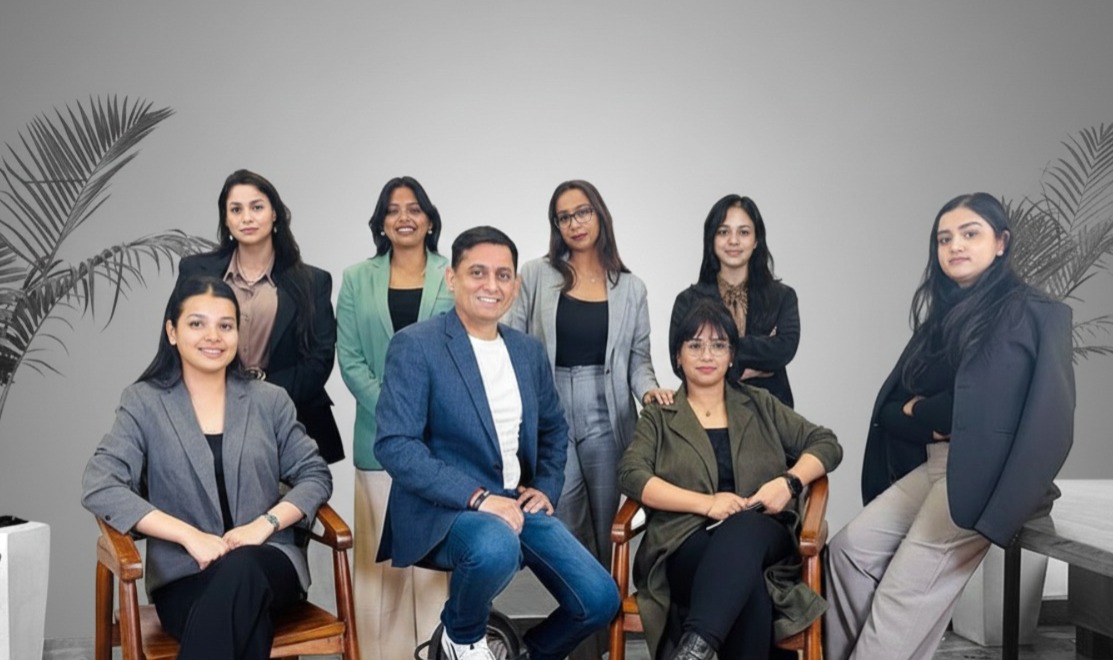
Startup accelerator Marwari Catalysts (MCats) has announced the ninth cohort of its flagship programme, Thrive 9.0, bringing six women-led startups into its fold with a sharp focus on healthcare, artificial intelligence and MSME growth. The new batch reflects the firm’s stated ambition to push more capital, networks and visibility towards women founders in India’s emerging startup hubs.
At a time when women-led companies receive only a small slice of overall startup funding, MCats cites an ecosystem share of about 15 per cent—the accelerator says it is deliberately tilting its portfolio the other way. Women already account for around 35 per cent of founders across MCats-backed startups, and several leadership roles inside the organisation itself are held by women.
Thrive 9.0 is structured to help its latest cohort move from solving grounded, local problems to building businesses with global relevance, particularly in healthcare access, AI-enabled services and compliance solutions.
Six founders, six problem statements
The new cohort brings together early-stage companies working on fertility care, AI-powered sales, global MSME enablement, memory preservation, fintech intelligence and legal compliance:
- Elara IVF : Affordable fertility and healthcare access: Led by Dr Renu Sharma, Elara IVF is building an affordable chain of fertility centres, starting with a pilot in Rajasthan. The venture aims to widen access to trusted reproductive healthcare in regions where specialised services are typically limited or expensive.
- Tvara AI sales agents and workflow automation: Founded by Ruchika Sureka, Tvara develops private AI agents that automate sales workflows. The product is positioned as a way for organisations to increase productivity while continuously learning from interactions and data.
- Leap Ahead India – Global enablement for MSMEs: Mallika Jain’s Leap Ahead India focuses on Indian MSMEs and founders who want to sell beyond domestic markets. The platform works to connect them with international buyers, funding opportunities, markets and mentors, effectively acting as a bridge to global demand.
- Nostalgia Pages-AI for mental health and memory preservation: Neha Rajpurohit leads Nostalgia Pages, described as a self-publishing “memory capsule” brand. The startup helps individuals and communities preserve school and college memories and local culture, tapping into nostalgia and emotional well-being.
- InteliQuant AI- Explainable AI for fintech and risk: Run by Priyanka Bairathi, InteliQuant AI offers tools for CXOs that promise real-time anomaly detection and AI-enabled assurance. The company’s proposition is to help enterprises safeguard profitability and reduce hidden losses through explainable intelligence in financial data.
- Rhett- Simplifying legal compliance with AI: Rupal Mathur’s Rhett is positioned as a legal-tech and compliance solution that turns a traditionally complex process into something “straightforward, accessible and affordable” for startups and growing businesses.
Taken together, the cohort reflects a mix of sectoral depth, healthcare, finance, law and enabling technologies such as AI and workflow automation, with each founder anchoring her product in specific gaps in the Indian market.
“We don’t just talk about women empowerment, we invest in it”
MCats founder and CEO Sushil Sharma underlined that the company wants to be judged by where it deploys capital, not just by the language of inclusion. “We do not only speak about women empowerment, we invest in it,” he said, adding that the new cohort’s founders “come from real India, solve real challenges, and are ready for real scale,” and that innovation and leadership are not bound by gender.
The accelerator says it is deliberately scouting for talent outside India’s established startup metros, positioning itself as an early backer of founders who are rooted in their local contexts but ambitious about scale. Partner Divya Multani Jain noted that MCats “understands India beyond metros” and aims to build solutions grounded in culture and community while still giving them a global platform.
Backed by BRICS CCI’s WISE initiative
Thrive 9.0 also sits within a wider collaboration between MCats and Women in Innovation, Science & Entrepreneurship (WISE), an initiative of the BRICS Chamber of Commerce and Industry’s Women Empowerment vertical (BRICS CCI WE).
WISE programme lead and BRICS CCI WE president Ruby Sinha described innovation, collaboration and access to funding as the “core pillars” of the initiative. She welcomed MCats’ focus on women entrepreneurs using technology, framing it as part of a broader push for “inclusive innovation” tied to a sustainable global economy.
Ankita Sachdeva, joint director at BRICS CCI, said the joint effort with MCats is intended to open up both domestic and international funding, exposure and networks for the participating founders. The idea is to link women-led startups not only to capital but also to markets and mentorship within and beyond India.
A structured playbook for women-led ventures
For women-led companies in its orbit, MCats lays out a four-part mission:
- Early discovery in non-metro ecosystems- identifying promising founders outside the traditional startup hotspots.
- Backing with capital and conviction- investing from its own fund while seeking co-investors to speed up their growth journey.
- Providing strong networks- using mentor and investor connections to enable 5-10x growth in revenue and valuation.
- Celebrating visible leadership- positioning these entrepreneurs as role models for future founders.
The firm has invited strategic co-investors and ecosystem enablers to join its MCats Club, a vehicle through which investors can deploy capital into such startups and participate more actively in their growth.
From Jodhpur base to a national footprint
Marwari Catalysts describes itself as one of India’s fast-growing startup ecosystem players, combining the roles of accelerator and venture studio. Headquartered in Jodhpur, it operates regional offices in Mumbai, Bengaluru and Jaipur and manages a SEBI-approved Category I AIF.
According to figures shared by the organisation, MCats is supporting more than 100 early-stage ventures spread across over 20 cities. Its portfolio, which includes 35 per cent women-led startups, has collectively generated over 5,000 jobs and seen more than 11 successful exits so far.
These numbers position Thrive 9.0 not as an isolated programme but as part of a broader attempt to build an integrated pipeline, from early discovery and capital to networks, exits and role-model visibility, for founders who might otherwise remain overlooked.
Significance of Thrive 9.0
While Thrive 9.0 is at an early stage, its design responds directly to two persistent gaps in the Indian startup story: the under-representation of women in funded ventures and the concentration of opportunities in a handful of urban centres.
By placing women founders from diverse sectors into a structured accelerator, tying them into a SEBI-regulated fund, and plugging them into the BRICS CCI WISE network, MCats is effectively betting that inclusive capital and mentorship can be built into the architecture of a startup programme rather than treated as an add-on.
For the six founders in the new cohort, the coming months will test how far that architecture translates into customers, capital and scale. For the wider ecosystem, Thrive 9.0 will be watched as one more indicator of whether India’s innovation economy can deepen its commitment to women-led entrepreneurship beyond statements of intent and into measurable outcomes on the ground.
Also Read: IndiGo Crisis: Experts Reveal How the Airline Planned the Meltdown