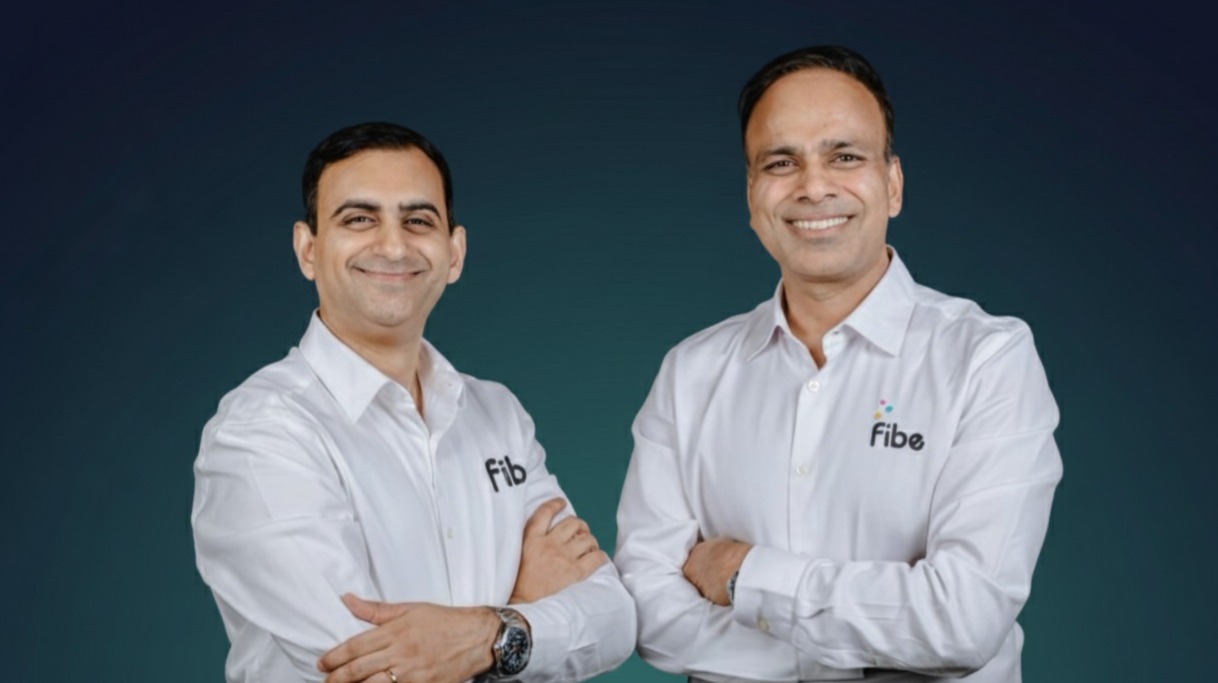
Pune-based digital lender Fibe has raised $35 million in equity funding from the International Finance Corporation (IFC), the private sector arm of the World Bank Group, in a Series F round that will be used to strengthen its balance sheet and fuel long-term portfolio growth.
Founded in 2015 and formerly known as EarlySalary, Fibe focuses on middle-income households, offering short-tenure personal loans and impact-linked financing for healthcare and education needs. The company says it has facilitated more than 9 million loans so far and now operates across over 940 cities in India.
Capital to back expansion, new products
The fresh equity will be deployed primarily to shore up Fibe’s capital base and support the next phase of portfolio expansion, the company has said.
Akshay Mehrotra, Managing Director and Group CEO of Fibe, called IFC’s entry a “meaningful milestone” in the company’s journey to build impact-led financial products.
The funding, he said, will help Fibe “enhance its product suite” and deliver a unified experience spanning borrowing, saving, investing and payments, while keeping “responsible credit and positive socio-economic outcomes” at the centre of its strategy.
The IFC investment is part of Fibe’s Series F round and follows a long line of marquee backers. The company has raised over $266 million in equity capital to date, including secondaries, with investors such as TPG’s The Rise Fund, Norwest Venture Partners, Eight Roads Ventures, TR Capital, Piramal Finance and Chiratae Ventures on its cap table.
Fibe is “backed by TPG” and confirms the $35 million IFC cheque as part of this latest round.
IFC’s bet on inclusive, responsible credit
The deal fits squarely into IFC’s stated goal of expanding access to finance for underserved segments in emerging markets. Imad N. Fakhoury, Regional Division Director for South Asia at IFC, said the equity infusion would both “expand responsible financing for underserved individuals, especially women, and strengthen Fibe’s responsible finance approach.”
Fibe’s core proposition is short-term, small-ticket personal credit aimed at salaried and self-employed customers who typically struggle to access loans from traditional banks. Alongside regular cash loans for personal expenses, the company offers impact-linked financing products that can be used for medical treatments or education-related spending.
The partnership with IFC is expected to deepen this impact focus, particularly around gender inclusion, where multilateral lenders have been actively pushing for higher participation of women borrowers and entrepreneurs in formal credit systems.
Fibe’s Growth: Profitability track record amid sector headwinds
Fibe has reported four consecutive years of profitability, bucking the volatility that has hit sections of India’s digital lending ecosystem. Its non-banking finance company (NBFC) arm, Early Salary Services Limited, has been a key driver of that performance.
Despite what the company describes as a “broader downturn in the digital lending sector”, marked by rising defaults and slower disbursements in personal loans, Early Salary Services nearly doubled its profit in FY25. Profit after tax rose to ₹101.18 crore in the year ended March 2025, up 82.8% from ₹55.34 crore in FY24.
Interest income climbed 43.3% to ₹1,001.1 crore in FY25 from ₹698.77 crore a year earlier, while total revenue from operations increased 45.8% to ₹1,033.03 crore compared with ₹708.73 crore in FY24.
These numbers underline the scale the lender has achieved on the back of its salaried-class customer base and signal why a global investor such as IFC would be willing to come in at a late stage.
From EarlySalary to Fibe: building a consumer fintech franchise
Under its earlier brand EarlySalary, the startup began by offering instant salary advances and small cash loans to urban professionals through a fully digital journey. Over time, it expanded into broader personal loans and structured its offerings so customers could use credit not just for discretionary consumption but also for essential life events such as education and healthcare.
The company’s rebrand to Fibe was aimed at positioning it as a multi-product consumer fintech rather than a pure-play salary advance app. Today, its portfolio spans short-term personal loans and impact-linked products, and management has indicated that the long-term vision is to integrate credit with savings, investments and payments on a single platform.
What the IFC round signals for Indian consumer fintech
While the size of the IFC cheque $35 million, is modest by late-stage global funding standards, the strategic value of the investor and timing of the deal matter. The investment comes after a period in which several digital lenders have faced regulatory scrutiny and tighter capital flows.
In that context, a direct equity bet from a World Bank Group institution is likely to be read as an endorsement of Fibe’s underwriting practices and governance standards.
For Fibe, the fresh capital strengthens its balance sheet at a time when it is already profitable and scaling rapidly. For IFC, the deal offers exposure to India’s expanding middle-income market through a lender that is explicitly targeting underserved customers, including women, with formal, impact-linked credit.
How effectively Fibe uses this capital to broaden its product stack and deepen its presence beyond India’s top metros will now be closely watched by both investors and regulators. But for the moment, the Series F infusion marks a clear vote of confidence in its model of impact-driven, technology-enabled consumer lending.
Also Read: Marwari Catalysts’ Thrive 9.0 Backs Six Women-Led Healthcare and AI Startups