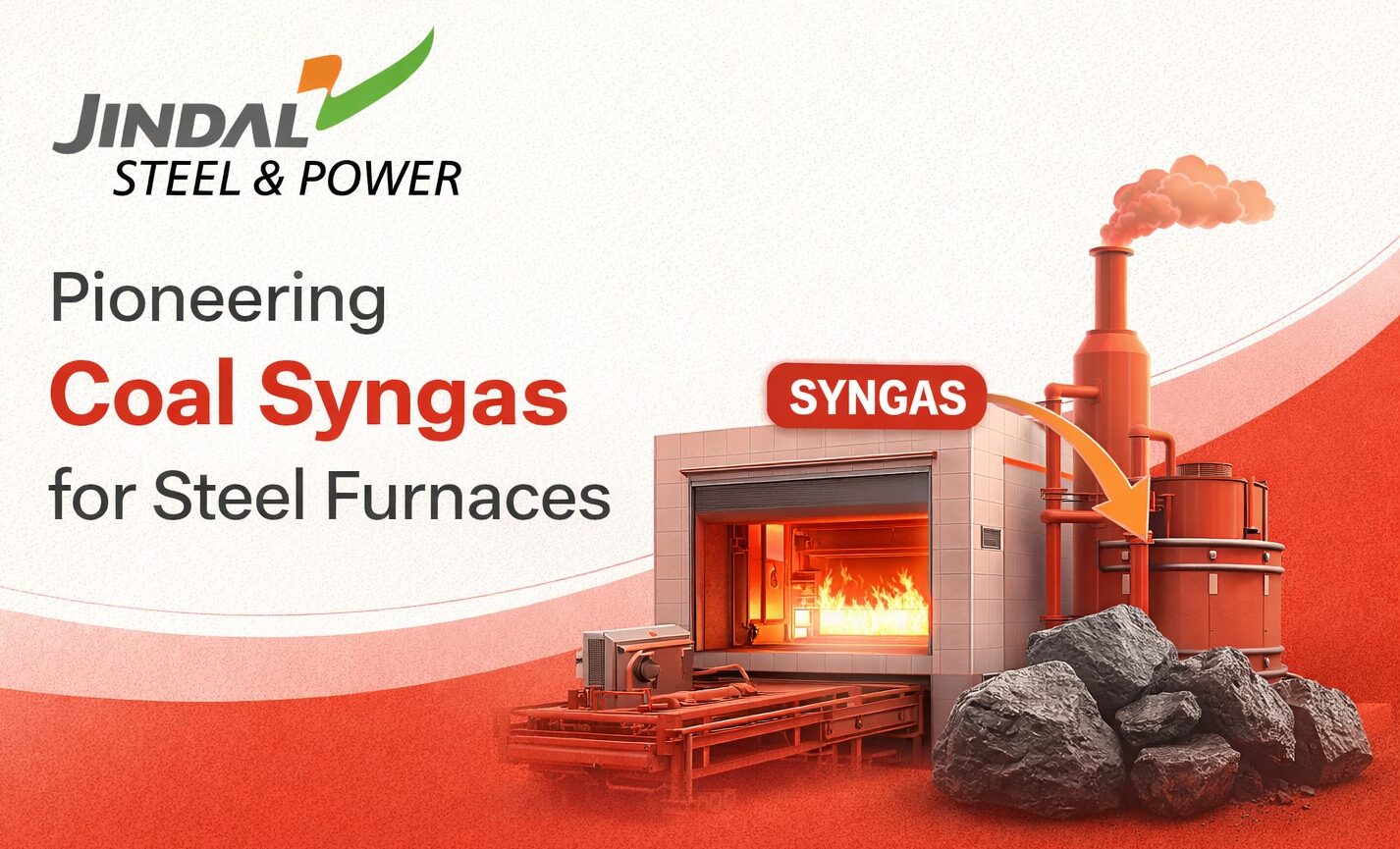
Jindal Steel has marked a significant milestone in the global steel industry by deploying syngas derived from coal gasification in galvanising and colour coating line furnaces. These furnaces are traditionally powered by fuels such as natural gas, LPG, or propane. The move represents a first-of-its-kind application in steelmaking and introduces an alternative fuel source capable of sustaining the high temperatures required for producing corrosion-resistant and durable steel products.
The development builds on the company’s earlier achievement of commissioning India’s first coal gasification-based Direct Reduced Iron (DRI) plant. In that process, syngas was successfully used for iron-making, laying the foundation for its expanded use across other stages of steel production. By extending the application of syngas to finishing processes, the company has demonstrated the versatility of coal gasification technology in industrial operations.
Reducing Dependence on Imported Fuels
The initiative reflects a strategic shift toward energy self-reliance by utilizing domestically available coal resources. By converting swadeshi coal into syngas, Jindal Steel is reducing its dependence on imported fuels such as coking coal, liquefied natural gas, and other hydrocarbons commonly used in steel manufacturing.
According to company leadership, syngas has the potential to replace several imported industrial inputs, including methanol, ammonia, and ammonium nitrate. This transition not only supports cost efficiency but also strengthens India’s broader energy security by minimizing exposure to global fuel supply disruptions and price volatility.
The approach aligns with the objectives of the National Coal Gasification Mission, which aims to promote cleaner and more efficient utilization of coal. By integrating coal gasification into its operations, the company is contributing to a national effort to modernize energy usage in heavy industries.
Also Read: SC Declines Relief to Vedanta in Adani-Jaypee Deal Row
Advancing Sustainability Goals in Steel Production
Beyond energy security, the adoption of coal gasification supports India’s transition toward lower emission intensity in industrial processes. While coal remains a carbon-intensive resource, gasification enables a more controlled and efficient conversion process, which can reduce emissions per tonne of steel produced when compared to conventional methods.
The initiative is also seen as a step toward meeting emerging global environmental standards. With regulatory frameworks such as the Carbon Border Adjustment Mechanism influencing international trade, steel producers are under increasing pressure to adopt cleaner technologies. By lowering emission intensity, coal gasification can enhance the competitiveness of Indian steel exports in markets with strict environmental requirements.
Industry experts have highlighted the potential for combining coal gasification with carbon capture technologies in the future. Such integration could further reduce emissions and help align steel production with long-term climate goals, though widespread adoption of these combined systems remains in early stages.
A Transformational Path for India’s Steel Sector
The successful deployment of syngas in furnace operations presents a possible pathway for transforming India’s steel industry. If adopted on a larger scale, coal gasification could significantly reduce the sector’s reliance on imports, stabilize energy costs, and improve resilience against global supply chain disruptions.
One possible trajectory involves rapid scaling of the technology, supported by government incentives and increased private investment. In such a scenario, India could strengthen its position as a competitive exporter of lower-emission steel products, leveraging both cost advantages and improved environmental performance.
However, challenges remain. High capital investment requirements and technological complexities could slow the pace of adoption across the industry. In this context, early adopters like Jindal Steel may continue to lead the transition, while broader implementation depends on policy support and advancements in technology.
As the steel sector navigates evolving economic and environmental demands, the integration of coal gasification offers a practical and scalable solution. The recent development underscores how innovation in fuel technology can reshape industrial processes while supporting national priorities of self-reliance and sustainability.
Also Read: Dam Good Fish Secures Strategic Funding at Rs 30 Crore Valuation