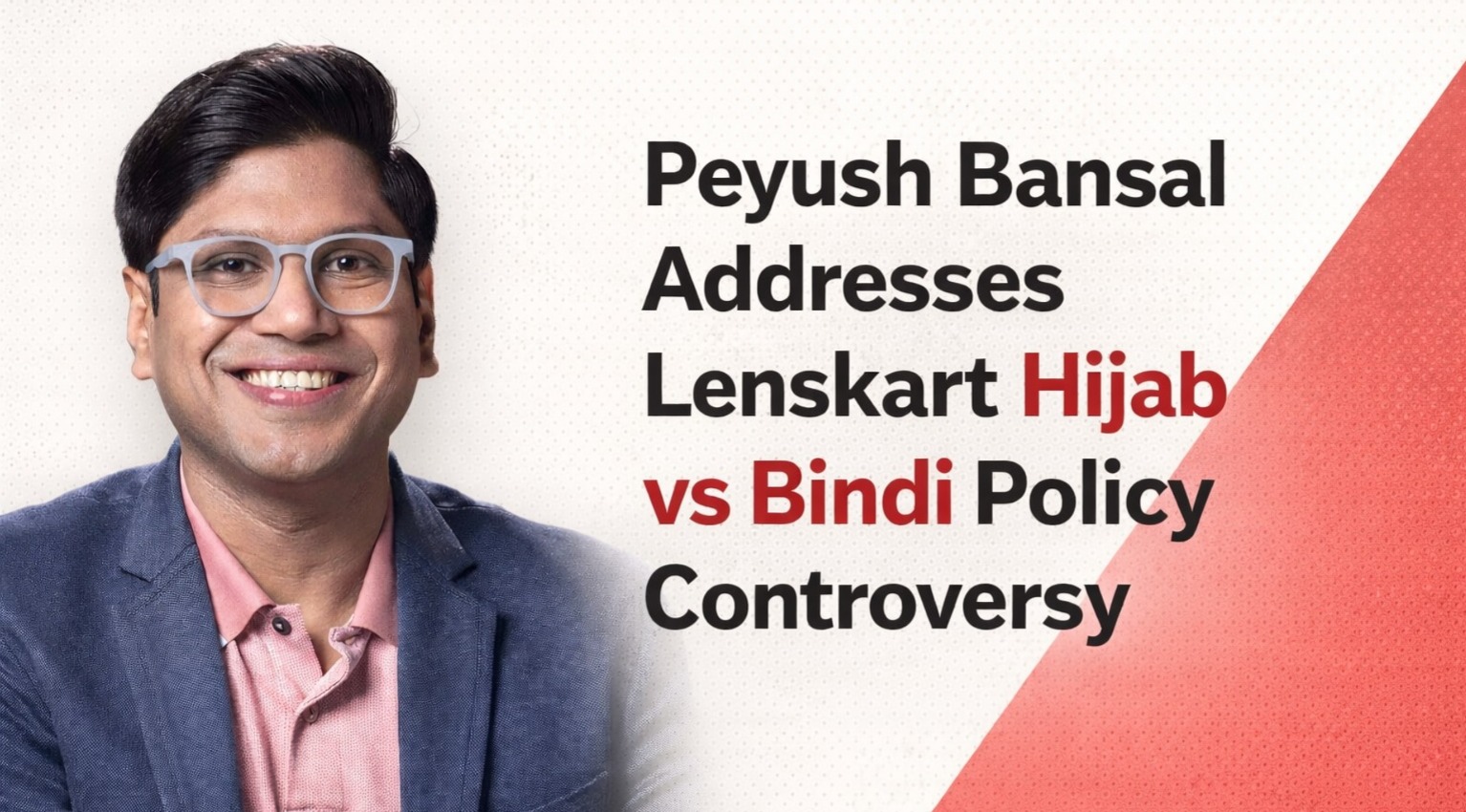
Lenskart founder Peyush Bansal has stepped in to address a growing online controversy after a purported internal policy document triggered widespread criticism and allegations of religious discrimination.
The issue began after images of what was described as a “Lenskart Style Guide” surfaced on social media, leading to sharp reactions from users. The document appeared to suggest that while certain religious attire such as hijabs and turbans were permitted, other symbols like bindis, tilaks, and religious threads were not allowed.
Screenshots from the guide, which quickly went viral, showed detailed grooming instructions for store employees. Among them were points stating that bindis were “not allowed” and that religious threads or wrist bands had to be removed. These visuals intensified the backlash, with several users questioning what they saw as selective restrictions on religious expression.
The controversy gained further traction as social media users tagged Bansal and demanded clarification. Some posts even escalated to calls for official complaints and boycotts, reflecting the intensity of the reaction online.
Responding to the situation, Bansal issued a public clarification, stating that the document being circulated does not reflect Lenskart’s current policies. He made it clear that the company does not impose restrictions on religious expression, including symbols such as bindi and tilak.
Bansal emphasised that Lenskart’s grooming policies have evolved over time, and that outdated versions should not be seen as representative of the company today. Acknowledging the confusion caused, he said the company regrets the concern that arose from the circulation of the document.
However, Peyush Bansal also added: “Yes – an older version of our grooming policy had language that didn’t reflect our values. When it came to my notice in Feb this year, we got it fixed immediately, much before this conversation. Lapse was in language, intent was never in question. I should have caught this sooner. That’s on me”
He also underlined that policy reviews are an ongoing process within the organisation, and any gaps in language or guidelines are addressed as they are identified.
Beyond the immediate clarification, Bansal’s statement focused on reinforcing Lenskart’s identity. He pointed out that employees across the country openly express their faith and cultural practices in the workplace, describing these as integral to the company’s ethos.
Calling Lenskart a company built in India, by Indians, and for Indians, Bansal said that cultural symbols and traditions carried by employees are a core part of the organisation. He added that this would never be compromised.
Also Read: Vaibhav Suryavanshi’s Rise Is Bigger Than a Net-Worth Number