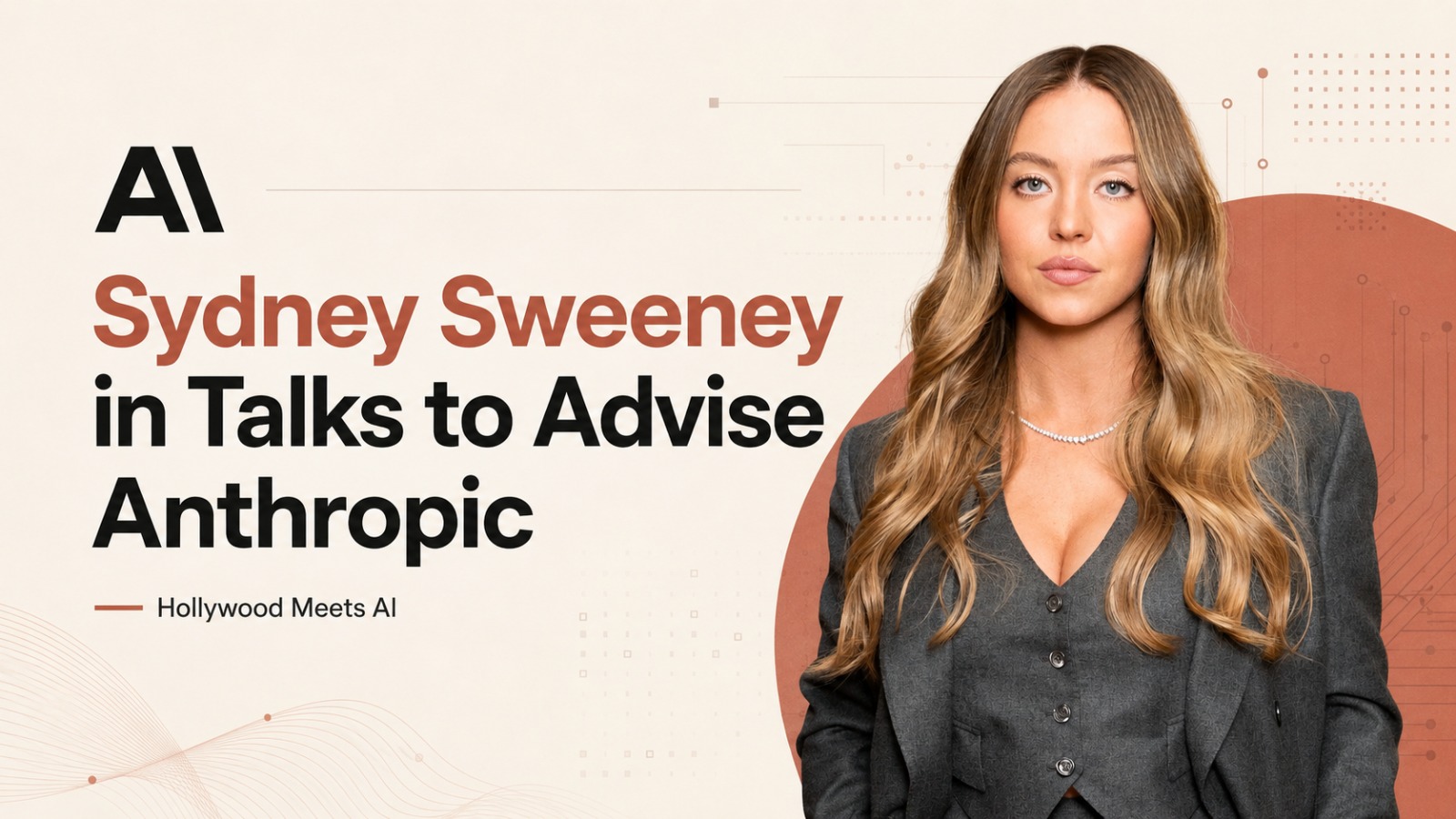
Sydney Sweeney is in advanced talks to join the artificial intelligence company as a strategic advisor, according to an update carried by Blockchain. News, citing The Wall Street Journal. The role has not been presented as a confirmed appointment, which makes the wording important. At this stage, it is a developing conversation, not a finalized corporate announcement.
Still, the development says a lot about where the AI industry is heading.
For years, artificial intelligence companies have spoken mainly through engineers, researchers, founders and investors. That made sense when AI was still seen as a technical product for specialists. But generative AI is no longer sitting quietly inside labs or enterprise software. It is entering schools, offices, creative studios, marketing teams, newsrooms and everyday search habits.
That shift has created a new challenge for AI companies: public trust.
Anthropic is already known in the AI race for its emphasis on safety and constitutional AI principles. It competes in a crowded space with players such as OpenAI and Google DeepMind. In that kind of market, the strongest product is not always the only winner. Companies also have to explain themselves clearly, earn confidence and make complex technology feel less distant.
That is where someone like Sweeney becomes relevant.
A celebrity advisor would not be expected to build AI models or set technical safety standards. But a public figure from entertainment can help a technology company understand how ordinary users think, react and build trust. AI companies often struggle to speak outside their own ecosystem. Hollywood, on the other hand, understands audience behaviour, storytelling and cultural timing.
The possible appointment also points to a wider industry pattern. AI firms are beginning to look beyond technical talent for roles that can help with communication, adoption and public engagement. As AI tools move into consumer life, companies need people who understand not just products, but perception.
There is a clear opportunity here. Anthropic could use a high-profile advisor to make conversations around AI safety, responsible use and everyday applications more accessible. Educational campaigns, creative collaborations and public-facing explainers could all benefit from a voice that reaches audiences beyond developers and policy circles.
But there is also a risk.
Celebrity involvement in AI can easily become confusing if the role is not clearly defined. The public deserves to know whether a celebrity advisor is helping with communication, creative industry feedback, user experience, brand strategy or something else. Without clarity, such appointments can look like marketing exercises dressed up as strategy.
That matters even more in artificial intelligence, where exaggerated claims are already a concern. Companies working with public figures must be careful not to create the impression that celebrity visibility equals technical credibility. Trust in AI cannot be built through star power alone. It has to come from transparency, safety, performance and responsible communication.
Sweeney’s possible role, if finalized, would therefore be worth watching not because it brings Hollywood glamour into AI, but because it reflects a deeper transition. The AI industry is no longer competing only inside labs. It is competing for public understanding.
Anthropic’s talks with Sydney Sweeney show that AI companies now recognise something simple but powerful: adoption is not just a technology problem. It is a culture problem. People do not only ask what AI can do. They ask whether they should trust it, whether it respects their work, whether it understands their world and whether the companies building it are being honest.
A strategic advisor from entertainment will not answer all of those questions. But the very idea of such a role shows that AI firms are beginning to take the cultural side of technology more seriously.
For now, the story remains at the advanced-talks stage. If it becomes official, the real test will be whether the appointment brings meaningful public engagement or simply another headline to the AI race.
Either way, one thing is clear: artificial intelligence is entering its culture era, and the companies building it know they can no longer speak only to coders, investors and regulators. They now have to speak to everyone.
Also Read: Vaibhav Suryavanshi’s Rise Is Bigger Than a Net-Worth Number