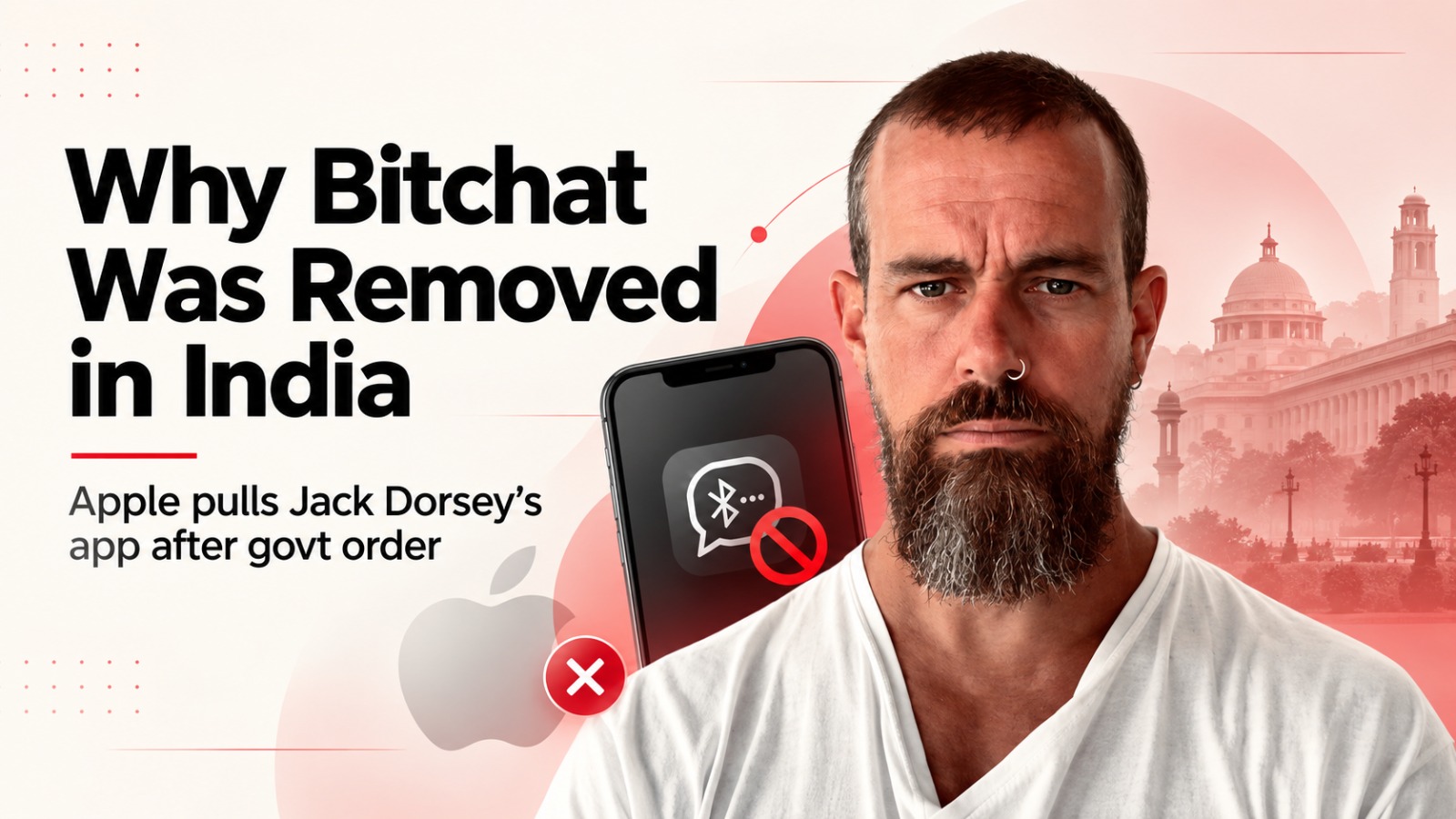
Apple has removed Jack Dorsey‘s offline messaging app Bitchat from its India App Store following a takedown request from the Ministry of Electronics and Information Technology (MeitY). The October 3 action comes barely two months after Indian authorities sought the removal of the Bluetooth-based application from GitHub over national security and public order concerns.
Dorsey, the co-founder of Twitter, disclosed the development in a post on X on Saturday, sharing what appeared to be an official communication from Apple’s App Review team.
The notice stated that the application was being removed at MeitY’s request because it contained content deemed illegal in India, placing it in violation of Apple’s App Review Guidelines.
The government reportedly invoked Section 69A of the Information Technology Act, 2000, to seek the removal.
While the latest notice does not specify what content prompted the action, the government had previously raised concerns about Bitchat’s ability to operate during internet shutdowns.
Why Is the Indian Government Opposed to Bitchat?
The dispute goes back to July 2026, when the Indian Cybercrime Coordination Centre (I4C), under the Ministry of Home Affairs, directed GitHub to remove Bitchat.
The July 23 notice followed protests organised by the Cockroach Janata Party at Jantar Mantar in New Delhi over examination paper leaks. During the demonstrations, some participants were reportedly observed using Bluetooth-based messaging applications despite temporary internet restrictions around the protest venue.
This is where Bitchat’s technology became a concern for the authorities.
Unlike conventional messaging platforms, Bitchat uses Bluetooth mesh networking to connect nearby devices. Messages can travel between connected devices without requiring mobile data, an internet connection or a central server.
This allows users to communicate even when conventional internet services are unavailable, a feature the government believes could potentially be misused to bypass legally imposed network restrictions.
In its earlier notice, I4C warned that decentralised messaging platforms could be exploited by terrorist organisations, organised criminal groups and cybercriminals to coordinate activities while evading lawful detection.
The agency also pointed to difficulties such applications could pose for investigations. Without a centralised service provider, obtaining subscriber information, communication records or timely assistance from the platform could become challenging for law enforcement agencies.
These concerns formed the basis of the July action. However, the October removal notice shared by Dorsey does not establish whether the latest order was issued on identical grounds.
What Happens to Bitchat Users in India?
Apple’s decision affects more than just the app’s public listing.
As outlined in the notice shared by Dorsey, Bitchat will also become unavailable through Apple’s TestFlight service in India, including versions distributed for internal and external testing. Existing public TestFlight links will no longer function for users in the country.
Apple has, however, clarified that the application will continue to be available in other territories selected by the developer through App Store Connect.
The notice also advises Dorsey to approach MeitY directly for further information about the takedown or the Indian legal requirements behind it.
There is no confirmation in the available reports that existing installations of Bitchat have been remotely disabled on users’ devices.
Dorsey had also criticised the Indian government’s earlier action in July. Sharing the previous takedown notice on X, he alleged that the government did not favour technologies such as Bitchat and wanted the application removed.
With Apple now complying with the latest removal demand, the dispute has moved beyond GitHub to one of the country’s major mobile app distribution platforms.
The government’s detailed reasons for the October order remain unclear, although its earlier objections highlight the challenge posed by communication technologies that continue to function independently of conventional internet networks.
Also Read: Inside NPrep, the Jodhpur Startup Using AI for Nursing Exam Preparation