

In a sector where innovation often stops at design and retail, a Bengaluru-based startup STCH is pushing artificial intelligence deeper into the fabric of fashion, literally.
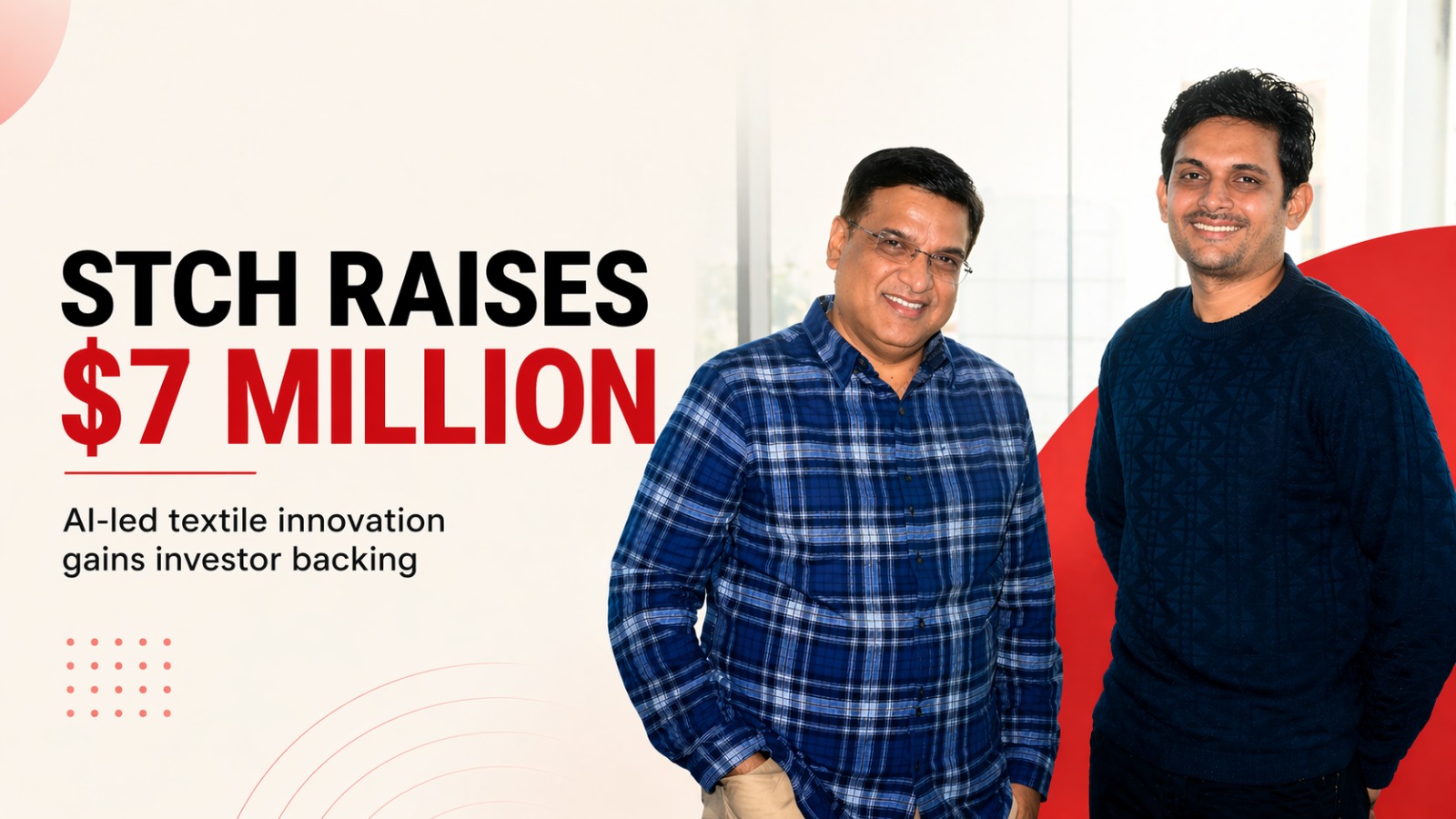
STCH, a textile technology company, has raised $7 million in a pre-Series A funding round led by Omnivore, with participation from Kae Capital and WVC. The fresh capital signals growing investor interest in reimagining how fabrics are developed, sourced, and produced at scale.
Founded in 2025 by Narahari Payala and Aseem Chitkara, STCH is building an AI-driven platform that focuses on one of the most overlooked layers of the fashion industry: fabric innovation and manufacturing. While much of the industry’s tech adoption has centered around front-end experiences, like trend forecasting, personalization, and e-commerce, STCH is working on the backend, where inefficiencies have long persisted.
At its core, the startup combines artificial intelligence with textile R&D to help global fashion brands develop high-performing and sustainable fabrics. Its system analyses global fashion trends, identifies suitable materials, and integrates these insights into a controlled manufacturing network spread across India and other parts of Asia.
This approach allows brands to move faster from concept to production while improving material selection and supply chain efficiency. The platform also emphasizes sustainability, enabling better choices around fibres and production processes, an increasingly critical factor for global brands navigating regulatory and consumer pressure.
Also Read: Vaibhav Suryavanshi’s Rise Is Bigger Than a Net-Worth Number
The company operates under a contract development and manufacturing organisation (CDMO) model, positioning itself not just as a technology provider but as an end-to-end partner for brands. This hybrid approach, combining software intelligence with manufacturing execution, sets it apart in a fragmented textile ecosystem.
STCH already appears to be gaining early traction. The company reports an order book exceeding $15 million, with demand coming from brands across the United Kingdom, Europe, and the United States. This suggests that global players are actively looking beyond traditional supply chains and are open to AI-led manufacturing solutions.
Both founders bring prior experience from Zetwerk, where they worked closely with industrial supply chains. That background seems to inform STCH’s strategy, focusing less on theoretical innovation and more on solving practical bottlenecks in production and sourcing.
For CEO Narahari Payala, the opportunity lies in shifting attention to where it matters most. He has pointed out that while AI in fashion is often associated with consumer-facing applications, the real transformation is likely to happen deeper within the supply chain, particularly in fabric development and manufacturing, which remain under-optimised despite being critical to the industry.
The timing may also be working in the startup’s favour. Evolving global trade dynamics, including improving trade relationships with markets like the UK and Europe, along with easing tariff conditions from the United States are creating a more favourable environment for Indian textile exporters. In this context, a platform that blends AI with manufacturing could position India as a more competitive and innovation-driven sourcing hub.
Investors seem aligned with this thesis. Omnivore’s Managing Partner Mark Kahn has highlighted the founders’ understanding of both material science and supply chain realities, an uncommon combination in the textile space. The firm believes that India already has the raw materials and manufacturing base, and that platforms like STCH could unlock the next phase of value by layering intelligence on top.
In essence, the importance of the model developed by STCH becomes clear when taking into account the nature of the industry which needs to be brought into the era of new technologies. As textile industry is considered to be among the oldest in the world, it is based on inefficient fragmentation of processes and their subsequent human-controlled coordination. STCH attempts to reduce all these processes using artificial intelligence.
Whether this approach scales remains to be seen. But the early signals funding, order book, and global interest, suggest that the industry is ready to experiment with new models.
Also Read: Who Owns Your Team Now? IPL’s Latest Ownership Breakdown