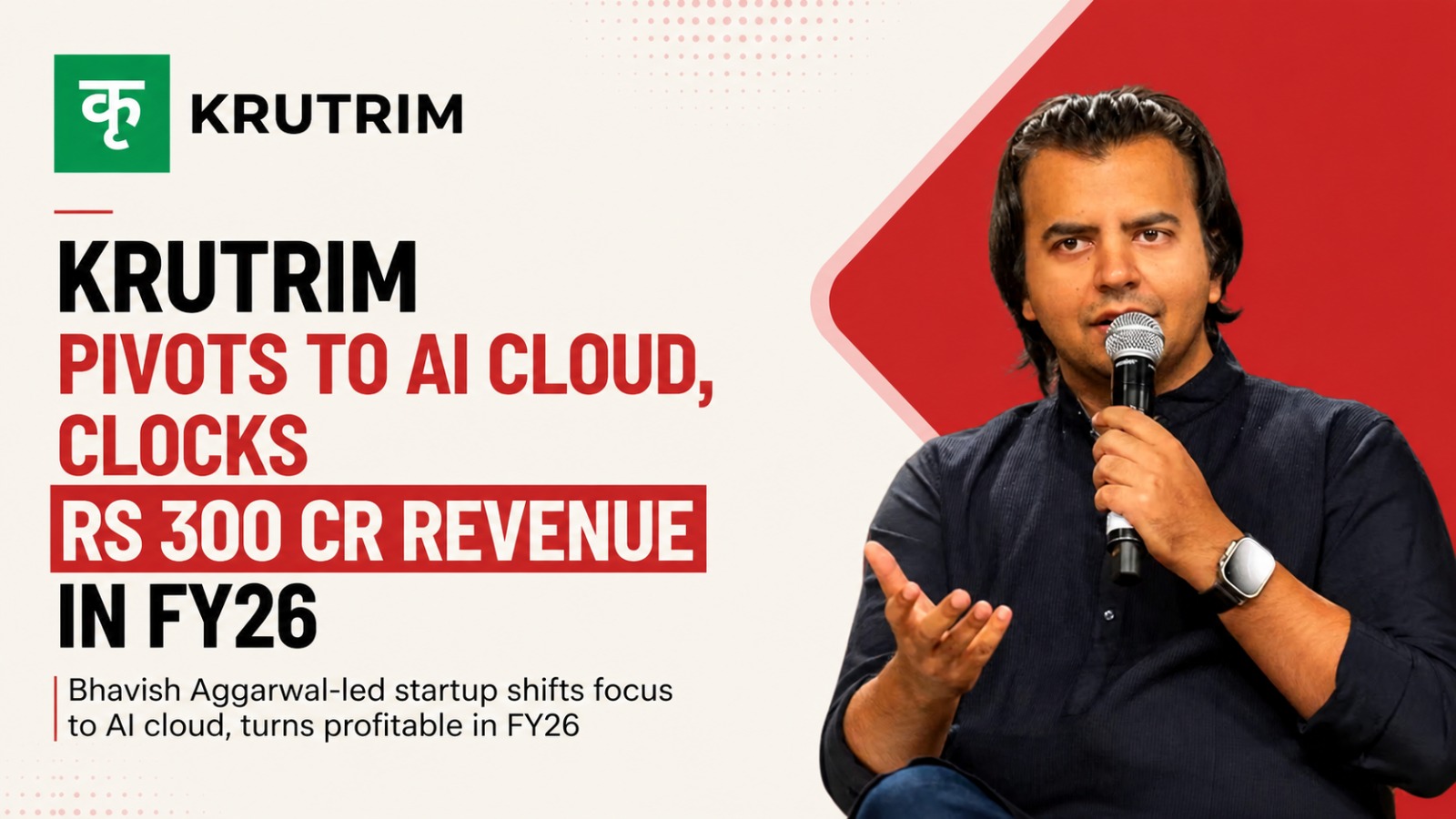
Bhavish Aggarwal’s startup Krutrim AI appears to be taking a sharper, more commercial turn. After earlier ambitions around building large language models and AI chips, the company has now shifted its focus toward AI cloud infrastructure, a business that is already showing revenue traction.
Krutrim reported around Rs 300 crore in revenue for FY26, nearly three times higher than the previous year. The company also said it turned profitable during the year and has become more capital-efficient, reducing the need for fresh fundraising.
The pivot marks a clear change in strategy. Instead of spending heavily on long-term research-heavy products, Krutrim is now concentrating on AI infrastructure for businesses, including cloud-based computing and enterprise AI tools. Its AI cloud platform is already being used by more than 25 enterprise clients across sectors such as mobility, fintech and e-commerce.
The shift comes after a difficult period. Krutrim laid off more than 150 employees last year while recalibrating priorities. Around the same time, Ola Electric pledged about 2.43% of its equity to raise funds for a Krutrim data centre.
The company’s consumer-facing AI assistant, Kruti, also faced challenges after going offline earlier this year and remaining inaccessible across web and app stores. That setback seems to have pushed Krutrim toward a more dependable revenue path: selling compute and cloud capacity to enterprises.
Still, one key question remains. A meaningful part of Krutrim’s revenue is believed to come from within the Ola ecosystem. Its next test will be whether it can expand meaningfully beyond internal demand and win a larger base of outside enterprise customers.
Krutrim is entering a crowded but growing market where Indian startups are trying to build local cloud and compute solutions. With demand for GPU-based computing rising, the company’s timing may be strong. But its long-term success will depend on execution, customer trust and whether it can turn India’s AI infrastructure demand into a scalable business.
Also Read: Vaibhav Suryavanshi’s Rise Is Bigger Than a Net-Worth Number