Early-stage venture capital firm Kae Capital has wrapped up its first India-focused fund with the kind of outcome LPs dream about but rarely see from a 2012-vintage seed vehicle.
The $25-million maiden fund has delivered over 5x multiple on invested capital across its India and overseas structures, with the India vehicle alone clocking a 3.6x distribution to paid-in capital (DPI) as of September 2023.
The heavy lifting has come from two early, unfashionable bets: intra-city logistics platform Porter and health-and-nutrition retailer HealthKart, which together have already returned the fund “multiple times over” through a series of recent secondary transactions.
Kae Capital: 2012 seed experiment that aged into a benchmark
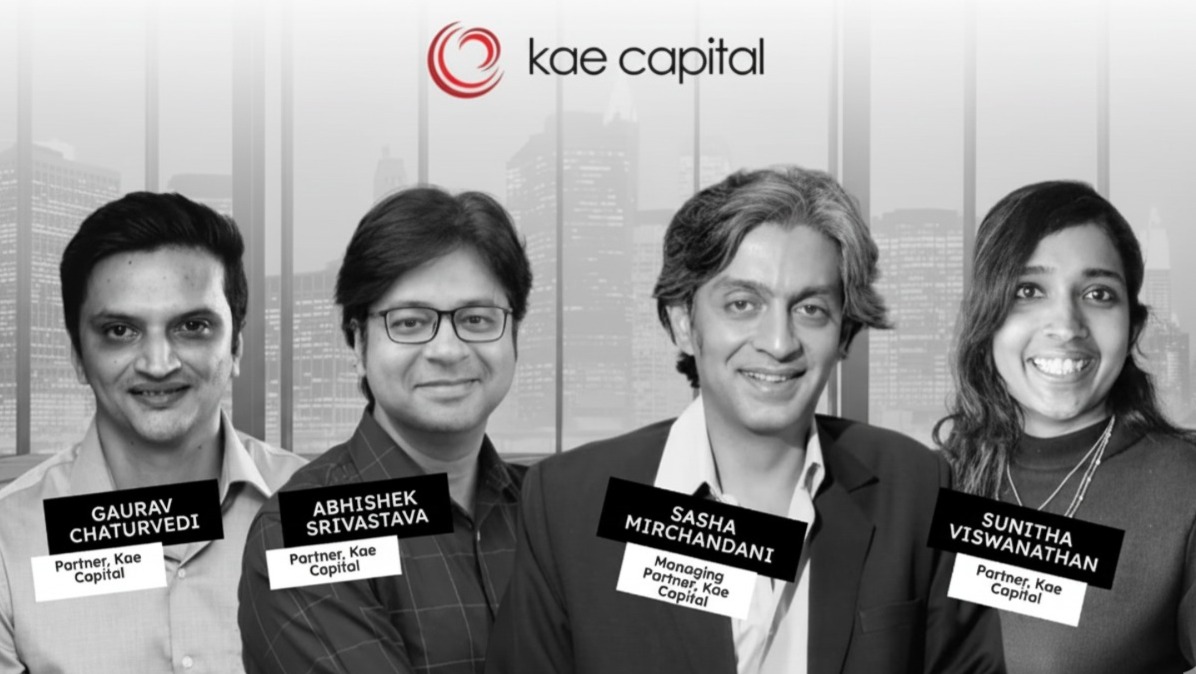
Kae’s Fund I was launched in 2012, when seed investing in India was still more experiment than asset class. Founding partner Sasha Mirchandani recalls that the brief was simple: back “extraordinary founders at their earliest stages” and stay with them across cycles, at a time when few domestic funds were willing to underwrite that risk.
More than a decade later, that contrarian timing has paid off. Kae’s India vehicle was formally closed in 2023, while the global sleeve of Fund I has been extended and is on track to deliver over 5x returns, underscoring the consistency of performance across structures.
General partner Gaurav Chaturvedi calls the DPI “not just a number” but a symbol of what’s possible when early conviction is matched by long-term partnership with founders and LPs.
How Porter and HealthKart carried the fund
The crux of Fund I’s story lies in how two very different businesses ended up underwriting most of the returns.
Porter, an intra-city logistics platform that connects businesses and individuals to on-demand mini-trucks and two-wheelers, has returned more than twice the fund’s corpus on its own, according to disclosures from Kae. HealthKart, which sells nutrition supplements and wellness products through its online platform and offline stores, has returned roughly 1x of the fund on its own, with additional unrealised value still in play.
Together, the two companies have already “returned the fund multiple times over” via recent secondary transactions, with Kae still retaining stakes in both.
For a $25-million fund, those outcomes are significant. They lift Fund I into the bracket of one of the strongest-performing early-stage vehicles of its vintage in India, and place Kae among the country’s better-documented seed managers on realised outcomes, not just paper mark-ups.
A portfolio built before the boom
Beyond the headline exits, Fund I’s construction tells its own story of India’s last decade in tech.
The maiden fund backed 32 companies across India and the US, ranging from online pharmacy Tata 1MG and retail-tech platform Fynd to risk-and-compliance software firm Certa, social-media analytics startup Airwoot, and event-tech tool Eventifier.
Across this portfolio:
- Startups attracted more than $900 million in follow-on capital, and
- Created around $2.7 billion in enterprise value, according to Kae’s numbers.
Some of these companies have since been acquired by larger platforms, 1MG is now part of Tata Digital, while Fynd has expanded into a broader omnichannel retail-software play.
The fund, in other words, wasn’t built around just two outliers. Porter and HealthKart may have powered the DPI, but their performance sits on top of a portfolio that quietly rode multiple waves: healthcare, omnichannel retail, SaaS, and analytics, well before these tags became pitch-deck clichés.
Picking “non-obvious” founders, not hot themes
Internally, Kae attributes the outcome less to thematic bets and more to its founder-first underwriting.
Chaturvedi says the firm actively looks for “non-obvious insights and founder-market fit”, probing whether a team has the specific skills and motivation to build in a particular market. Markets do matter, he admits, but the firm is comfortable backing insights that don’t look obvious on day one, a description that fits both Porter’s early push into intra-city trucking and HealthKart’s bet on organised nutrition retail.
That lens also explains why Kae’s first cheques have grown in size over time, from about $500,000 earlier to between $1 million and $1.5 million now, as conviction and scale have increased.
LPs, liquidity and the signal this sends
The real test of a VC franchise today is not just paper TVPI but how much cash has actually gone back to investors. Kae’s announcement lands at a moment when limited partners are scrutinising GP track records more intensely and nudging funds to realise at least part of their winners through secondary sales and structured exits.
By choosing to partially and fully exit stakes in Porter and HealthKart — while still keeping some upside, Kae effectively:
- Demonstrates that seed bets from the early 2010s can convert into meaningful DPI, and
- Shows that India’s private-market ecosystem now has enough depth for sizeable secondary transactions in growth-stage companies.
Those are not abstract metrics for LPs looking at the next cycle of India-focused seed and early-growth funds; they are tangible proof that early, high-risk rupees can make their way back home.
From a $25-million experiment to a $250-million platform
Fund I was only the starting point. On the back of its early performance, Kae has raised two subsequent funds of $50 million and $100 million, respectively.
Across these three funds, the firm now:
- Manages over $250 million,
- Has backed around 90 startups,
- Counts three unicorns in its portfolio, and
- Is associated with five companies that have each crossed $100 million in annual revenue.
Cumulatively, those companies have generated about $7.7 billion in enterprise value, with more than $2 billion in follow-on capital flowing into the broader Kae portfolio.
Fund II has already returned its secured amount to investors, after backing companies such as Zetwerk, Nazara, and Snapmint, and exiting names like Halaplay, Fynd, and Numberz, with further value still to be realised.
Fund III, which is still being deployed, has made 29 investments so far, including Grapevine and Quickads, as well as consumer-facing brands like Foxtale (skincare) and Nua (women’s wellness).
Having proved its seed model with Fund I, Kae is now leaning into a more defined set of bets. The firm says it is sharpening its focus on artificial intelligence, intelligent automation, manufacturing resilience, and deeptech, backed by what it views as supportive regulatory tailwinds in these segments.
It is also experimenting at the edges of that thesis, Kae has, for instance, already invested in a robotics company, though the name has not yet been disclosed publicly.
For now, though, the story is less about what comes next and more about what has just been proven. A small, 2012 seed fund, assembled before India’s startup ecosystem found its current scale, has returned real cash several times over, primarily on the back of two gritty, operationally heavy businesses that were anything but glamorous when the first cheques were written.
In a market still chasing the next hot theme, Kae Capital’s maiden fund reads like a quiet counter-narrative: that in Indian seed investing, patient capital, non-obvious founders and disciplined exits can still outperform the hype.
Also Read: MIT Spinout Gradiant Is Quietly Rewriting the Rules of Industrial Water Use