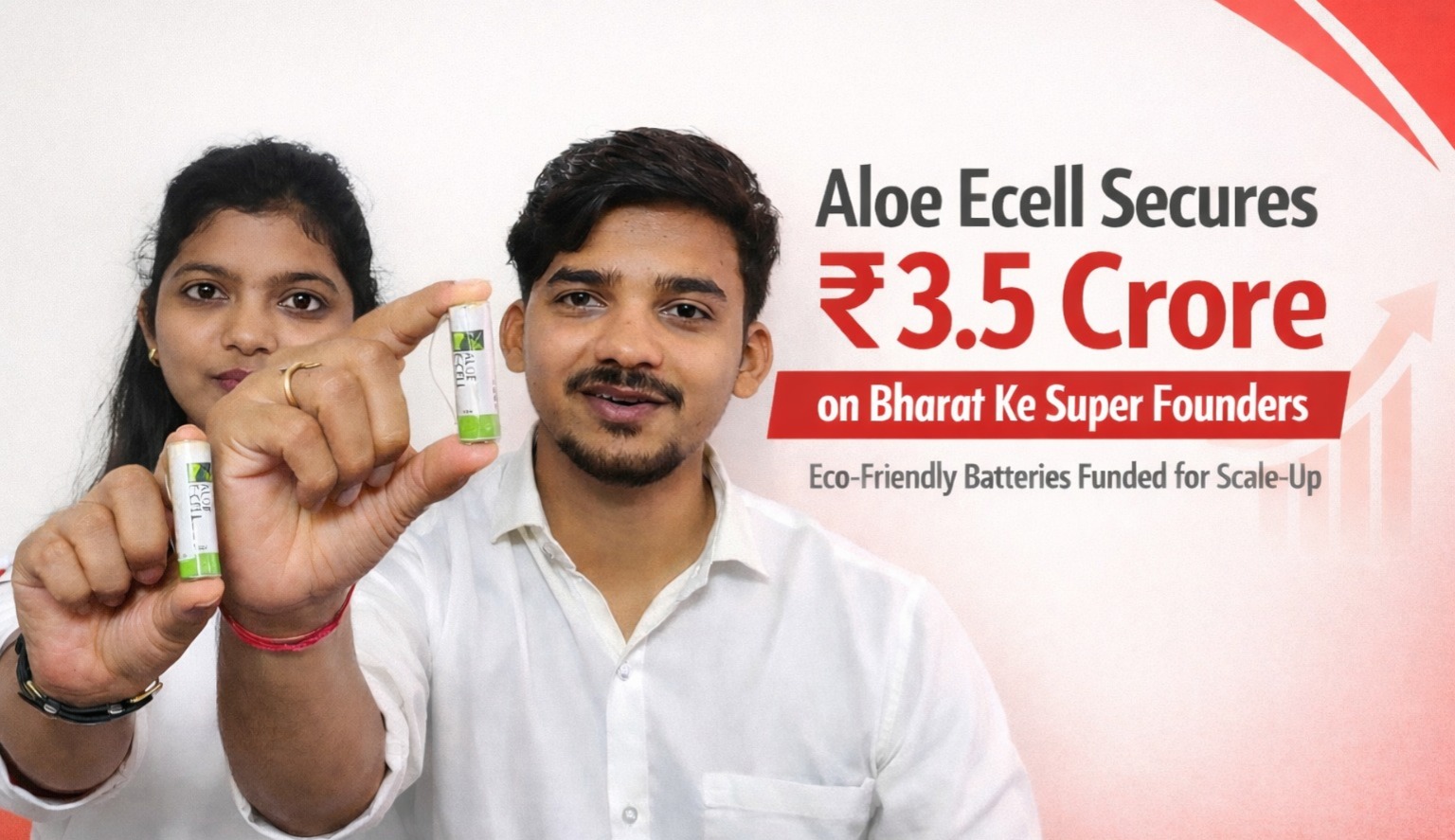
The Aloe Ecell Story: When Bharat Ke Super Founders premiered on Amazon MX Player, the opening story did not come from a metro startup hub or a deep-pocketed tech founder. It came from Bundi, Rajasthan and from a question most people rarely pause to ask: what happens to the batteries we use every day?
That question has now placed Aloe Ecell, a climate-focused battery startup, at the centre of a national conversation after the company secured a ₹3.5 crore structured funding commitment on the show.
The funding includes ₹2.5 crore in equity for a 4.16% stake from the show’s panel of investors and ₹1 crore in debt financing facilitated by Recur Club, aimed at accelerating distribution and market reach.
“More than a feature”
Reacting to Aloe Ecell becoming the opening story of the series, co-founder Naveen Suman framed the moment as larger than television visibility.
“Being the opening story of #BharatKeSuperFounders is more than a feature,” Suman said. “From Bundi, Rajasthan, we set out to rethink something all of us use every day. What many doubted at the start is now opening a national conversation. The journey of Aloe Ecell is just getting started.”
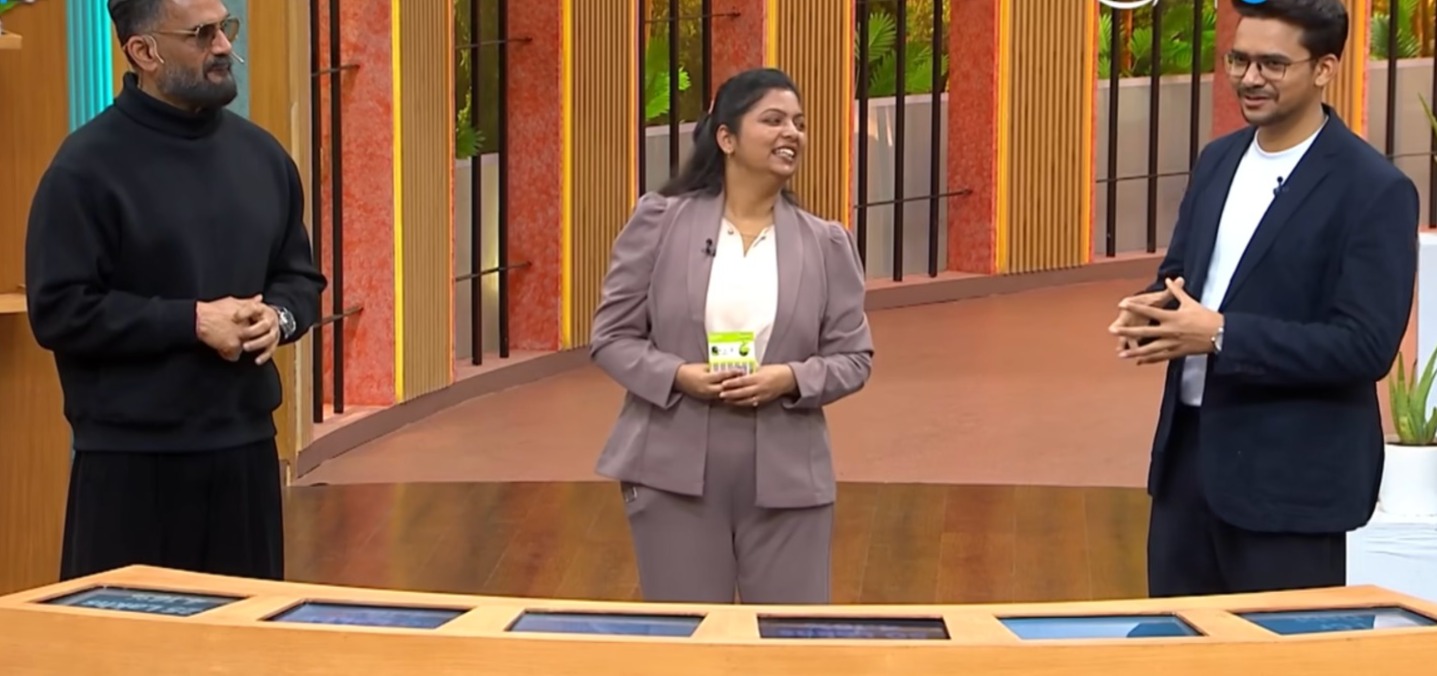
The startup is co-founded by Naveen Suman and Nimisha Varma, who have worked on the idea since its early days, focusing on a product category often overlooked in climate discussions, primary dry-cell batteries.
Rethinking the everyday battery
Aloe Ecell’s core proposition lies in AA and AAA 1.5-volt batteries developed using an aloe vera extract-based electrolyte, instead of conventional chemical compositions. The company positions its batteries as eco-friendly, leak-resistant, and designed for everyday household devices such as remote controls, clocks, toys and cameras.
Equally central to the pitch is an integrated recycling programme, intended to address the disposal problem associated with single-use batteries, an issue rarely visible in policy debates but widespread in homes.
A deal structured for scale
Unlike many televised startup pitches that end with a single valuation headline, Aloe Ecell’s funding is split between ownership capital and debt.
The equity component is backed by multiple investors from the show’s panel, while the debt portion is aimed at strengthening distribution, working capital and quick-commerce expansion, areas where consumer hardware startups often struggle after initial visibility.
The programme is hosted and mentored by Suniel Shetty, and positions itself as a platform where investment decisions are tied to business fundamentals, scalability and long-term impact, rather than just on-air theatrics.
A Standout Story
What makes Aloe Ecell’s appearance notable is not just the funding, but where the story originates. At a time when most climate-tech narratives are dominated by urban labs and large industrial solutions, Aloe Ecell’s journey from small-town Rajasthan to a national streaming platform underscores how everyday products can become entry points into larger environmental conversations.
For now, the real test lies ahead, whether Aloe Ecell can translate television attention into consistent supply, nationwide distribution, and a recycling system that scales alongside sales.