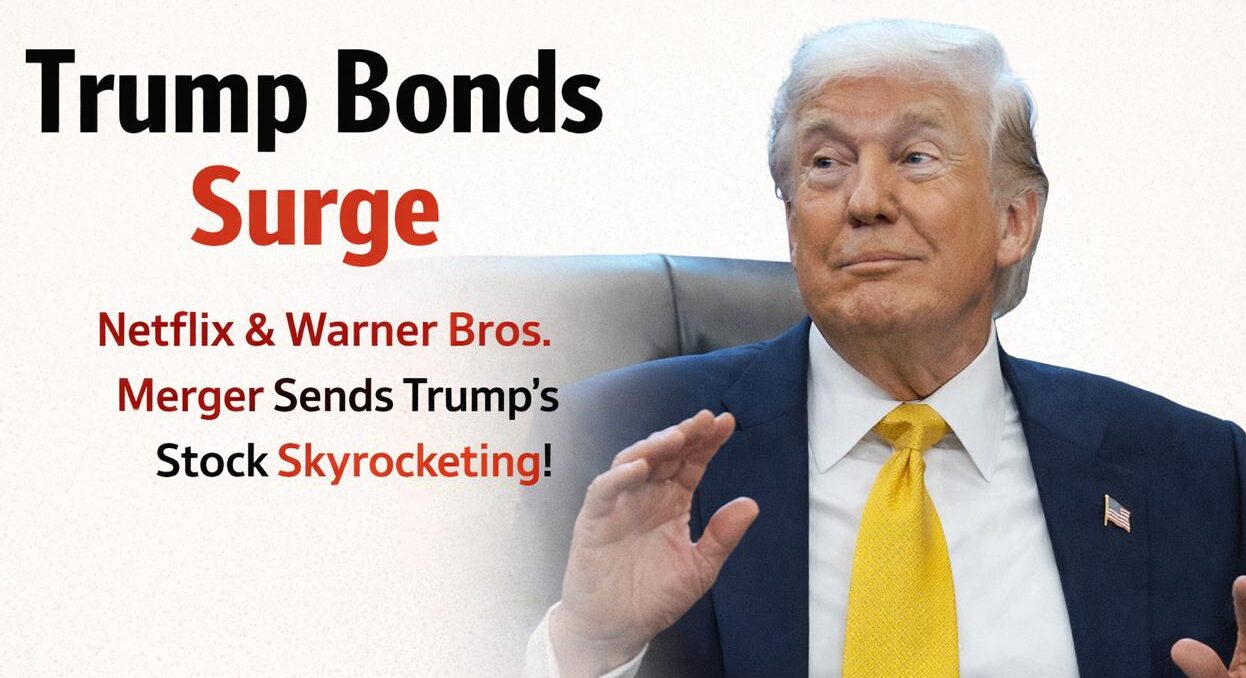
A recent financial disclosure showed that President Donald Trump bought corporate bonds tied to Netflix and Warner Bros. Discovery soon after the companies announced a major merger. The investments were legal and reported, but their timing has led to debate about personal wealth, public office, and public perception during a time of close scrutiny.
How a Quiet Disclosure Suddenly Became a Story About Power, Timing, and Trust
In early January 2026, a government document that is usually overlooked became the focus of attention. It was Donald Trump’s financial disclosure, which is often technical and ignored by most people. This time, one detail stood out: the president had bought corporate bonds tied to Netflix and Warner Bros. Discovery just weeks after their major merger was announced. There was no claim of wrongdoing or secrecy. Still, the disclosure quickly started a conversation about the bigger issue of how personal wealth and public power can overlap.
For political watchers and financial analysts, the main interest was not the amount Trump invested, but the story it created. Today, when the line between public office and private business is closely watched, even small financial moves can raise questions about ethics, influence, and public perception.
The Deal That Changed the Mood in Hollywood and Washington
When Netflix and Warner Bros. Discovery announced their merger in December 2025, it made a big impact in the entertainment world. Netflix, started by Reed Hastings and now led by Ted Sarandos and Greg Peters, had already changed how people watch shows and movies. Warner Bros. Discovery, led by David Zaslav, has a long history with famous studios and franchises like HBO and DC Comics. The deal, worth over $80 billion, was set to change streaming, advertising, and control over content worldwide. It also drew attention from regulators, since deals this large often raise concerns about competition and market power.
People in the industry said the merger would change things like subscription prices and how big franchises are shared. Analysts thought the new company would have more power when dealing with cable companies, advertisers, and international markets. In Washington, regulators were getting ready for a major review to weigh consumer interests against company goals, a process that often gets a lot of political attention.
What Trump Bought, and Why the Details Matter More Than They First Appear
Trump bought bonds, not stock, which is an important difference. Bonds make the buyer a lender and offer fixed returns, while stocks make the buyer an owner with returns tied to share prices. The disclosure shows Trump made several bond purchases in December 2025, each in the $250,001 to $500,000 range as required by law. Two were for Netflix and two for Warner Bros. Discovery. Since disclosures only show ranges, the exact total is unclear, but the combined amount could be up to about $2 million.
On its own, this amount is small compared to Trump’s total wealth. But in context, the timing made it more important. Buying the bonds right after the merger announcement led some to wonder if a president could benefit from market changes affected by government actions. Financial experts point out that even passive investments can affect a leader’s reputation when they overlap with public duties.
Also Read: DefSpace Dialogue Signals India’s Push for Integrated Defence Space
The Gap Between the Purchase and the Public Reveal
Trump made the investments quietly in December, and the public found out weeks later. This delay is normal, since U.S. ethics rules give senior officials time to report financial activity. Disclosures are meant to inform people after the fact, not right away. When the document came out in mid-January, it met the legal requirements, but it also started new political and social discussions. Once the information was public, how people interpreted it became as important as following the rules.
Observers pointed out that disclosures often lead to debate, not because of illegal actions, but because they highlight possible conflicts of interest. In Trump’s case, the story added to ongoing talks about how the president handles personal wealth while in office. It showed that transparency alone does not solve perception problems; timing, context, and how things look all matter too.
Why Timing Became the Heart of the Story
Trump bought the bonds soon after the merger was announced and as the deal was heading for antitrust review. Presidents do not directly approve mergers, but the agencies that do are part of the executive branch. This connection can raise concerns, even if there is no direct influence. Critics focused on how it looked, while supporters saw it as just a coincidence. For the public, it raised a common question: how separate should a leader’s private finances be from decisions that affect related industries?
In this situation, timing was nearly as important as the amount invested. It highlighted the challenge leaders face when their personal investments are connected to industries being closely watched by regulators. Even the appearance of a possible conflict can make headlines, shape public opinion, and affect the credibility of policymakers.
Trump the President Versus Trump the Businessman
Donald Trump has always stood out from traditional politicians. Before entering politics, he was known as a businessman, a brand, and a dealmaker. This mix of roles has continued during his time in office and affects how people see his actions. His team says that third-party professionals manage his investments and that he does not make individual trades. Supporters believe this is enough separation. Critics say that, given Trump’s background and influence, even passive investments in companies under review can seem questionable. This debate is not new, but the recent disclosure brought it back into focus.
Political analysts say Trump’s situation shows a bigger issue for wealthy leaders: how to keep control over their own finances while easing public concerns. The president’s roles as both businessman and policymaker are unusual among U.S. leaders, and this creates a constant need to balance personal interests with public responsibility.
A Much Larger Financial Picture Behind the Headlines
Many people missed the bigger picture behind the disclosure. Around the same time, Trump reported buying almost $100 million in bonds, mostly municipal bonds from cities, schools, and public agencies. These are usually safe investments meant for stability, not speculation. In this context, the Netflix and Warner Bros bonds look more like a small part of a larger, diversified portfolio than a focused bet on the merger.
Financial experts have pointed out that including both municipal and corporate bonds shows a strategy focused on steady returns, not quick speculation. While the timing got attention, the overall pattern matches the risk management seen in wealthy investors with many different investments.
Why People Are Still Talking About It
This story has lasted not because of scandal, but because of what it represents. It shows how transparency works, but also how it can still make people uneasy. Financial disclosures are meant to build public trust, but they also show how close wealth and government can be. Trump’s bond purchases were legal, reported, and fairly small. Still, they happened at a time when the media industry was changing, regulators were paying attention, and the president was a divisive figure.
Besides legal issues, the discussion is about ethics, public perception, and trust. It raises questions about how leaders can handle their private wealth while keeping public confidence. Even with oversight systems in place, people naturally judge timing, appearances, and possible influence, showing that financial disclosures are about how things look as much as about following the rules
Also read: Gig Economy in Delhi: Journalist Earns ₹34/Hour as Delivery Worker