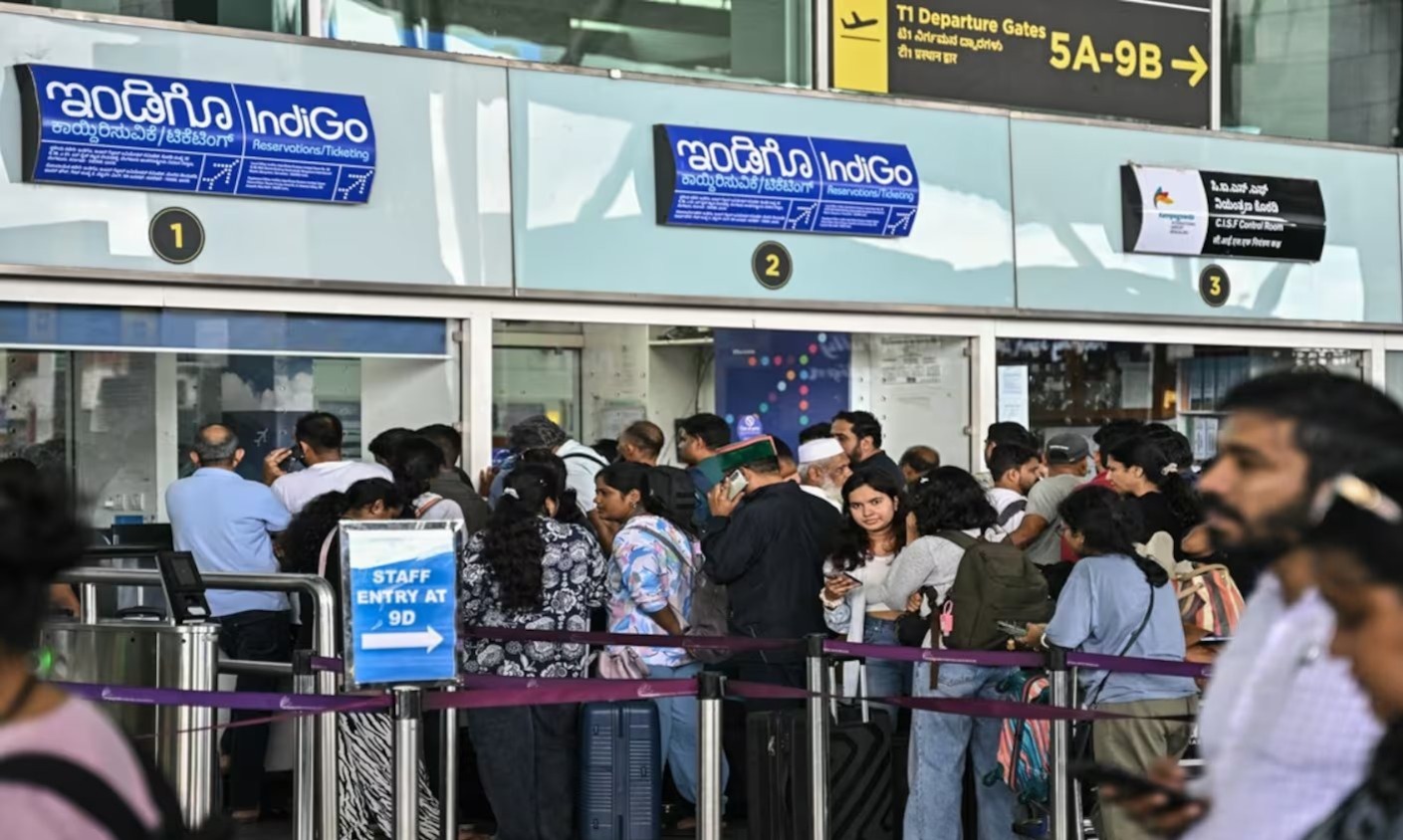
Was India’s largest airline caught in an unavoidable storm, or did its management knowingly walk into the Indigo crisis? As IndiGo battles the fallout of more than 6,000 cancellations this month, senior pilots and aviation experts allege that the chaos was not accidental but “pre-planned”, a strategy designed to pressurise regulators and dilute stricter pilot-fatigue rules.
The allegation, first raised by the Federation of Indian Pilots (FIP), is now gaining political traction. FIP president Captain C.S. Randhawa has claimed that the airline created the conditions for a meltdown by overloading its winter schedule, switching critical software at the same time and failing to alert regulators despite early warning signs. He has demanded a judicial probe and criminal prosecution of IndiGo’s top management.
Software integration at the heart of the controversy
According to accounts shared with The Financial Express, the dispute traces back to IndiGo’s decision to integrate its network-planning platform with crew-utilisation software just as the winter schedule kicked in. The airline was allotted 150 additional flights a day, significantly increasing operational pressure at precisely the moment the new system went live.
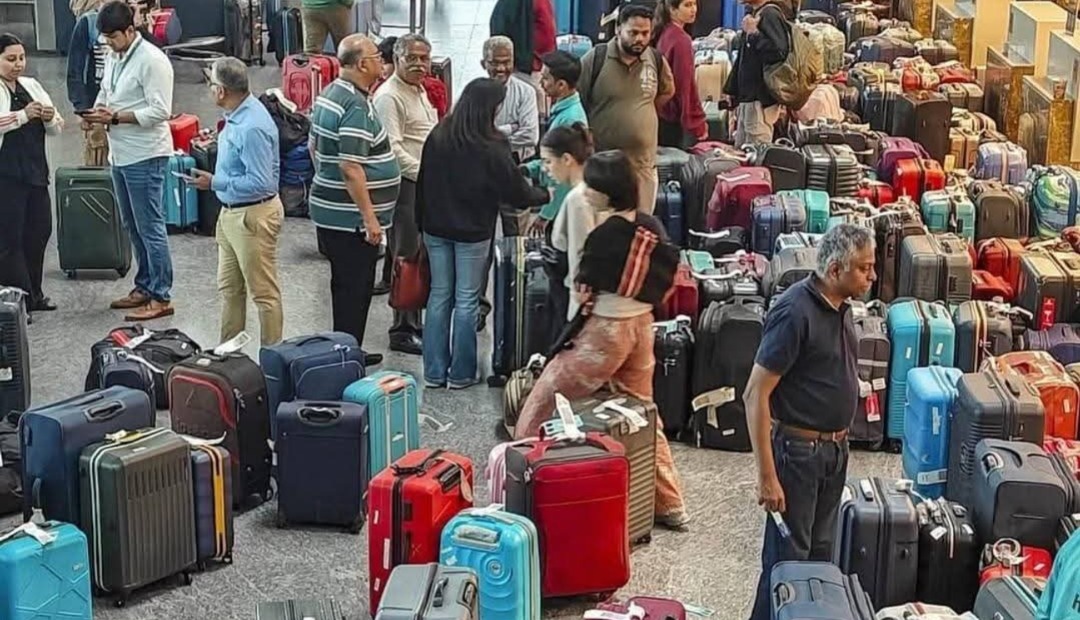
Experts say the timing was critical. Randhawa argues that a system upgrade of this scale should never coincide with peak-load months. Instead, IndiGo allegedly went ahead, fully aware that even minor errors in crew optimisation could result in grounded aircraft and cascading delays. “How can all aircraft be on the ground, all pilots available, all cabin crew present and still no flight take off?” he asked.
FIP timeline signals early awareness of disruption
Pilot representatives claim IndiGo knew by December 2 that the software-and-schedule combination was triggering severe rostering conflicts, yet chose not to intervene decisively. CNBC-TV18 reports that Randhawa alleges IndiGo was aware that a collapse was unfolding but allowed cancellations to rise unchecked through the following week.
He points out that earlier technical changes did not cause such chaos. A software modification on about 200 A320 aircraft on November 29 led to only some delays. Phase-2 crew-rest norms introduced on November 1 did not disrupt operations. But on December 2, he says, “a bomb exploded”. The cancellation graph climbed suddenly and steeply only after that date.
The sharp break in pattern, pilots argue, strengthens the suspicion that the crisis was not a spontaneous systems failure but the result of decisions taken internally and knowingly.
Indigo Crisis: Did safety rules become the bargaining chip?
The most explosive allegation concerns the motive. Multiple pilot bodies claim IndiGo used the chaos to push back against India’s tightening Flight Duty Time Limitation (FDTL) norms, which impose stricter limits to prevent pilot fatigue.
FIP alleges IndiGo engineered public pressure by letting disruptions peak, then positioned regulatory relaxation as the only path to normalcy. By December 8, the government granted temporary FDTL exemptions for IndiGo’s A320 fleet, a move that pilots say undermines uniform safety standards.
Another pilots’ association told The Financial Express that the DGCA’s decision “compromises safety”, emphasising that fatigue rules cannot be relaxed for one operator.
Randhawa has gone further, accusing the airline of using passengers as leverage to force a rollback. He says pilots “are not happy” and warns that selective relief from court-linked safety norms could raise larger legal questions.
Experts describe a clear four-step pattern
Aviation specialists reviewing the publicly available timeline outline a four-part sequence that, in their view, resembles a coordinated playbook:
1. Overload the system: Push through a major software integration while adding 150 flights daily to the winter roster.
2. Allow predictable disruption to unfold: Aircraft and crew were available, yet thousands of flights were cancelled, an inconsistency cited by pilot leaders.
3. Let anger peak among passengers: The tally rose past 6,000 cancellations affecting nearly nine lakh travellers, creating a national-level crisis.
4. Secure regulatory relief: Government responded with temporary FDTL relaxations meant only for IndiGo’s A320 fleet. Pilot bodies say this sequence appears too precise to be coincidental.
Political establishment signals tougher stance
The controversy has now moved beyond the aviation community. Devesh Chandra Thakur, a Rajya Sabha MP on the parliamentary panel for civil aviation, called the airline’s conduct “callous” and said that if deliberate wrongdoing is proven, IndiGo’s licence should be cancelled. He added that the management, including CEO Peter Elbers, may be summoned before the committee.
The civil aviation minister has separately assured strict action, confirming that the DGCA is probing whether the meltdown was preventable.
IndiGo’s parent InterGlobe Aviation, meanwhile, has seen its stock decline by over 15%, making it the Nifty’s worst performer during the crisis period.
What remains allegation?
Investigations are underway, and no formal finding of guilt has been issued. However, what is firmly established through official data and public statements is:
- The scale of the collapse: 6,000+ cancelled flights, nearly nine lakh affected passengers.
- The timing of IndiGo’s system integration and winter-schedule expansion.
- The government’s decision to grant FDTL relaxations only to IndiGo’s A320 fleet.
What remains unproven, though strongly alleged by pilots and some lawmakers, is whether IndiGo consciously choreographed the collapse to negotiate regulatory concessions.
A test case for India’s aviation ecosystem
The outcome of ongoing probes will determine whether this becomes one of India’s most serious aviation compliance failures or a massive operational miscalculation.
What is already clear is that the episode has opened a deeper debate: can any airline be allowed to use operational pressure to influence safety norms, and should regulators apply fatigue rules inconsistently across carriers?
For now, the IndiGo crisis stands as a watershed moment, one that will shape not just accountability for a single meltdown but the future contours of aviation safety, transparency and regulatory independence in India.
Also Read: IndiGo Axes Hundreds of Flights, Targets Dec 10 for Recovery