

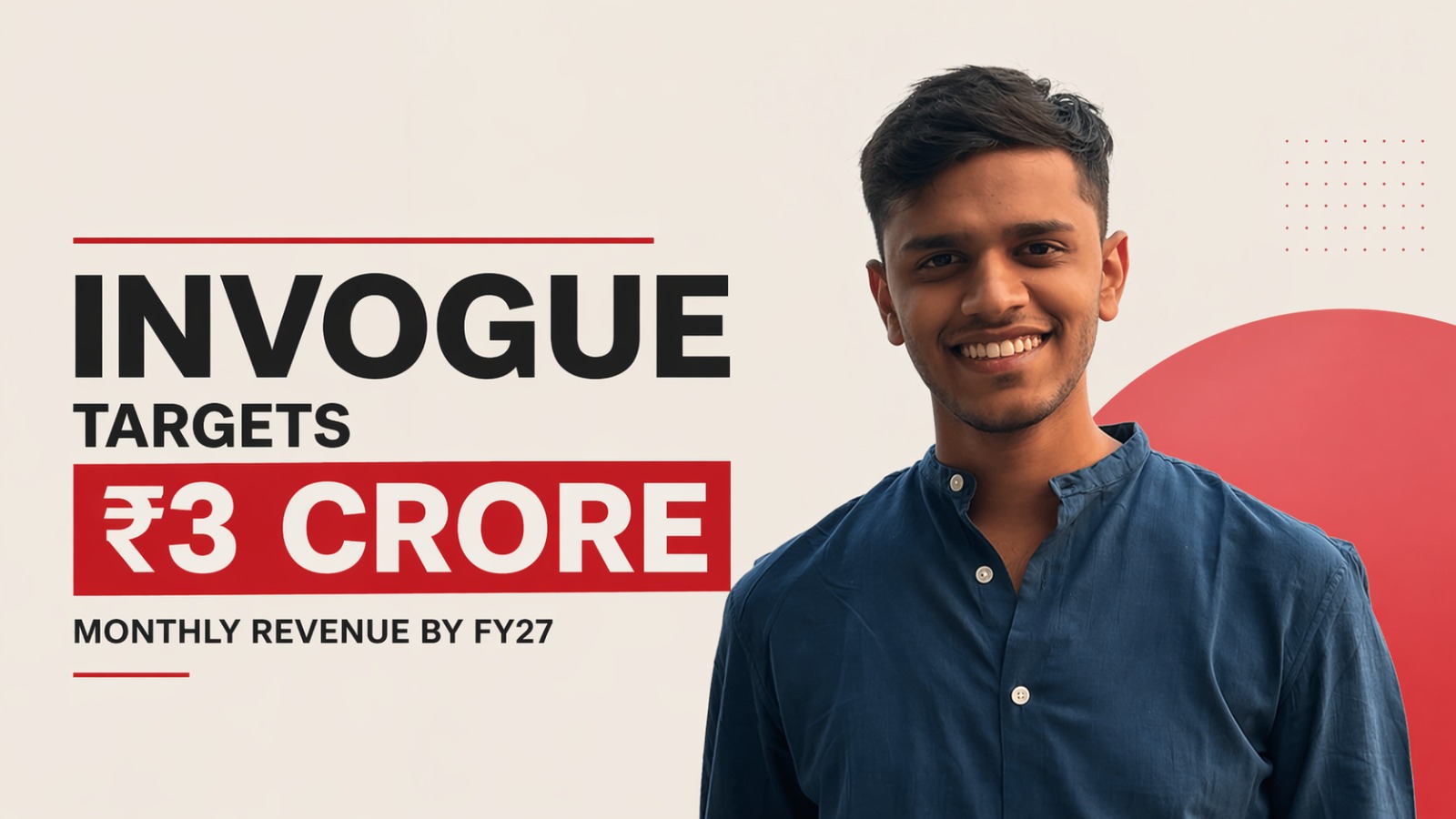
For Invogue, there was a problem first, before anything else. Maadhav Saxena recalls the story behind his clothing line by beginning with something that was lacking in the shapewear industry. There was already shapewear, there were people purchasing shapewear, yet there were very few who really appreciated or enjoyed using their shapewear.
Built during the COVID-19 lockdown as a direct-to-consumer brand, Invogue stepped into a space that hadn’t seen much meaningful innovation. Saxena’s idea was simple but difficult to execute: create shapewear that people would actually enjoy wearing, not just tolerate for the way it looked.
A few years in, that approach is beginning to reflect in the company’s growth plans. Invogue is now working towards a monthly revenue run rate of ₹3 crore by the end of FY27, while continuing to stay profitable.
The Invogue Story: Building a Business Without Burning Cash
In India’s D2C boom, profitability has often taken a back seat to scale. Discounts and aggressive marketing have powered growth for many startups, but not always sustainably.
Saxena says the company focuses on making each order work on its own. The aim is to be profitable from the first sale itself, rather than relying on repeat purchases to recover costs. That mindset has helped the brand scale without slipping into heavy cash burn.
Designing for Real Life, Not Just the Mirror
At the core of Invogue’s product thinking is a challenge that has long defined shapewear: compression versus comfort.
Instead of treating it as a trade-off, the brand approached it as a design problem. Over three years, the team worked through multiple iterations to understand where a garment should provide support and where it should ease up. The outcome, Saxena says, is a balance that allows shapewear to feel wearable through the day.
Owning the Customer, Not Just the Sale
Most of Invogue’s sales come through its own website, giving the company direct access to customer behaviour and feedback.
That control feeds directly into operations. The brand claims to operate with zero dead stock across roughly 200 SKUs, helped by a focus on what it calls “functional fashion”, where demand tends to be more predictable than trend-led apparel.
A Category That Is Quietly Changing
What is also working in Invogue’s favour is a shift in how shapewear is being perceived.
Saxena notes that younger consumers are far more open about wearing shapewear today. It is no longer limited to being hidden under outfits. In many cases, it is being styled as everyday wear, including at social events and concerts.
New Categories and Fresh Capital
To build on that momentum, Invogue is preparing to expand its product range. One of its upcoming launches is swimsuit shapewear, a segment Saxena believes is still largely untapped.
The company is also raising external capital, targeting a ₹4 crore round, with a significant portion already secured. Alongside this, Invogue has started investing in brand-building efforts, including a recent collaboration with Malaika Arora.
Changing the Conversation
For Saxena, the bigger play is not just growth, but perception.
He challenges the idea that shapewear is meant for a specific body type, positioning it instead as something that enhances how people feel in what they wear.
If Invogue can hold on to its product focus and financial discipline while scaling, it may not just grow as a brand. It could help redefine how an entire category is seen in India.
Also Read: Who Owns Your Team Now? IPL’s Latest Ownership Breakdown