A new venture capital firm, Deep33, has launched with a $100 million first close and says it is building its strategy around a simple idea: the next wave of competition in artificial intelligence won’t be decided only by apps, but by the deep infrastructure that powers AI and the quantum breakthroughs that may reshape computing over the next decade.
Deep33’s fund is aimed at deep-tech companies working on what it describes as critical infrastructure for the United States and its allies, with a particular focus on the US-Israel corridor. The firm says it is targeting areas where bottlenecks could emerge as AI and advanced computing scale, quantum computing, AI infrastructure, advanced energy, and robotics.
A $150M target and a “this quarter” finish line
Deep33 is structured as a $150 million venture fund and expects to complete its planned raise during the current quarter, according to the report. A key backer named is Arkin Capital, led by Nir Arkin, described as a major investor in the fund.
The launch story is framed around a broader market moment the fund calls an “AI SuperCycle.” Deep33’s thesis, as described, is that unprecedented spending by large technology companies is creating a once-in-a-generation buildout phase, one that rewards teams building the “picks and shovels” behind the scenes.
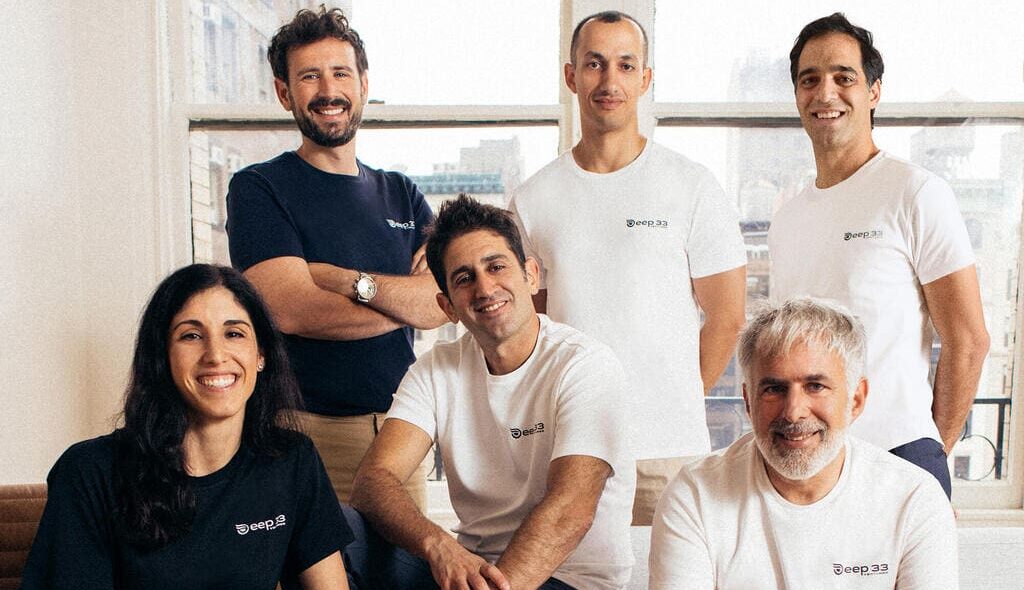
Who’s behind Deep33?
The founders named are Lior Prosor, identified as the fund’s managing partner and formerly a partner at Hanaco and Michael Broukhim, described as a serial entrepreneur with investments in companies such as Stripe and SpaceX.
Prosor explains the fund’s origin as a research-led decision: “The decision to establish the fund came after many months of in-depth research to identify the areas where immediate investment will be required in the coming years in order for the West, led by the United States, to win the AI race.”
Deep33 says it built a “comprehensive investment thesis” from that research and recruited partners with domain expertise to match.
Quantum, energy, and AI infrastructure
Deep33 says it has already deployed capital into five startups across quantum and energy, and that it is also supporting two additional companies operating in stealth mode.
Some of the named investments include quantum firms QuamCore and CyberRidge, and energy innovator Particle.
The two stealth companies are described in functional terms rather than by name:
- One is focused on sustainable fuel production, with the stated goal of eliminating reliance on oil and toxic waste.
- Another is working on optimizing GPU utilization to reduce costs and improve AI computing power.
A specialist bench to chase specialist problems
Deep33’s team structure is presented as unusually domain-heavy for an early fund. Col. (res.) Joab Rosenberg, a quantum physicist and former commander of the Talpiot program, will lead quantum investments.
Other sector leads named include Ori Amsalem for energy investments and Maj. (res.) Yael Barsheshet overseeing AI infrastructure.
The pitch is clear: if the next phase of AI is constrained by compute, energy, and hardware realities, then the advantage goes to teams that know where the constraints show up first and can spot startups tackling them before the headlines catch up.
The “AI SuperCycle” numbers Deep33 is betting on
Deep33’s thesis leans heavily on the scale of spending it says is already underway. Tech giants have committed over $1 trillion to AI, with $315 billion earmarked for 2025 alone, alongside substantial US government investment through budgets and grants.
Those figures are used to argue that demand for AI capability is no longer speculative, it is being built into capital expenditure plans at the highest level. For a fund like Deep33, the implication is that infrastructure startups (compute efficiency, energy, and next-gen architectures) may see urgency and budgets, much earlier than typical venture cycles.
The Significance
“A crowded market with excessive hype for everything called ‘AI’, yet also one with a strong need for differentiation. The strategy as described by Deep33 is one of avoiding the “race” for the most ‘obvious’ ‘ai wrapper” and instead focusing on quantum capabilities, energy, and making compute for AI cheaper.
Whether this approach becomes a blueprint for other funds will depend on execution, especially the ability to turn technical conviction into a portfolio that can survive long timelines (common in quantum and deep infrastructure). But the early message from Deep33 is straightforward: the next chapter of AI is going to look a lot more like infrastructure and industrial-scale engineering than it does like a shiny demo.
Also Read: Sam Altman Likely to Visit India During Global AI Summit