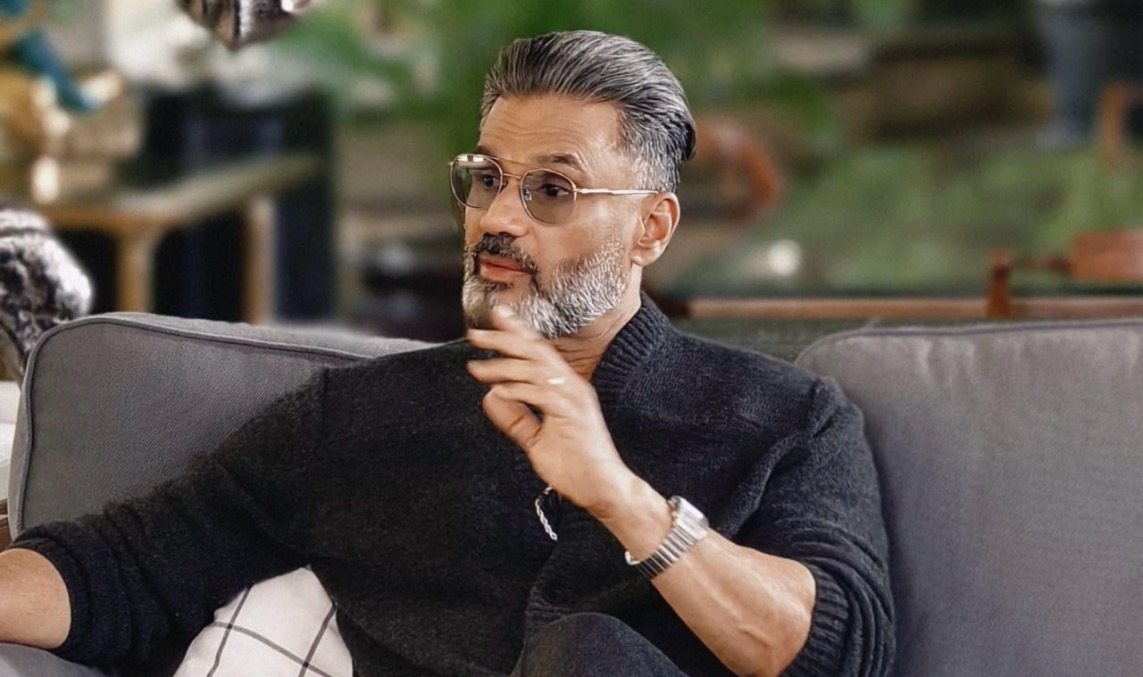
Mumbai: Actor and entrepreneur Suniel Shetty has drawn attention to a quiet but significant transformation underway in India’s startup ecosystemm one where founders are increasingly choosing authenticity over imitation, and local relevance over borrowed global templates.
In a recent LinkedIn post, Shetty reflected on how, until a few years ago, success in the startup world often followed an unspoken formula.
Founders were expected to present themselves in a particular way, from how they dressed and spoke to how they pitched their ideas, often mirroring global startup aesthetics rather than their own lived realities.
Shetty noted that this approach was not unique to startups.
Drawing from his experience in the entertainment industry, he pointed out that Indian cinema too went through a prolonged phase of recreating formulas that had worked in the past. According to him, both industries were shaped by the same underlying impulse: the need to “catch up” and prove legitimacy on a larger, global stage.
A more confident generation of founders
What stands out to Shetty today, however, is a clear departure from that mindset. He observed that founders he now encounters appear far more comfortable operating on their own terms. Rather than polishing away their background or context, many are embracing it, building businesses rooted in Indian realities, speaking in their own voice, and addressing problems they understand deeply.
Importantly, Shetty emphasised that this shift toward local authenticity has not reduced ambition. On the contrary, he believes several of these India-first products and services have the potential to scale beyond national boundaries, precisely because they are built with clarity and conviction.
Why authenticity is changing outcomes
Shetty’s reflection suggests that confidence has begun to reshape how businesses are built. When founders stop trying to impress external audiences, he argued, their attention naturally shifts to what works on the ground, for customers, for teams, and for the long-term health of the business.
He noted that this trend is visible across sectors, with products that are unapologetically local while still being structurally strong enough to find relevance elsewhere. According to Shetty, founders today are not distancing themselves from their roots; instead, they are using them as a foundation.
Learning from example, not imitation: Suniel Shetty
Shetty attributed this growing confidence to a broader pattern within the ecosystem. Indian founders, he wrote, have increasingly seen peers create substantial value without copying established global playbooks. That visibility, he suggested, has replaced imitation with belief and aspiration with pride.
He described this realisation as one of the most rewarding aspects of his association with Bharat Ke Super Founders, a platform that brings him into close contact with emerging entrepreneurs across the country.
A marker of ecosystem maturity
The future of the startup landscape in this changing culture, according to Shetty, is one in which this strength will define the startup landscape in the country. Founders are not, in effect, waiting for the right to play with the big boys but rather making their own way.
“The result of all this,” he says, “is a tangible outcome: better products, more truthful businesses, and a sustainable impact.”
This development is progress in its most sustainable form for Shetty, because instead of being spurred through borrowed confidence in Western capitalism, he hears India’s entrepreneurial voice.
Also Read: Suniel Shetty steps into startup spotlight with ‘Bharat Ke Super Founders’