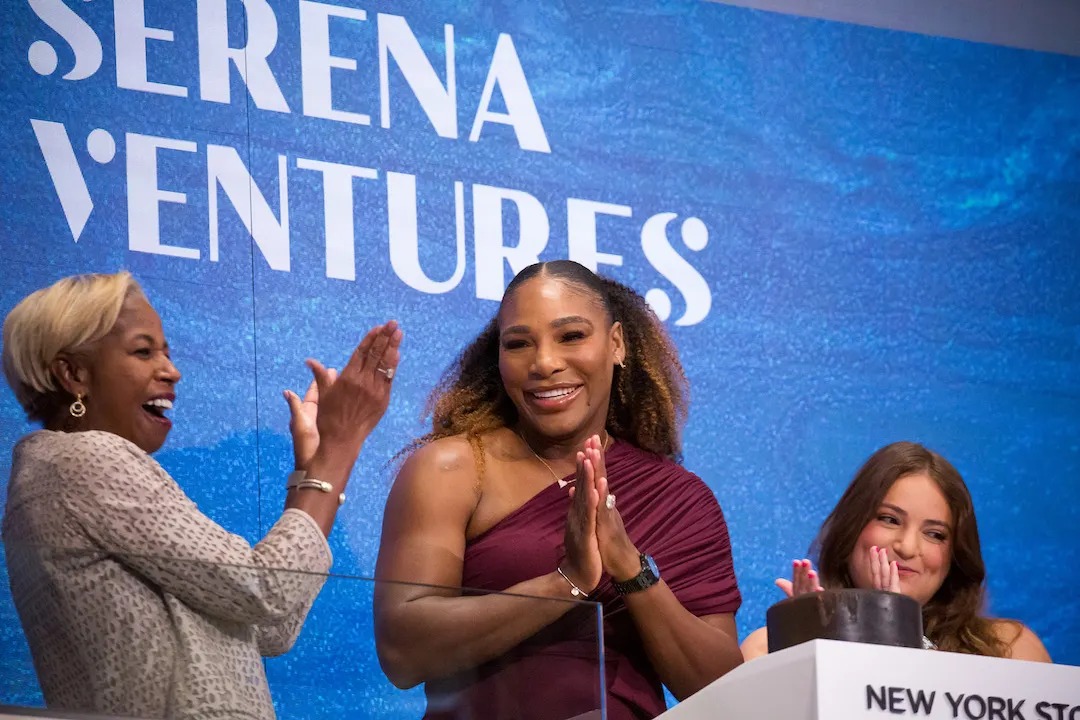
Serena Williams spent years mastering the art of winning on the tennis court. Now, she is taking that same precision to a sector far from the spotlight, but close to everyday life: hygiene and health. And she is doing it with the same competitive instinct, not to donate, but to build business.
Williams, already one of the most successful athlete-turned-investors, has taken on a new role this year as the first entrepreneur-in-residence at Reckitt, the global consumer health company behind brands such as Lysol, Durex, and Enfamil.
The appointment is part of Reckitt Catalyst, a £10 million programme designed to uplift underrepresented founders in hygiene, maternal care, and health equity. The initiative plans to support up to 200 founders by 2030, particularly across Africa, Asia and Latin America.
“Bold, innovative ideas can solve some of the world’s most pressing healthcare challenges if given the right support to thrive,” Williams said at Cannes Lions, emphasising that founders need “mentorship, funding, and strong belief.”
Backing Markets Silicon Valley Rarely Sees
While venture capital often pours money into trending technologies, Williams’ thesis centres on markets that may not look flashy but have enormous demand.
She notes that hygiene is routinely ignored in venture capital, despite its critical importance for women, mothers, and children. “It’s foundational,” she said, calling the sector essential for both real impact and real returns.
This perspective aligns closely with why Reckitt partnered with her: health equity and hygiene-focused startups remain chronically underfunded, especially those led by women. Globally, women-run startups receive less than 3% of all venture financing, even though research shows they often outperform male-founded companies.
A Winning Investor With 14 Unicorns on the Cards
Williams didn’t come into this partnership as a celebrity face. She came with one of the strongest investment records in sport.
- She launched Serena Ventures in 2014 to back founders historically excluded from tech funding.
- The firm raised a $111 million fund, with diversity as part of its investment thesis, not its philanthropic mission.
- Before launching the fund, she had already backed around six unicorns; today, her portfolio includes 14+ billion-dollar companies and several decacorns.
Her focus has spanned healthcare, fintech, and consumer technology, but her newest move marks a decisive shift, to scale hygiene and maternal care companies through both capital and connections.
“A 30-minute conversation can unlock new partnerships or investment opportunities. I want to offer that access to founders who aren’t part of the usual power circles,” she said.
Building a Pipeline for Businesses That Save Lives
Reckitt Catalyst’s targets show the commercial potential behind impact-driven markets. By backing startups that provide locally led solutions, the programme aims to improve access to hygiene for five million people, not through charity drives, but scalable products.
Williams is already connecting Catalyst entrepreneurs with her existing portfolio, building a network effect across companies solving similar problems in underserved markets.
“This isn’t about taking anything away from male founders. It’s about expanding the pie,” she said.
Why Serena Williams’ Strategy Matters for Global Business
Her move comes at a moment when emerging markets are shaping the future of health tech and consumer wellness. With rising populations and relatively low per-capita investment, regions such as Africa and South Asia are positioned to produce the next generation of essential health products, in maternal care, sanitation, diagnostics, and education.
Williams’ strategy reframes investment in these markets not as philanthropy, but as smart business with scale-worthy demand. Hygiene products are often recession-proof. Maternal care remains under-innovated. And consumers in growth markets are rapidly demanding better health standards.
In other words, Serena Williams isn’t just betting on overlooked founders, she is betting on overlooked markets.
Serena Williams has spent her career proving that underestimated players can dominate when given opportunity. Now, she is extending that truth to the world of business. With Reckitt, she is building a pipeline where hygiene startups are not positioned as causes to support, but companies that can compete and win, on a global stage.
And like every Serena comeback, this one is designed to change the game.
Also Read: Qure.ai Partners With the Government to Scale AI Disease Screening