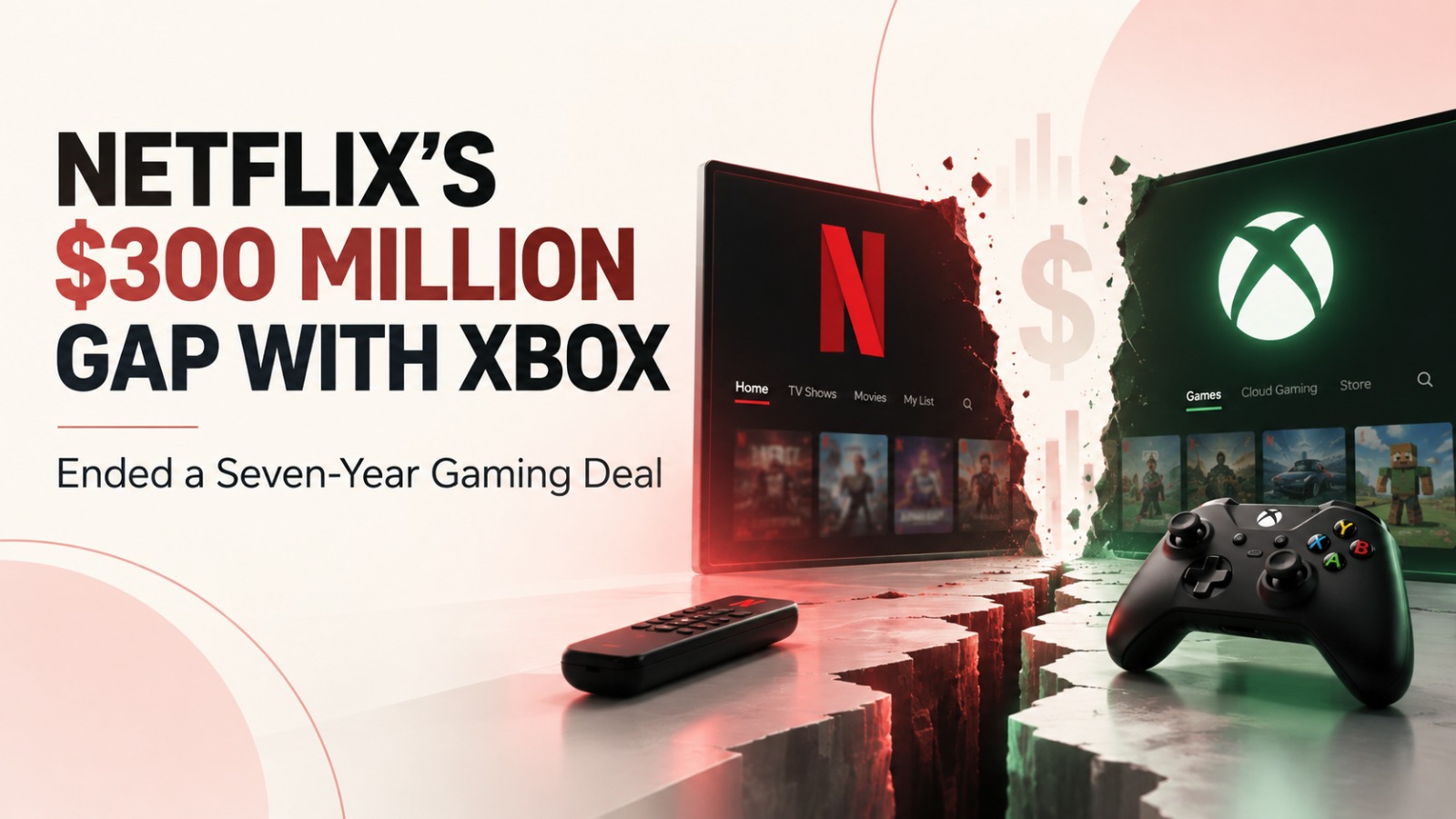
Netflix’s proposed $500 million deal to secure exclusive film and television adaptation rights to Microsoft’s Xbox franchises has collapsed after the two sides reportedly failed to agree on a price. Xbox sought $800 million for the arrangement, leaving a $300 million gap between the streaming platform’s offer and the gaming division’s counterproposal.
The proposed agreement would have given Netflix a seven-year exclusive licence to adapt Xbox properties for film and television. However, the negotiations ended without a deal, leaving Xbox free to pursue individual partnerships with different entertainment companies.
The breakdown also highlights the challenge of agreeing on the value of major gaming franchises as streaming platforms compete to bring established video game worlds to the screen.
The $300 Million Difference That Stopped the Deal
Netflix’s offer was reportedly made by Bela Bajaria, who was serving as the company’s chief content officer at the time. She proposed paying $500 million for exclusive adaptation rights covering Xbox franchises over seven years.
Xbox CEO Asha Sharma and her business affairs team reportedly responded with a counteroffer of $800 million. Some Netflix executives, including Chief Financial Officer Spence Neumann, were said to consider the amount too high.
The difference between the two proposals was $300 million. With the sides unable to reach an agreement, Netflix eventually withdrew its offer.
The negotiations also underwent a leadership change at Netflix. Bajaria’s departure and Peter Rice’s appointment as the company’s new chief content officer preceded the withdrawal of the proposal, bringing the discussions to an end.
The agreement would have placed a substantial collection of Xbox-owned intellectual property under one exclusive arrangement with Netflix. Instead, the two companies will continue to explore opportunities through individual projects.
Why Netflix Wanted Xbox’s Gaming Franchises
Securing exclusive adaptation rights to Xbox franchises could have given Netflix access to an established catalogue of gaming properties for its film and television business.
Video game adaptations have become an important area of competition for entertainment companies. Amazon has found success with Fallout, while HBO has drawn attention with The Last of Us. Both properties demonstrate the opportunities available to studios that can turn established gaming worlds into television series.
For Netflix, an exclusive Xbox agreement could have provided a pipeline of recognisable franchises for future adaptations. It would also have reduced the need to negotiate separately for individual properties covered by the proposed licence.
However, the failed negotiations show how difficult it can be for a streaming platform and a gaming company to agree on the financial value of an entire portfolio of intellectual property.
For Xbox, accepting a single exclusive arrangement would have meant committing a broad set of franchises to one entertainment partner. Pursuing separate agreements instead gives the company greater flexibility over how individual properties are developed and distributed.
Xbox and Netflix Still Have Projects in the Pipeline
Despite the collapse of the broader licensing proposal, the two companies have not ended their relationship.
Xbox described Netflix as a valued partner and pointed to upcoming animated adaptations involving Minecraft and Diablo as examples of their continuing collaboration.
These projects indicate that the failed negotiations have not ruled out future work between the companies. Rather than securing exclusive access to a wider catalogue, Netflix could still pursue agreements involving specific Xbox franchises.
Rice’s appointment as Netflix’s chief content officer could also shape the company’s approach to future intellectual property deals. The company may continue exploring opportunities to bring established entertainment and gaming properties to its platform, although no new broad agreement with Xbox has been confirmed.
Xbox Is Moving Towards Individual Adaptation Deals
Xbox has established its XP division to oversee opportunities involving film, television, merchandise and live events. The division is intended to help expand the company’s franchises beyond gaming.
Its approach includes working with different entertainment partners rather than placing its properties under one exclusive arrangement.
Existing projects illustrate this strategy. Fallout is associated with Prime Video, the Minecraft films are being developed with Warner Bros., and Gears of War has an adaptation partnership with Netflix.
This model allows Xbox to pursue different arrangements for different franchises. It also leaves room for negotiations that reflect the needs and commercial value of individual properties.
The company is expected to continue announcing adaptation partnerships under its new structure, although the details and timing of future deals remain uncertain.
What the Failed Netflix Deal Means for Gaming Adaptations
The collapse of the proposed agreement does not necessarily signal a retreat from video game adaptations. Instead, it points to a disagreement over how much exclusive access to a major gaming portfolio should cost.
Netflix was reportedly unwilling to meet Xbox’s $800 million counteroffer, while Xbox did not accept the streaming company’s initial $500 million proposal. The resulting impasse ended the possibility of a seven-year, catalogue-wide arrangement.
For Xbox, individual licensing deals offer an alternative that could allow it to work with several entertainment partners. For Netflix, pursuing specific franchises may provide a more targeted way to secure gaming properties without committing to the proposed $800 million arrangement.
The immediate outcome is clear: Netflix will not receive the exclusive Xbox adaptation rights it sought through this deal. Future collaborations remain possible, but any broader partnership would require the companies to find common ground on both the rights involved and their price.
Also Read: Pronto Founder Anjali Sardana Launches Physical AI Startup Provision Labs