For years, the Indian Premier League (IPL) was the ultimate launchpad for startups looking to scale fast, with IPL Advertising playing a central role. A few seconds of airtime during a high-stakes match could deliver what months, sometimes years, of marketing could not: instant national visibility.
That strategy, however, is beginning to shift.
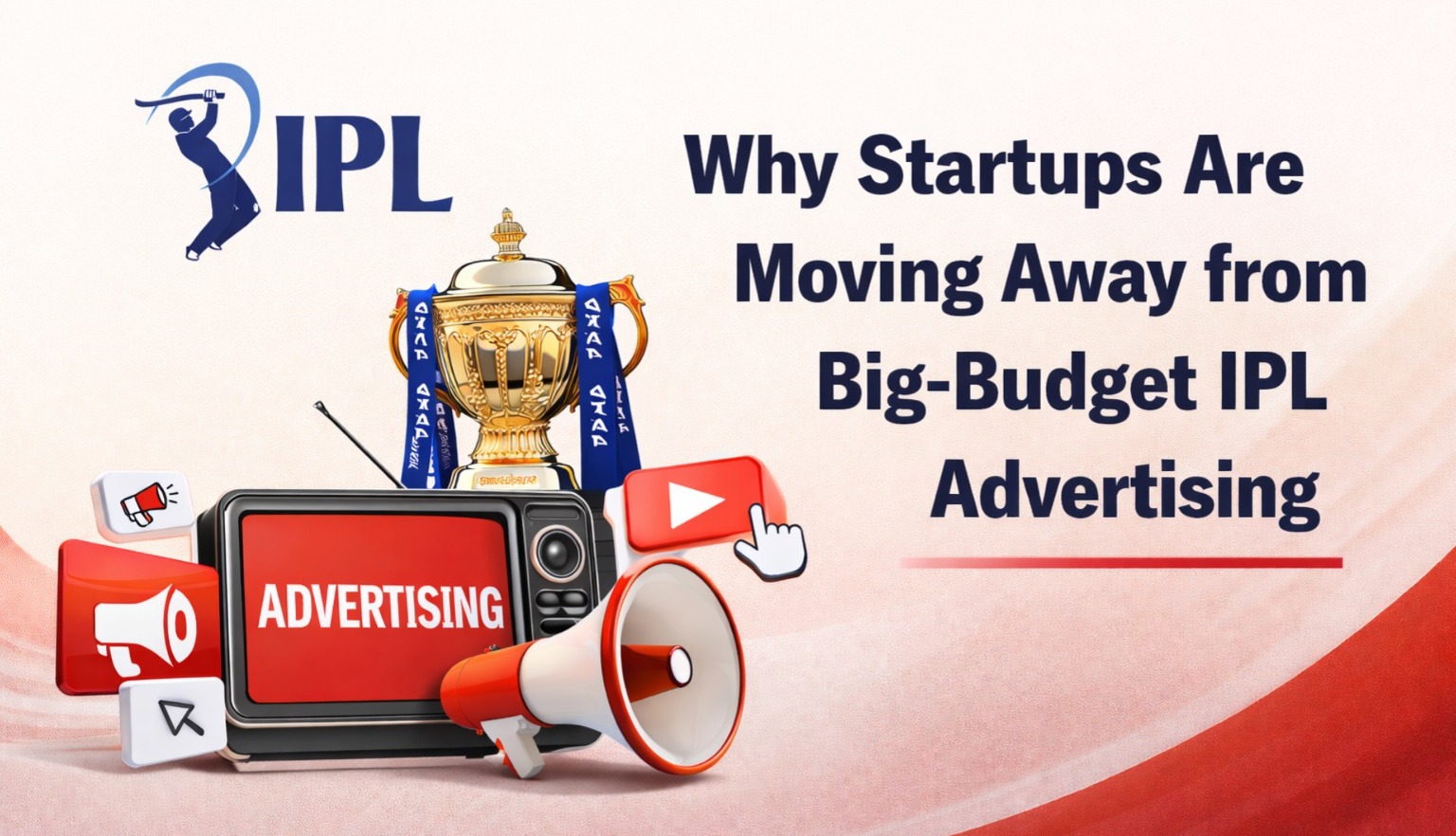
Startups today are moving away from heavy IPL advertising spends and leaning towards more measured, performance-driven growth. The change reflects a broader reset in how young companies are thinking about capital, customers, and long-term sustainability.
From Visibility to Viability
There was a time when growth came before everything else. If funding was available, startups deployed it aggressively to acquire users and build recall. IPL, with its massive reach, fit perfectly into that playbook.
Repeated ad exposure during matches helped several emerging brands become household names in a relatively short span. Companies like BYJU’S, Dream11 and CRED are among the most visible examples of startups that used IPL advertising effectively to build national recognition.
The logic was simple, capture attention first, figure out monetisation later.
That logic no longer holds the same weight.
Today, marketing decisions are being filtered through a sharper lens. Startups are increasingly focused on how much it costs to acquire a user, whether those users stay, and if they generate meaningful revenue over time. Visibility without conversion is no longer enough.
IPL Advertising: The Cost vs Outcome Equation
IPL continues to deliver scale. Its reach remains unmatched in India’s advertising landscape. But that scale comes at a steep price.
The expenditure involved in advertising during important games or obtaining sponsorships is very high. It is tough for the young companies to invest in these areas since it is hard to quantify the benefits.
Even though the number of people reached through the campaign may be large, they may not all be potential consumers. The disparity between the two has become a serious issue.
On the other hand, online media allows for accurate targeting, constant monitoring, and easy adjustment of the campaigns. To the young firms looking for effectiveness, these attributes have become invaluable.
The Attention Problem
Even as IPL viewership remains strong, audience behaviour has evolved.
Watching a match is no longer a single-screen experience. Viewers are often multitasking, scrolling through social media, chatting, or shopping while the game plays on. That divided attention reduces the impact of ads, particularly for startups that rely on quick engagement or action.
In such an environment, simply being seen is no longer enough.
Lost in the Noise
Another growing challenge is clutter.
IPL has become an advertising-heavy ecosystem, with brands competing across television, streaming platforms, team jerseys, and even in-stadium visibility. Standing out now requires sustained presence across formats, not just a few ad spots.
This is where the gap between startups and large corporations becomes more visible. Deep-pocketed players like Reliance Jio and Tata Group can afford continuous visibility throughout the tournament, ensuring recall. Startups, with tighter budgets, often struggle to achieve the same impact.
A Different Kind of IPL Advertiser
Startups haven’t disappeared from the IPL, they’ve just become more selective.
Earlier, high-growth startups used the tournament as a launchpad. Unacademy and Upstox, for instance, were part of this earlier wave that leaned heavily on IPL for rapid brand-building.
Now, the companies that show up tend to be more established. They already have a stable user base and clearer business fundamentals. For them, IPL is less about experimenting and more about reinforcing brand presence at scale.
Importantly, IPL is no longer a standalone bet. It is often combined with digital campaigns that help track performance and improve efficiency.
Not the First Step Anymore
What has truly changed is the sequence.
For many startups today, IPL is no longer the starting point. The focus has shifted to building a strong base first, refining the product, acquiring users through digital channels, and ensuring sustainable metrics.
Only after reaching a certain level of maturity do they consider investing in a platform like IPL. At that stage, the goal is not just growth, but credibility and national brand reinforcement.
The shift away from big-budget IPL advertising is not a rejection of the platform, it is a sign of a more disciplined startup ecosystem.
IPL remains one of India’s most powerful advertising stages. But it now works best for companies that can afford not just to enter, but to stay visible.
For startups, the focus has clearly moved from chasing attention to building outcomes.
Also Read: Seema Ahuja Signs Off from Biocon After Over 15 Years