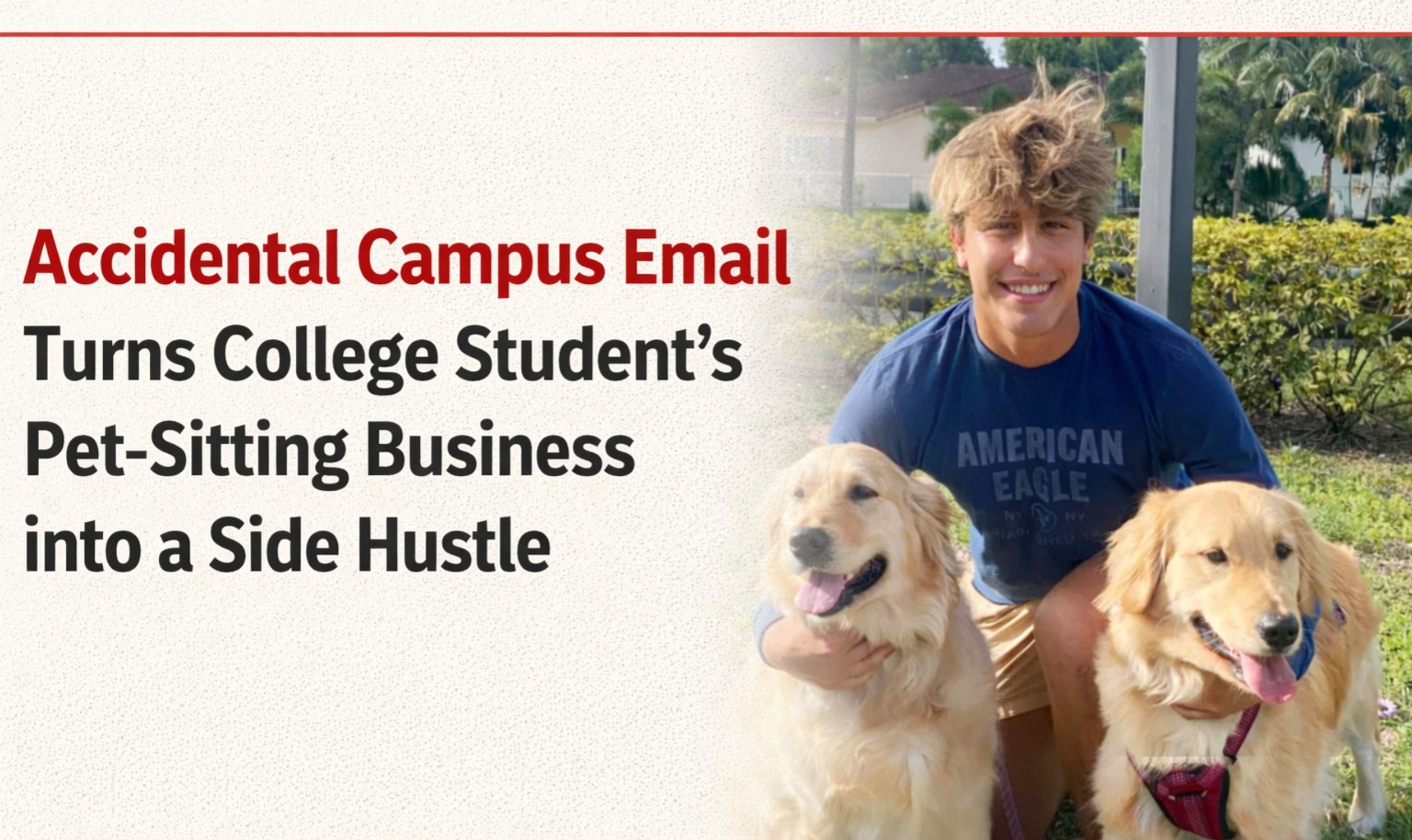
What began as an awkward mistake in form of an accidental email for University of Alabama student Hector Gutierrez quickly became an unexpected break for the small business he had been building since high school.
Gutierrez, 18, found himself at the centre of campus attention earlier this year after he accidentally sent his business school professor’s recommendation letter to a university listserv that reached thousands of students. The error triggered a flood of responses and phone calls, instantly making him a familiar name on campus. As Gutierrez told Fortune, his inbox and phone lit up almost immediately after the email went out.
What could have remained an embarrassing episode instead gave visibility to the business he had been building quietly for nearly three years: Hec’s Pet Sitting. The venture began in South Florida when Gutierrez chose not to take a conventional teenage job and instead started offering local pet-sitting services by distributing flyers around his neighbourhood. Over time, word of mouth helped the business grow from a one-person effort into a registered LLC with 10 part-time employees and annual income of more than $10,000.
That accidental email did more than create a moment of campus notoriety. It reportedly helped turn Gutierrez into a social media talking point, earned him a meeting with the university president, and led to coverage in the school newspaper, all of which brought fresh attention to his business. For a college student balancing coursework with entrepreneurship, that kind of exposure can be difficult to buy and impossible to predict.
Now in his first year studying business management in Alabama, Gutierrez is using that unexpected visibility to open new possibilities, including potential customers in his college town. The income from the pet-sitting business is also helping him manage the steep cost of studying out of state, which the report says exceeds $50,000 a year.
His story also reflects a broader shift in how younger people are approaching work. Reports place Gutierrez within a larger Gen Z trend toward entrepreneurship and side gigs, especially as traditional career routes feel less certain. It cites a 2023 Samsung and Morning Consult survey showing that 50% of U.S. students aged 16 to 25 aspire to start their own business.
It also references Intuit research finding that nearly two-thirds of people aged 18 to 35 have started, or plan to start, a side gig. At the same time, a Handshake survey found that three in five college seniors feel pessimistic about their job prospects.
That uncertainty, according to Jacob Stone Humphries, the University of Alabama business instructor who wrote Gutierrez’s recommendation letter, is shaping how many young people think about work.
Gutierrez’s experience is striking because it combines two realities of modern student life: the risk of public mistakes in a hyper-connected environment, and the possibility that visibility, even when accidental, can create real commercial opportunity.
His business did not emerge overnight because of one email. It had already been built through neighbourhood outreach, customer trust and gradual expansion. The email simply accelerated attention toward something that was already real.
That is what makes the story resonate. It is not just about a college blunder going viral. It is about how a young entrepreneur, already doing the slow work of building a business, was suddenly given a much bigger audience.
And in a moment when more students are questioning whether a degree alone guarantees security, Gutierrez’s journey offers a different picture of campus ambition: one where the side hustle is not merely extra income, but an early experiment in independence.
Also Read: Edorica Luxury Skincare: India’s Rising Clean Beauty Brand