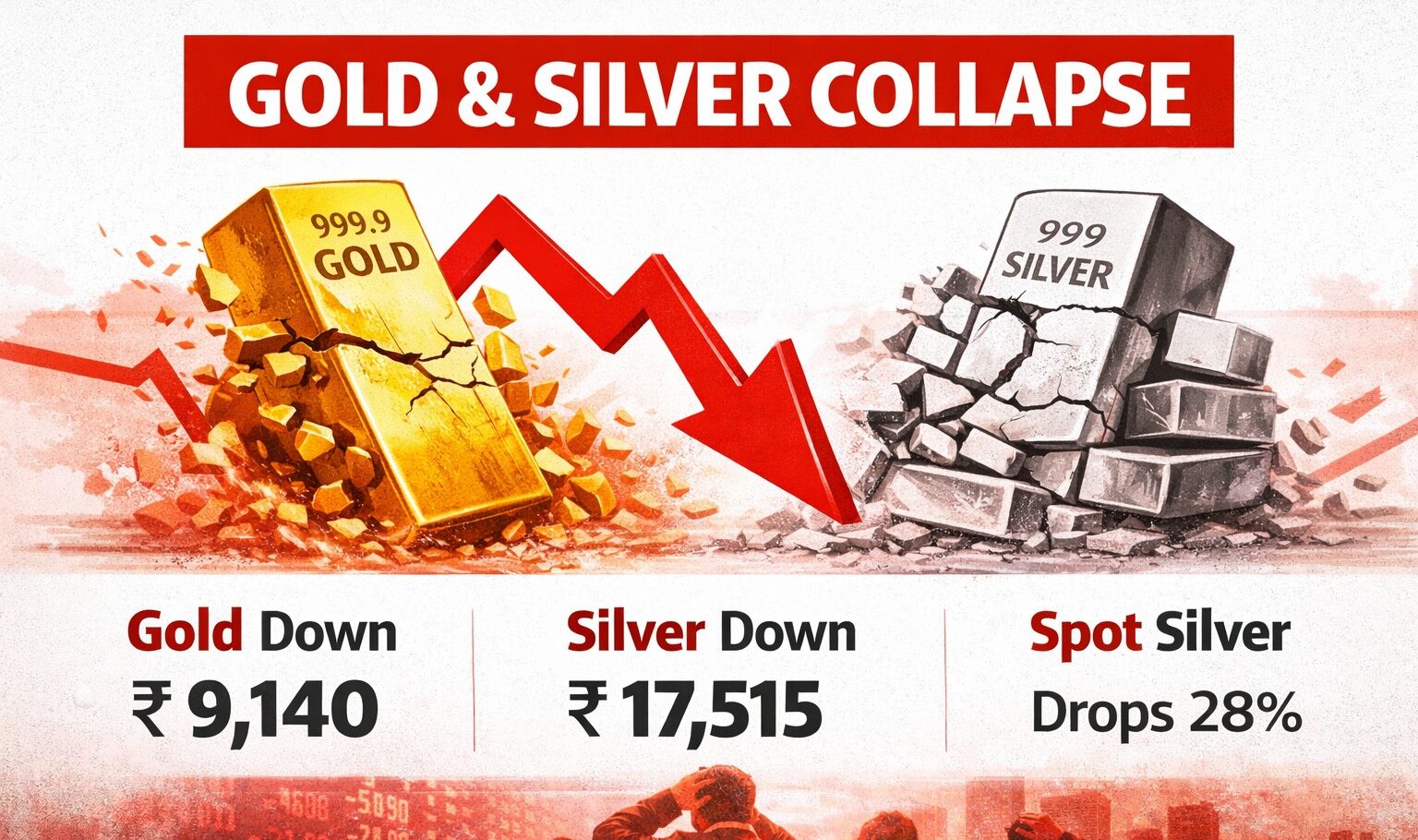
Gold and silver prices witnessed one of their sharpest declines in recent history, extending a dramatic sell-off that erased massive value across global and domestic markets. On February 1, MCX gold April futures fell by Rs 9,140, or 6 percent, to Rs 1,43,205 per 10 grams. Silver March futures also plunged sharply, dropping Rs 17,515, or 6 percent, to Rs 2,74,410 per kilogram.
The losses capped a brutal three-session slide. From recent lifetime highs earlier in the week, gold has fallen by nearly Rs 50,000 per 10 grams, while silver has declined by Rs 1,45,638 per kilogram. The speed and scale of the correction marked a rare and severe reversal in the precious metals market.
Global Silver Prices See Record One-Day Drop
The sell-off was equally intense in international markets. Spot silver prices crashed 28 percent in a single session, falling to $85 per troy ounce from a recent high of $121.60. This marked the steepest recorded one-day decline for silver, underscoring the extreme volatility gripping the metals complex. The sharp fall followed aggressive profit-booking after prices surged to record levels in a short span of time.
Gold prices overseas also faced heavy pressure as investors exited safe-haven assets amid shifting global monetary expectations and a strengthening US dollar.
Also Read: Cigarettes and Pan Masala Prices Rise From February 1: What Has Changed
Metal Stocks Reel Under Heavy Selling Pressure
The collapse in bullion prices spilled over into Indian equity markets, hitting metal stocks hard. Shares of Hindustan Copper plunged as much as 19 percent, while Hindustan Zinc declined 12.5 percent. Vedanta and Hindalco both fell around 10 percent during the session.
The broader Nifty Metal index dropped more than 5 percent, reflecting widespread selling across the sector. Hindustan Zinc, one of the world’s leading silver producers, lost approximately Rs 63,000 crore in market capitalisation over just two trading days. Vedanta saw its market value shrink by about Rs 54,000 crore during the same period, highlighting the scale of investor losses.
Shift in US Monetary Outlook Hits Commodities
Investor sentiment weakened significantly following developments in the United States. US President Donald Trump nominated former Federal Reserve Governor Kevin Warsh as the next chair of the Federal Reserve. Warsh is widely known for his hawkish views on inflation and interest rates.
The nomination led markets to reassess expectations around future rate cuts. Concerns that monetary policy could remain tighter for longer strengthened the US dollar, which typically weighs on commodity prices. As a result, precious and base metals faced intensified selling as traders moved to lock in profits accumulated during the recent rally.
Margin Requirement Hikes Add to Volatility
Market volatility increased further after major exchanges raised margin requirements in response to extreme price swings. CME Group announced sharp hikes in margins for Comex gold and silver futures, increasing requirements by up to 33 percent for gold and 36 percent for silver.
In India, MCX raised bullion margins to 20 percent for gold and 25 percent for silver. Higher margins require traders to commit more capital to maintain positions, often forcing leveraged participants to reduce exposure. These changes amplified selling pressure, accelerating the downward move in prices.
Budget 2026 Uncertainty Weighs on Domestic Sentiment
Domestic factors also added to market caution. With the Union Budget 2026 scheduled for release, traders remained wary amid uncertainty over potential changes to import duties on gold and silver. Any adjustment to duties can directly influence domestic prices, demand, and trading sentiment.
This fiscal uncertainty, combined with global monetary shifts and margin hikes, kept both domestic and international investors cautious. The convergence of these factors created a highly volatile environment, leading to one of the most dramatic corrections the bullion market has seen in recent times.
As markets continue to digest these developments, gold and silver remain under pressure, with traders closely watching global policy signals and domestic fiscal announcements for further direction.