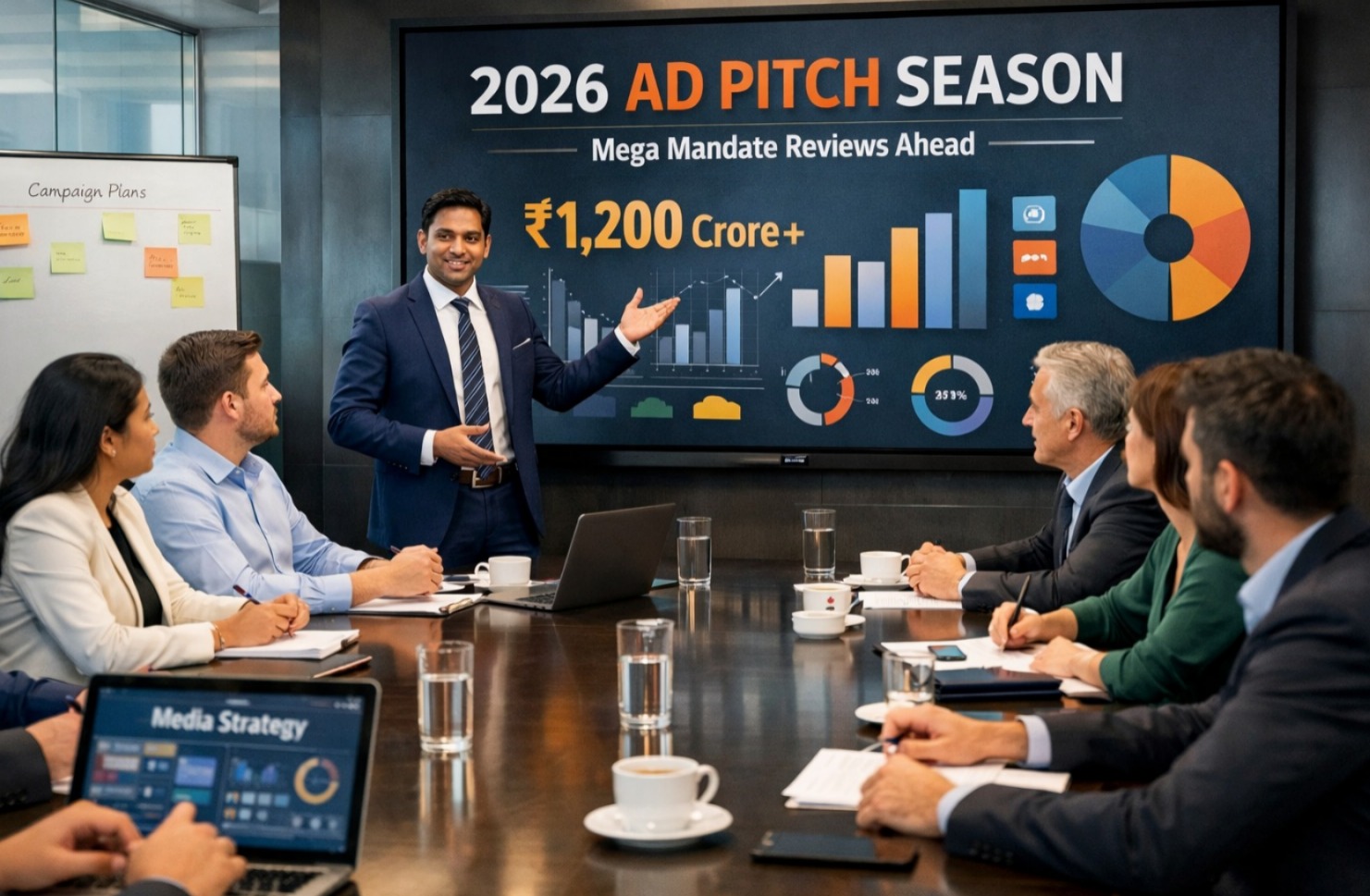
The Indian advertisement and media services industry is at a critical juncture, with the 2026 ad pitch season getting more and more momentum. Consolidation of the media mandates worth about ₹1,200 crore and above is awaiting review; this is an indication of more competition between agencies. This rivalry is driven by the changing demands of the clients, the acceleration of digitalization, and the increasing pressure to show the business results.
The executives of the industry argue that the present wave of reviews signifies a radical re-evaluation of the way advertisers think about media investments, buying and measuring them. After a period of upheaval (which can be explained by changing consumer behavior, the rise of online platforms, and regulatory changes to certain industries like the gaming one), brands are now consolidating their media strategies to match long-term expansion goals.
Account reviews are a result of consolidation and digital transformation.
One of the key factors that have driven these expansive pitches is the merging of mandates. Many of the big advertisers are shifting away from fragmented setups with multiple agencies in preference of a single lead agency or network. This model is viewed as a system to become more efficient, consolidate data and knowledge, and develop a better view of accountability towards performance. The advertisers also believe that consolidated mandates give them more bargaining power when the marketing budgets are under examination.
The urgency of the review cycle has been escalated by the digital transformation. OTT services, short-form video, e-commerce advertising, and programmatic purchases continue to experience more rapid growth, but traditional television and print are dwelling on more gradual growth percentages. The agencies are therefore judged in respect to their size and purchasing power as well as their ability to create sophisticated, multi-platform campaigns that are able to utilize data, automate, and employ superior analytics.
Agency Margins under Stress with High Client Expectations.
The top marketing leaders claim that the center of the 2026 pitch season has been firmly changed to outcomes. Brands no longer focus on reach or cost efficiencies but require evidence of sales impact, ROI, and brand safety. This pressure drives the agencies to meet the new expectations to incorporate first-party data, apply artificial intelligence in planning and optimization, and present real-time reporting and transparency.
The global and local agency networks are competing fiercely to win these mandates. Big agencies like GroupM, Publicis Groupe, Dentsu, IPG Mediabrands, and Havas Media are generally viewed as leaders because of their size, their investment in technology, and their ability to provide services in an integrated manner. A mandate of that scale will be able to significantly change the billing base, market share, and attraction of older talent of an agency.
The pressure on margins is also downward, caused by the competitive intensity. The use of aggressive pricing has become the order of the day in pitching, despite the clients expecting agencies to engage in heavy investment in technology, data infrastructure, and talented specialization. Privately, agency leaders admit that a balance between maintaining profitability and these demands is an uphill task, especially in a market where growth in fees has not been as high as the growth in services.
Mobility of Talent and Industry Rearrangement is to be expected.
The consequences of the pitch season are likely to bounce back in the industry. There will be an increased pace of talent mobility, particularly in areas like performance marketing, data analytics, and content strategy. Those agencies that obtain significant mandates can increase their staff, and agencies that are losing major accounts might be forced to change operations. In the case of mid-sized agencies, the climate is particularly mean, with the draining expenses of competing in mega pitches and the increasing divide between the global networks and the smaller agencies.
These changes highlight a larger change in the structure of the advertising ecosystem in India. With marketers becoming more focused on accountability, speed, and measurable impact, agencies are being asked to become more strategic partners than they were as media buyers. The results of the 2026 pitch season will not just decide which of the greatest advertising budgets in the country gets allocated; the results will also influence the agency-client relationships and competition in the coming years.
Also Read: Airbus CEO Warns of New Risks After Significant Trade Damage