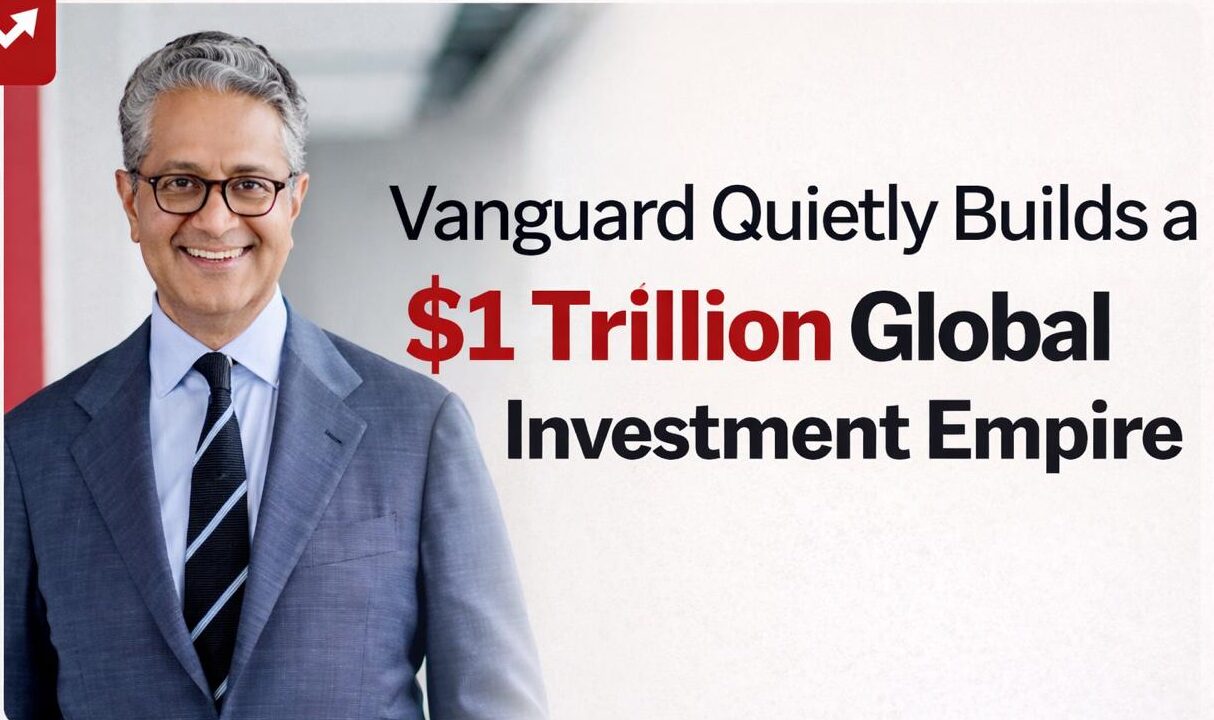
Vanguard has hit a major milestone in its nearly 50-year history by managing more than one trillion dollars in assets outside the United States for the first time. This achievement shows a shift in global investing, as more people choose low-cost, long-term strategies instead of expensive active management. It also marks a new chapter for Vanguard, with future growth now coming from outside the U.S.
A Quiet Milestone That Changed the Global Asset Map
Unlike splashy IPOs or headline-grabbing acquisitions, Vanguard’s one trillion dollar international milestone arrived without fanfare. By late 2025, assets managed outside the United States quietly crossed the mark, driven by steady inflows rather than a single surge of capital. Yet the implications are significant. Vanguard is now managing a sum larger than the GDP of many advanced economies outside its home market, reshaping how global capital is allocated.This milestone puts Vanguard in a select group of asset managers with a global reach, just as investors are rethinking where they invest and how much risk they take on.
How a U.S.-Focused Giant Slowly Learned to Think Global
Vanguard was founded in 1975 by John C. Bogle, who believed that investors deserved low-cost access to diversified markets. For decades, that philosophy was applied primarily within the United States. International growth existed, but it was secondary and cautious. As recently as the early 2010s, Vanguard’s assets outside the U.S. remained well below $500 billion.
The change started slowly as regulators around the world called for clearer fees and investors started caring more about costs. Vanguard built trust outside the U.S. by offering more index funds and ETFs designed for different regions. This early work helped Vanguard grow faster later on.
The CEO Who Turned Caution Into Worldwide Scale
Tim Buckley became Vanguard’s CEO in January 2018–2024 (more than 6 years), taking charge of a company strong in the U.S. but with room to grow internationally. He led Vanguard to focus more on Europe, Asia-Pacific, and big clients looking for steady, long-term investments.
Instead of growing too quickly, Buckley focused on steady growth and building strong operations. Vanguard opened new regional offices, grew its compliance teams, and offered products tailored to local markets. This careful approach was important as global markets became more unpredictable in the early 2020s.
The current CEO of The Vanguard Group is Salim Ramji, who took over in July 2024, succeeding Tim Buckley. Ramji, previously the Global Head of iShares & Index Investing at BlackRock, leads Vanguard’s mission to provide low-cost investment options and serves the company’s investor-owned structure
Why Cost, Trust, and Patience Won the World’s Money
Vanguard’s growth outside the U.S. reflects a bigger shift in how people invest. In Europe and Asia, new rules and market surprises made investors pay more attention to fees and steady long-term results. Vanguard’s fees stayed among the lowest in the business, often much lower than those of active managers.
At the same time, higher interest rates, changing currencies, and global tensions pushed investors to spread their money around the world. Vanguard’s wide range of stock and bond products made investing simple for everyone, from pension funds to individual investors. These steady inflows helped Vanguard grow over time.
Britain Becomes the First Big Portfolio Reset
In January 2026, Vanguard changed its UK LifeStrategy funds by lowering the amount invested in British stocks and bonds across funds worth tens of billions of dollars. This move was about adjusting to new economic outlooks and wanting more global variety, not about losing faith in the UK market.
The move signaled Vanguard’s willingness to rethink long-standing allocation models and adapt to shifting global realities. For investors, it reinforced the firm’s emphasis on long-term positioning over home-market bias.
When Pension Funds Start Rethinking America
According to reports, major investors in Northern Europe, such as pension funds and insurers, are becoming more cautious about their U.S. investments due to rising geopolitical risks, prompting a broader reassessment of how much they hold in American assets.
The U.S. is still a big part of global portfolios, but more money is now going into global strategies. By early 2026, Vanguard managed over eight trillion dollars worldwide, with more than one trillion outside the U.S. The company has become a top choice for these new investments.
Running a Trillion Dollars Across Borders and Rulebooks
Handling more than one trillion dollars outside the U.S. is complex. Vanguard works in many countries, each with its own rules and requirements. In the last five years, the company has invested a lot in local infrastructure to keep up.
This operational backbone has allowed Vanguard to maintain consistency in investor protections while tailoring products to local markets. As regulatory scrutiny increases globally, this capability has become a competitive advantage rather than a cost burden.
The Moment Vanguard Stopped Expanding and Started Dominating
Reaching one trillion dollars in assets outside the U.S. is more than just growth for Vanguard. It marks a change in the company’s identity. Vanguard is now a global player whose size helps shape the market itself. As investors keep looking for transparency, variety, and low costs, Vanguard’s approach seems well-suited for the future of asset management. This milestone shows that Vanguard’s next chapter will be about shaping how people invest, not just growing bigger.
Also Read: Deep33: Betting on the Hidden Engines of the AI Race