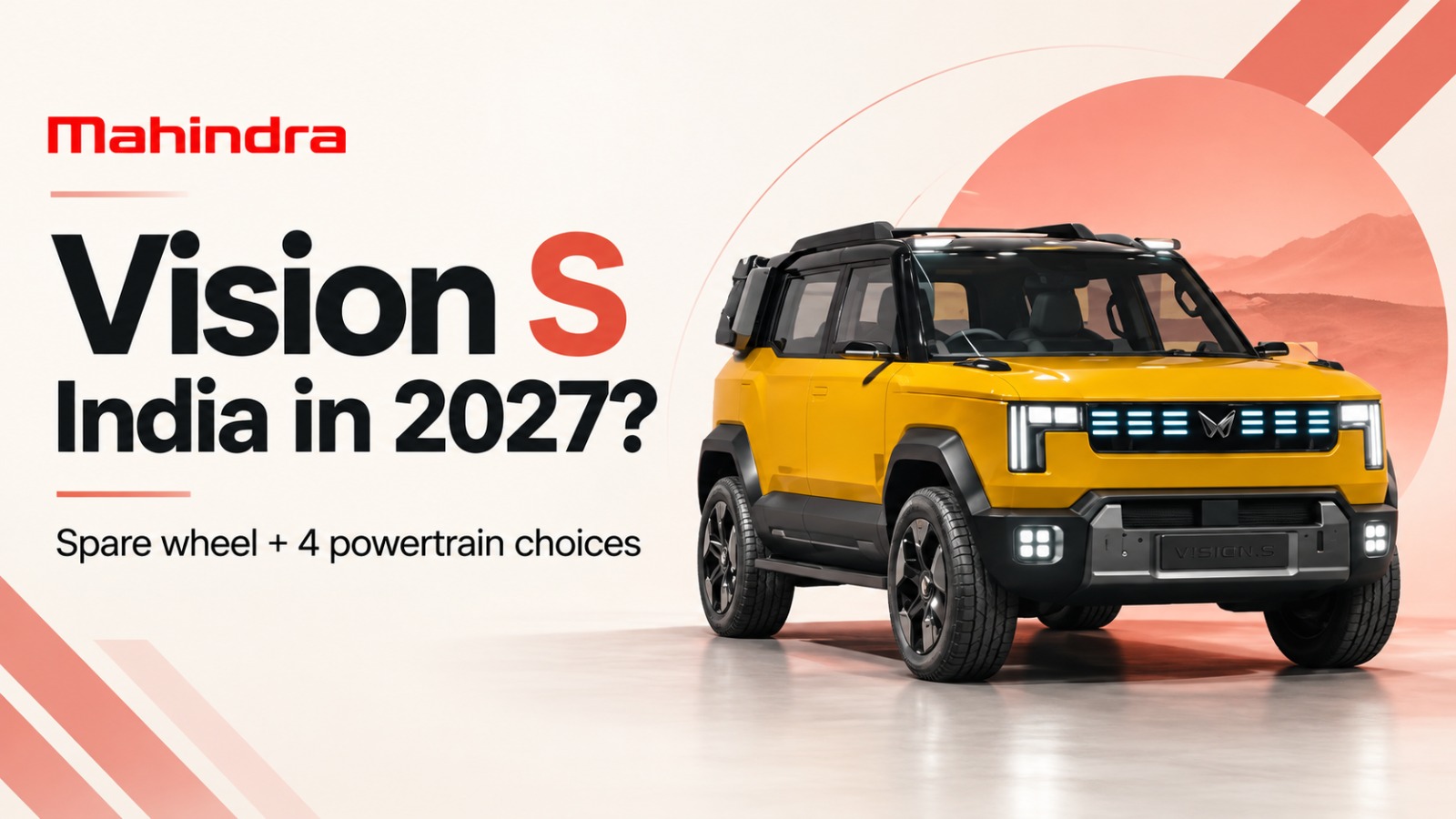
Mahindra is preparing to take its Vision S SUV from concept to production, with the model scheduled to enter production in 2027 as the company’s first SUV based on its NU_IQ platform. The sub-4m SUV is expected to offer a wide choice of powertrains, including petrol, diesel, hybrid and electric options.
The Vision S was unveiled on Independence Day in 2025 alongside three other Vision concepts. Since then, the production-focused version has retained several of the concept’s most distinctive design elements, including its upright stance, squared-off body and tailgate-mounted spare wheel.
From concept to a production SUV
The Vision S is designed around a 2,665mm wheelbase while keeping its overall length below four metres. Its boxy proportions and high bonnet give it a distinctly rugged appearance, moving away from the softer styling commonly associated with compact urban SUVs.
Production prototypes continue to carry several of the concept’s key visual cues. The upright body, squared-off panels and rear-mounted spare wheel remain central to the design. Mahindra is also expected to retain some of the concept’s premium cabin elements as the SUV moves closer to its showroom debut.
One unusual detail visible on the prototype is the AdBlue filler cap. Its presence points towards a diesel-powered version, adding weight to Mahindra’s plan to offer more than one type of internal-combustion engine alongside electrified options.
A platform built for four powertrain choices
The Vision S will use Mahindra’s NU_IQ modular monocoque platform, which is designed to accommodate petrol, diesel, hybrid and electric powertrains.
The platform also supports both front-wheel-drive and all-wheel-drive configurations. This flexibility gives Mahindra room to adapt the SUV for different powertrain requirements and markets without having to develop an entirely separate vehicle architecture for every version.
The final rollout could therefore happen in stages. Mahindra may introduce internal-combustion versions first before expanding the range with hybrid and electric variants.
What could make the Vision S stand out
The Vision S is expected to combine its rugged exterior with a more premium equipment list. The cabin is expected to feature dual digital displays, while a panoramic sunroof could add to the upmarket positioning.
Other expected equipment includes wireless smartphone integration, ventilated seats and Level 2 advanced driver assistance systems.
The combination of a compact footprint and an upright, lifestyle-focused design could give the Vision S a different identity within Mahindra’s SUV range.
The SUV is positioned above the XUV 3XO and below the Scorpio, creating space for a model aimed at buyers who want a city-friendly vehicle without giving up the visual character of a larger, more rugged SUV.
Petrol, diesel, hybrid or EV
Powertrain choice could become one of the Vision S’s biggest talking points.
The petrol and diesel versions would give buyers familiar internal-combustion options, while the hybrid and EV versions could appeal to customers looking for electrified alternatives. The expected EV configuration is also linked with the possibility of an all-wheel-drive setup.
The approach reflects the flexibility built into the NU_IQ platform. Instead of limiting the SUV to a single propulsion technology, Mahindra can potentially use the same basic architecture across several powertrain types.
That could also allow the company to adjust the mix of versions according to market demand and changing emission requirements.
Where the Vision S fits in the compact SUV market
The Vision S is expected to compete in a crowded compact SUV segment, with the Tata Nexon, Hyundai Venue, Kia Sonet and Maruti Brezza among the models it could face.
Pricing has been estimated in the ₹9 lakh to ₹20 lakh range, depending on the variant and powertrain. These figures remain estimates rather than confirmed production pricing.
For Mahindra, the challenge will be balancing the SUV’s rugged styling with the premium equipment expected inside the cabin while maintaining the advantages of a sub-4m footprint.
The road to 2027
The Vision S still has time before its planned 2027 production entry, leaving room for Mahindra to finalise its powertrain and equipment strategy.
A broad launch covering petrol, diesel, hybrid and electric versions could give buyers considerable choice from the beginning. A phased approach, beginning with internal-combustion models and bringing electrified versions later, would offer a different route.
Either way, the Vision S represents an important test of Mahindra’s NU_IQ strategy. Its defining feature may ultimately be less about one particular engine or technology and more about how effectively the company can use a single platform to offer a rugged compact SUV across multiple powertrain choices.
Also Read: Former Apple Engineers Build Lyte to Give Robots Real-Time 4D Perception