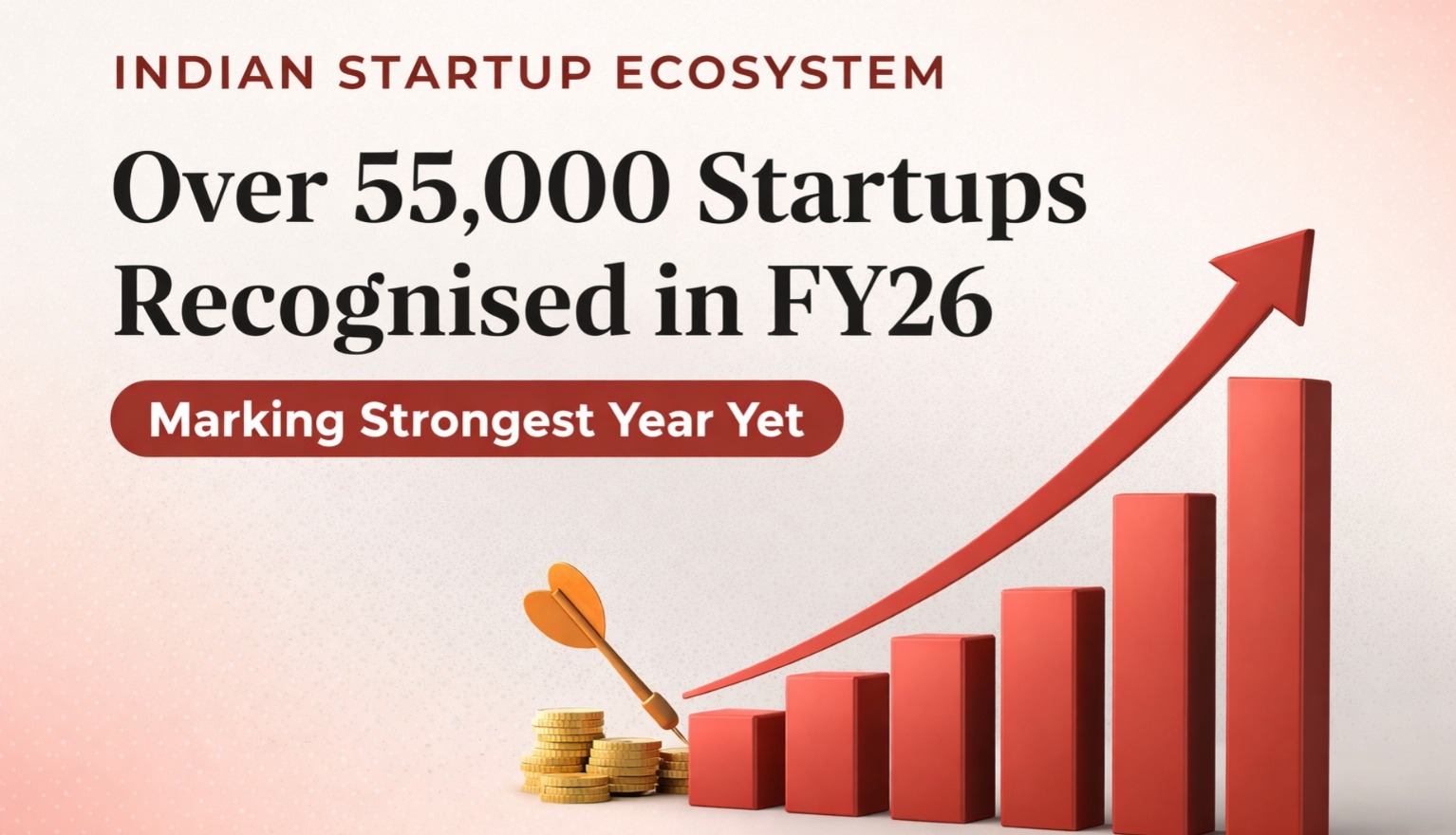
Indian startups have clocked their most significant annual expansion yet, with the government recognising over 55,000 new startups in the financial year 2025-26. It is the highest number recorded in a single year since the launch of the Startup India initiative in January 2016.
With this addition, the total number of recognised startups in the country has crossed 2.23 lakh as of March 31, 2026. These ventures have collectively generated more than 23.36 lakh direct jobs, reinforcing the sector’s growing role not just in innovation, but in employment generation.
The pace of growth this year stands out. Startup recognitions rose by 51.6% compared to the previous financial year, while direct job creation increased by 36.1%. At a time when global startup ecosystems have been navigating funding slowdowns and tighter capital conditions, India’s numbers suggest a system that continues to expand with momentum.
During the last ten years, the Indian startup environment has grown from an artificial and top-down policy-led approach into a much more practical, grassroots, and widespread entrepreneurial activity. Where startups used to be encouraged under pressure by the government, they are now increasingly being driven by entrepreneurs who establish their businesses under an established system and structure.
Among other aspects, employment seems to be the most practical outcome of such development. Almost half a million jobs have been created just within the current financial year of 2026, indicating that startups have become an important part of India’s economy as a whole.
Geographically, the ecosystem is becoming more distributed. Maharashtra continues to lead in both the number of recognised startups and total direct jobs generated, with Karnataka following closely. Uttar Pradesh has emerged as a key contributor in terms of startup count, while Delhi and Gujarat rank higher in employment generation. States such as Tamil Nadu, Telangana and Haryana are also strengthening their presence, indicating that startup activity is no longer limited to a handful of metropolitan hubs.
Another notable trend is the growing participation of women in entrepreneurship. Nearly half of all recognised startups now have at least one woman director or partner, signalling a gradual but meaningful shift in the composition of India’s founder base.
It is also true that policy support remains an important factor driving this expansion. Policies such as the Fund of Funds for Startups, Startup India Seed Fund Scheme, and the Credit Guarantee Scheme have contributed towards making capital available and mitigating the risk factors involved at the initial stages. This has facilitated investments into new ventures and allowed more entrepreneurs to join the ecosystem.
However, there is also evidence of growing maturity in the world of startups. Indeed, the filing of patents among startups is on the increase, indicating their efforts to innovate. Furthermore, participation in government procurement systems is gaining ground, helping startups to transition from being in an exploratory phase to earning steady income.
Combining all the above facts, it becomes evident that the ecosystem in FY26 has not only grown in numbers but also gained depth. By crossing the figure of two lakhs in recognising startups and by creating jobs worth millions, FY26 shows that India’s entrepreneurial journey has entered a new era that is more sustainable and stable.
While moving forward, this ecosystem will certainly witness a shift towards stability, proper governance, and continuous value generation, which will form the basis of its future. However, at present, what can be said is that FY26 has been a significant year for India’s entrepreneurial ecosystem.
Also Read: Who Owns Your Team Now? IPL’s Latest Ownership Breakdown