YES Bank delivered a strong jump for the March quarter, reporting a sharp rise in profit, but the optimism around the stock is being tempered by concerns over how durable that performance really is.
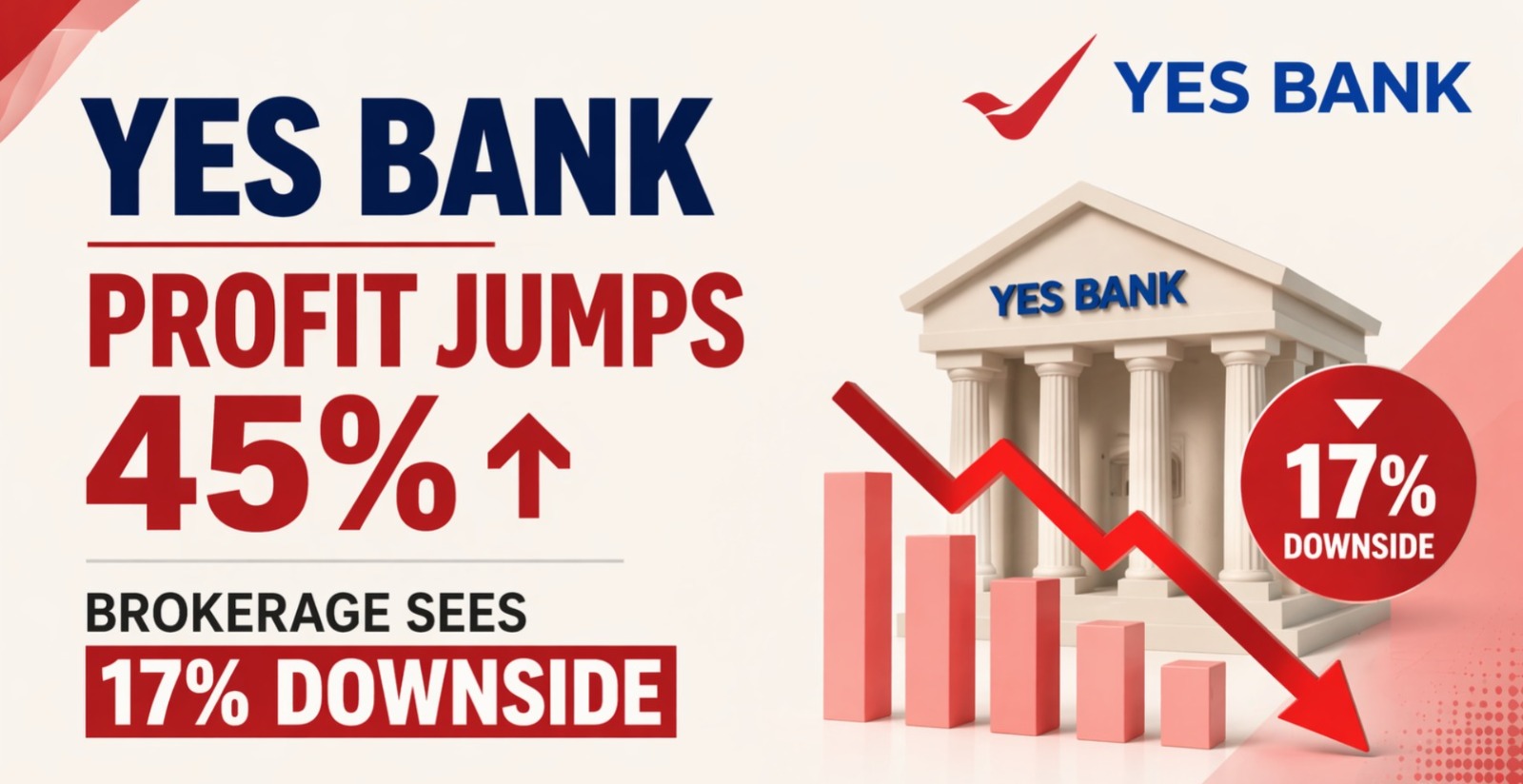
The private lender posted a 44.7 per cent year-on-year jump in standalone net profit for the fourth quarter at Rs 1,068.42 crore, up from Rs 738.12 crore in the same period a year earlier. Net interest income also rose 16 per cent to Rs 2,637.7 crore from Rs 2,276.36 crore in the year-ago quarter, pointing to a quarter that, at least on the surface, looked solid for the bank
Yet even as the earnings print appeared strong, brokerage firm JM Financial retained a cautious stance on the stock and reiterated its “sell” recommendation. The brokerage assigned a target price of Rs 17, implying a potential downside of 17 per cent, and argued that the current market price may be reflecting a level of structural profitability that the bank has not fully established on its core business alone.
According to JM Financial, a meaningful part of YES Bank’s recent earnings support has come from recoveries linked to Security Receipts, or SRs. These recoveries, the brokerage said, are finite in nature. With that pool nearing exhaustion, the question is whether the bank can sustain close to 1 per cent return on assets without that recovery-led boost. JM Financial said this remains uncertain, especially when core operating performance is still seen as weak.
The brokerage’s latest target is also lower than its earlier Rs 19 target issued in January, signalling that its concerns have not eased despite the latest quarterly performance.
To be sure, the quarter was not without operational positives. Loan growth improved to 11.1 per cent, while net interest margin rose 5 basis points sequentially. Management has guided for double-digit loan growth in FY27, in the 13–15 per cent range, with retail book growth expected at 10–11 per cent and corporate growth at 20 per cent.
The bank has also set a net interest margin target of 3–3.5 per cent over the next two to three years, along with an incremental improvement of 20–25 basis points in core return on assets in FY27.
The bank’s management has guided for lower SR recoveries of Rs 800–1,000 crore in FY27. That is significantly below the Rs 1,560 crore in SR recoveries recorded in FY26, and the brokerage believes this tapering could weigh on future earnings support and credit costs. In its view, as this cushion fades, the sustainability of profitability will come under greater scrutiny
The pressure points are already visible in parts of the asset quality data. Fresh slippages rose to Rs 1,100 crore in Q4 from Rs 1,050 crore in Q3. Net slippages, however, fell sharply to 0.32 per cent, helped by elevated recoveries. Provision coverage ratio stood at 81.9 per cent. Credit cost increased by 25 basis points quarter-on-quarter to 0.28 per cent, and JM Financial said that excluding SR recoveries, the figure would be 0.95 percent.
That distinction matters because it suggests the quarter’s cleaner appearance may owe much to recovery support rather than a fully stable underlying earnings engine.
For investors, that creates a familiar tension. The market often rewards visible improvement quickly. Brokerages, on the other hand, tend to look one step ahead and ask whether that improvement can hold once temporary supports begin to fade. JM Financial’s view is that the stock is already pricing in a stronger long-term profitability profile than what has yet been proven.
That does not erase the significance of YES Bank’s Q4 performance. A near 45 per cent jump in quarterly profit is notable by any standard. But the latest brokerage commentary suggests that the bigger debate is no longer about whether the bank has improved from its troubled past. It is about whether the current phase of profitability is sturdy enough to stand without help from recoveries that are expected to moderate.
And for now, that question appears to be keeping a section of the market cautious.
Also Read: Who Owns Your Team Now? IPL’s Latest Ownership Breakdown