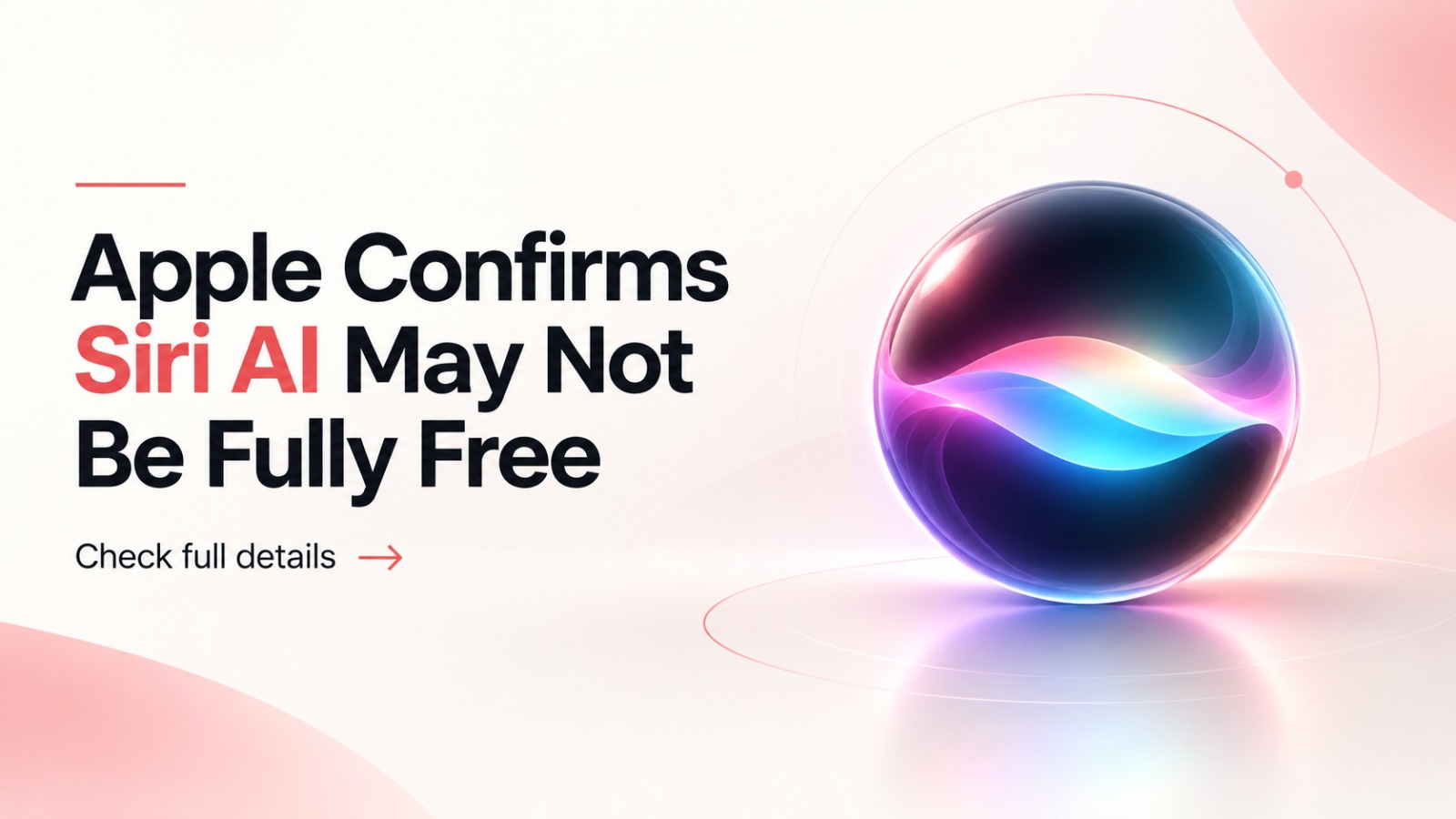
Apple’s upcoming AI-powered Siri will not offer unlimited access forever. The company has confirmed that some Apple Intelligence features that rely on server-side models will come with daily usage limits, meaning users could temporarily lose access after crossing a certain threshold.
The disclosure gives a clearer picture of how Apple plans to manage its more advanced AI capabilities. While users will initially be able to access Siri AI without paying, Apple says usage restrictions can be applied when demand or individual usage reaches certain levels.
For users waiting for the long-promised Siri upgrade, the important detail is that the limit may not simply depend on the number of requests. Apple says factors such as the type of feature, the complexity of a request and overall demand on its systems could influence access.
Siri AI will come with a usage ceiling
Apple has been preparing a much broader version of Siri through its Apple Intelligence initiative. The upgraded assistant is expected to bring capabilities including personal context, on-screen awareness, visual intelligence, systemwide actions inside apps and a dedicated Siri app.
Apple has also said that users will receive enhanced access to capabilities dependent on server-side models with its 2027 software releases.
However, details about usage limits appeared in the fine print of Apple’s support documentation and release notes following the company’s Surprise and Shine event.
The company has not yet disclosed the exact number of requests users will receive each day. It has also not explained whether the limit will reset at a specific fixed time or be determined differently depending on individual usage.
What happens when users hit the limit?
Apple says users will initially be able to use the affected Siri AI features without paying. However, that access can be temporarily paused once a user reaches the applicable threshold.
This means hitting the limit would not permanently remove the feature. Instead, access to the particular capability would be restricted for a period before becoming available again.
Apple says these limits are being introduced to help maintain a reliable experience for everyone using the system.
The company has left the exact thresholds open for now. It also indicates that the limits can change depending on factors such as the feature being used, the complexity of the request and the level of demand on Apple’s systems.
That makes the system different from a simple daily request counter. A user’s access could potentially be influenced not only by how frequently they use an AI feature but also by how demanding those requests are.
Apple may offer more access for a fee
Apple has confirmed that users will eventually have the option to receive increased access to these features by paying for it. However, the company has not announced pricing or confirmed whether a separate Siri AI subscription will be introduced.
There is another possibility for users already paying for Apple’s cloud services.
At WWDC, Apple said higher iCloud+ tiers would include expanded access to certain limited Apple Intelligence features. This could provide existing iCloud+ subscribers with a way to receive greater access without necessarily requiring a separate Siri subscription.
For now, Apple has not provided enough information to determine exactly how paid access will work.
When is the new Siri AI arriving?
The new Siri AI capabilities and related Apple Intelligence features are scheduled to arrive with iOS 27. The stable version of the software is scheduled to land on September 14.
The new iPhone and Apple Watch models are also expected to go on sale on September 18.
The arrival of the upgraded Siri will mark a significant expansion of Apple’s AI ambitions, but the company’s latest disclosure also makes one thing clear: access to its most demanding server-based AI features will not necessarily be unlimited.
For now, the biggest unanswered questions are how many requests users will receive, how often those limits will reset and how much Apple will charge customers who want greater access.
Also Read: iPhone 18 Pro Max vs Galaxy S26 Ultra: Display, Camera, Battery and Performance Compared