

Indian Gen Z grew up being told one thing clearly: study hard, work harder, and keep moving.
Now, many of them are doing something that looks surprisingly simple. They are growing tomatoes on balconies, cooking dal from scratch, journaling with pens, knitting, embroidering, visiting sabzi mandis, and calling it self-care.
And maybe they are right.
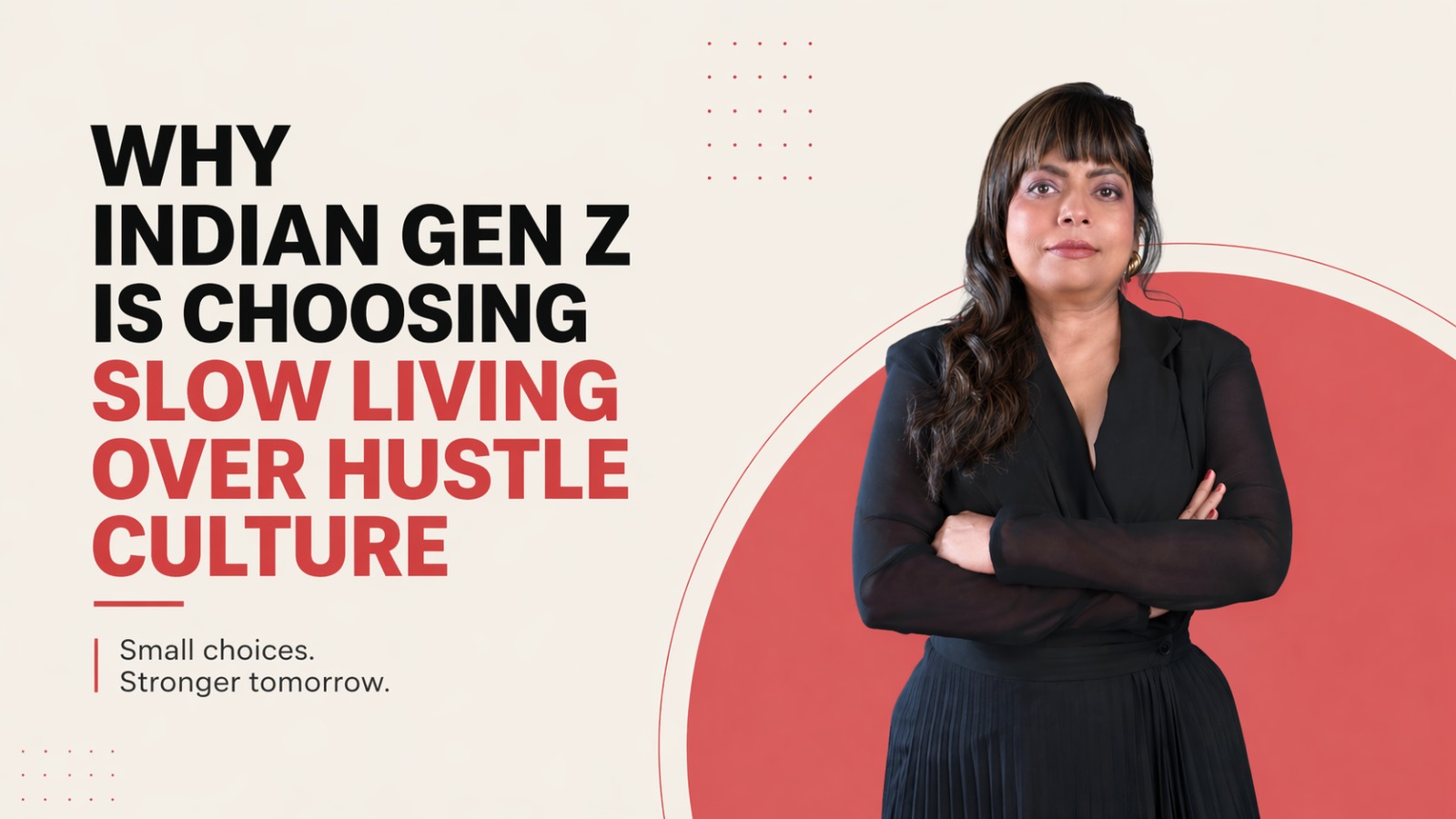
Archana Jahagirdar on Gen Z Slow Living Shift
Behind this shift is a generation carrying visible exhaustion. About 51% of Indian youth aged 18 to 24 are struggling with mental wellbeing. Nearly 60% report stress linked to education and employment. Among Gen Z employees in India, 58% have quietly checked out at work at least once.
This is the same generation that went through competitive coaching, graduated into a tough job market, moved to costly cities, and now lives inside screens. Work happens on screens. Rest happens on screens. Friendship, shopping, food, entertainment and even wellness often arrive through notifications.
So, Gen Z is searching for something offline.
Investor Archana Jahagirdar, Founder and Managing Partner at Rukam Capital, recently pointed out this quiet but visible shift in how young Indians are choosing to live. What they are reaching for, she notes, is not new. It looks a lot like home.
Terrace gardening was what grandparents did on Sunday mornings. Cooking from scratch was not a wellness ritual, it was everyday life. Stitching, knitting and growing plants were not branded hobbies. They were practical, familiar parts of Indian households.
Gen Z is rediscovering these practices with a new language. For them, slow living is not nostalgia alone. It is resistance.
Resistance to the idea that every good day must be productive. Resistance to always being online, visible and available. Resistance to an ambition culture that often leaves no space for stillness.
There is also a market hiding inside this emotional shift.
Craft products, seeds, analog stationery, slow food brands, local market platforms and physical wellness practices may all benefit from a generation tired of screen-heavy lifestyles. If Indian Gen Z is burning out from hustle culture, it may also spend seriously on anything that helps it slow down.
This is not just about growing tomatoes. It is about control, calm and connection.
For a generation that has been asked to perform constantly, making something with their hands offers a rare kind of relief. A plant on the windowsill, a notebook filled by hand, a meal cooked slowly, or a trip to the local market gives them something that content cannot.
Something real.
As Jahagirdar’s observation suggests, what looks like a lifestyle trend on the surface may actually be a deeper correction. Indian Gen Z is not rejecting ambition. It is redefining what a good life looks like.
And in that redefinition, the past is quietly becoming the future.
Also Read: Who Owns Your Team Now? IPL’s Latest Ownership Breakdown