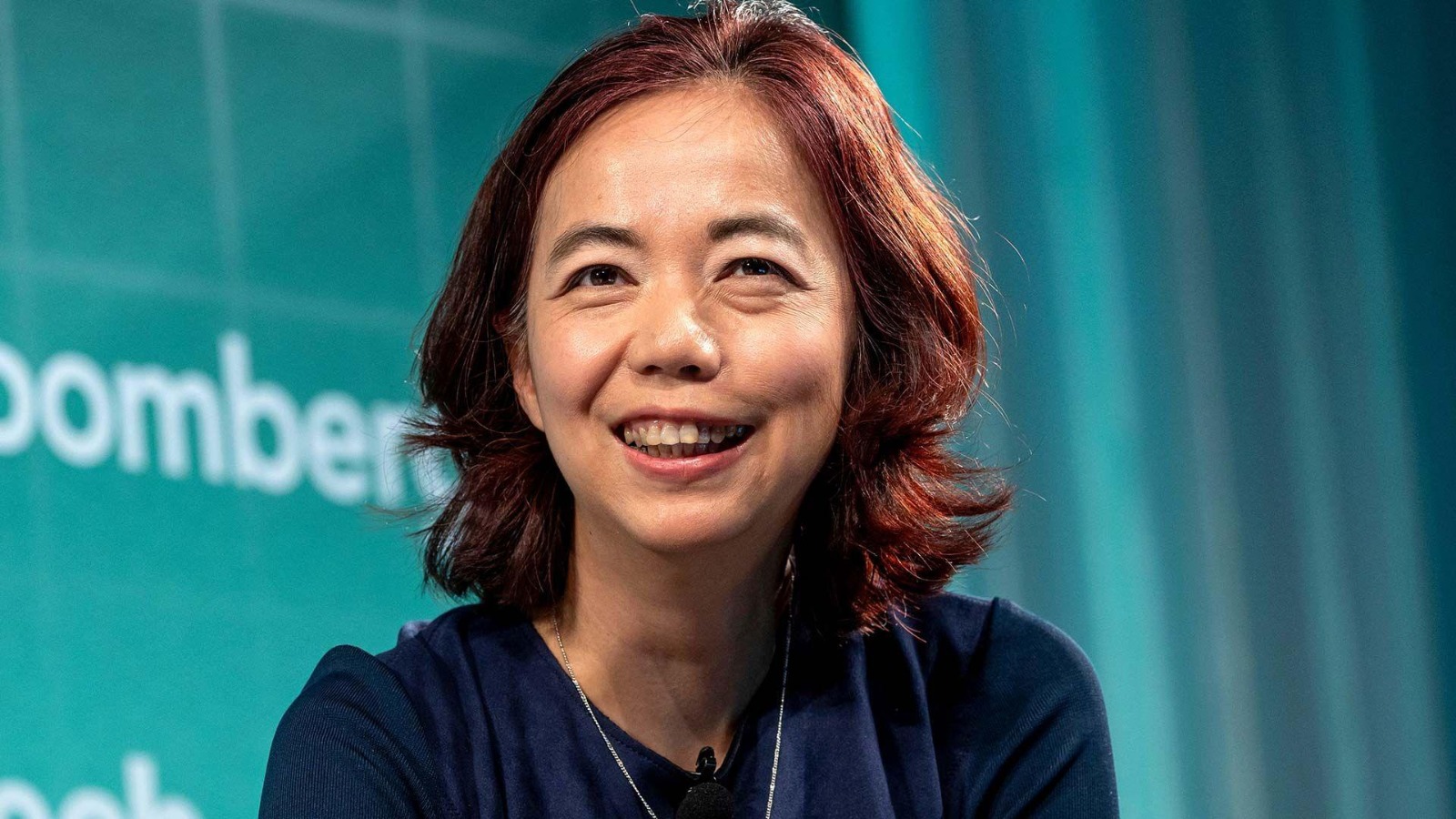
When Fei Fei Li finished class at Princeton in the late 1990s, her day was only half done. While her classmates headed to libraries and dining halls, she went back to a suburban strip mall in Parsippany, New Jersey, to answer phones, deal with inspectors, calm unhappy customers and close the books at her parents’ dry-cleaning shop.
She jokingly called herself the store’s CEO, but the title wasn’t a fantasy. As the only fluent English speaker in the family, she was the one keeping the business alive while juggling physics problem sets. Years later, that same mix of grit, systems thinking and stubborn curiosity would help her change the course of artificial intelligence.
Today, Li is better known as the “godmother of AI” – a Stanford professor whose work on ImageNet helped ignite the deep-learning revolution, and the co-founder of World Labs, a startup already valued at just over $1 billion and trying to teach machines something humans do instinctively: understand and move through the physical world.
Fei Fei Li: An immigrant teenager running the family lifeline
Li arrived in the United States at 15, moving with her parents from China to Parsippany with limited English and even fewer savings. To keep the family afloat, her parents took cashier jobs while she worked shifts in Chinese restaurants. When her mother’s health deteriorated just as Li was starting at Princeton, the family needed a more stable source of income. They decided to buy a dry-cleaning store in New Jersey.
Because Li spoke English, the responsibility of running it fell largely on her shoulders. Between lectures and lab sessions, she handled customer complaints, permits, inspections and billing. When she left for graduate school at Caltech, the work didn’t stop; she continued to manage the shop remotely well into her PhD years.
The experience, she has said, hardened her sense of resilience and gave her a ground-level understanding of how unpredictable real life is, lessons that would later inform both her science and her approach to building companies.
From big questions in physics to bigger questions about intelligence
At Princeton, Li was drawn to physics for its ambition: the idea that one could ask fundamental questions about how the universe works. Over time, her curiosity pivoted from galaxies and particles to something more intimate and slippery: intelligence itself.
What is intelligence? How does it arise in the brain? Could machines ever approximate it?
Those questions pulled her into computer vision at a time when the field was struggling. Early 2000s algorithms routinely failed on seemingly simple tasks, and many researchers suspected the models themselves were the problem. Li started looking outside computer science, borrowing ideas from psychology and linguistics about how humans build concepts and categories.
One observation stood out: people learn from an enormous amount of experience. Children don’t see ten pictures of a dog; they see hundreds, in different contexts, under different lighting, with different breeds. Yet AI systems of the time were being trained on datasets sometimes only a few hundred images deep.
The gap between human learning and machine training data became her obsession.
Betting on data when almost no one else did
Li proposed something that sounded reckless in 2007: build an image dataset huge enough to mirror the richness of everyday visual experience. Many in the field were skeptical. The frontier, they argued, lay in more sophisticated models, not in brute-force data collection.
She went ahead anyway, dragging along a team of graduate students and crowdworkers. The result was ImageNet, a sprawling collection of roughly 15 million labeled images spread across about 22,000 categories, organized using insights from how people naturally group objects and ideas.
Then she did something equally important: she turned ImageNet into a public challenge. Starting in 2010, the ImageNet Large Scale Visual Recognition Challenge became an annual competition where teams had to test their algorithms on the same massive dataset, creating a common benchmark and a kind of arms race in model performance.
In 2012, a deep neural network known as AlexNet blew past every previous result on ImageNet, convincingly beating classical approaches. The result changed AI’s trajectory. It validated deep learning, energized research into neural networks and laid intellectual groundwork for the models that now power large-scale language systems.
Because ImageNet made that moment possible, Li picked up a new moniker: the “godmother of AI” – a gender-flipped counterpart to the “godfathers” of the field.
World Labs and the push for ‘spatial intelligence’
Nearly two decades after the ImageNet bet, Li is now trying to push AI into a different frontier: the physical world.
Her new company, World Labs, focuses on what she calls “spatial intelligence” – training AI systems to perceive and interact with three-dimensional environments more like humans do, rather than just processing text or flat images. The startup has already reached a valuation slightly above $1 billion, despite being only a few months out of stealth.
Earlier this month, World Labs released its first commercial product, Marble. The tool lets users generate detailed, downloadable 3D worlds from text prompts, not just static scenes, but spaces that can be explored and manipulated. For industries ranging from gaming and film to robotics and training simulators, that kind of capability hints at cheaper world-building and more realistic virtual environments.
If Li’s bet is right, spatial intelligence could become as foundational for the next wave of AI as language models are for today’s chatbots.
The scientist now advising presidents and the UN
Li’s influence now extends far beyond research papers and product demos. She has emerged as one of the most visible voices urging governments to steer AI responsibly, particularly around safety, transparency and human-centric design.

In 2023, she joined the United Nations’ advisory board on scientific breakthroughs, giving her a formal role in shaping how global institutions think about fast-moving technologies. She has also briefed U.S. lawmakers and addressed senior political leaders, including a meeting with President Joe Biden that forms part of her public biography.
Her dual identity, immigrant entrepreneur and world-renowned scientist makes her a sought-after translator between technical communities and policymakers attempting to regulate AI without stifling its benefits.
Owning the ‘godmother’ label in a field full of ‘founding fathers’
Li has admitted she cringed when she first heard the “godmother of AI” nickname. But she has come to view it as something bigger than a personal compliment: a marker of representation in a field whose founding stories are usually told in male terms.
She has pointed out that science is full of “founding fathers” and “godfathers,” but far fewer women are described with the same kind of mythic weight. Rejecting the label entirely, she argues, would mean giving up space in the narrative at a time when more women’s voices are needed in AI, not fewer.
That stance ties back to her broader message: AI will shape the real world only if the people building it reflect that world’s diversity and complexity.
From a strip-mall shop to the front lines of the next AI wave
Li often describes science as a “nonlinear journey,” a path full of blind alleys and hard resets. That description applies just as neatly to her own life, from a teenager handling customer complaints over a dry-cleaning counter to a researcher whose dataset unlocked deep learning, and now a founder betting that AI must master space and movement, not just words.
Her story is not simply an immigrant success narrative or a tech-unicorn headline.
It is also a reminder that the breakthroughs underpinning the AI boom – ImageNet, large-scale training, spatial intelligence, grew out of a willingness to ask unfashionable questions, and to persist with them long after others have moved on.
Also Read: FinReach Secures Rs 21.9 Crore Funding Led by Colossa Ventures