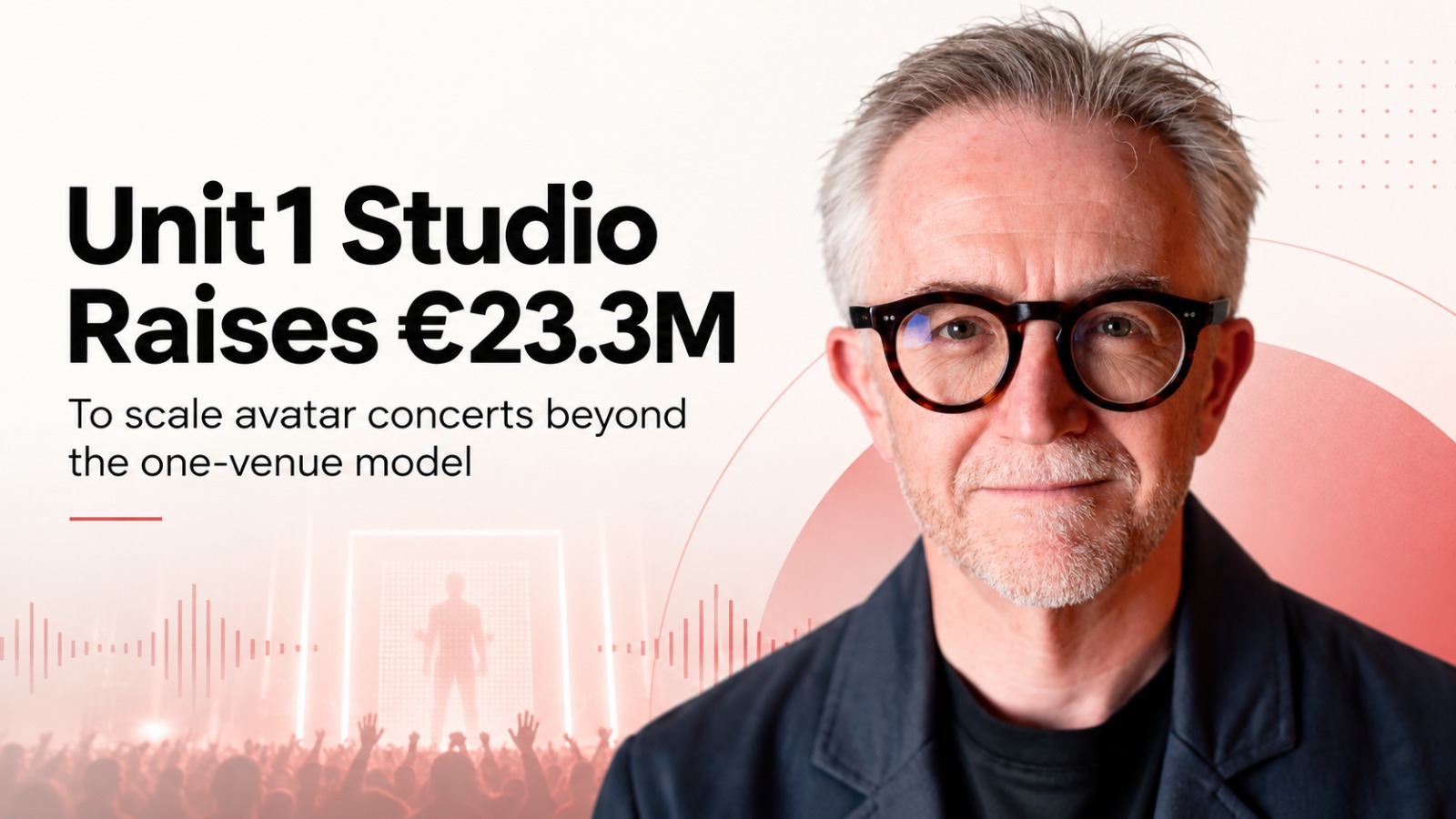
London-based Unit1 Studio has raised €23.3 million (£20 million) in fresh financing as it works to make large-scale avatar concerts easier to reproduce across multiple venues rather than keeping productions tied to a single location.
The financing combines an oversubscribed equity investment with additional production funding. Balderton Capital led the equity round, while existing investors Mercuri, Gilston Music and Paul McGuinness, the long-time manager of U2, also participated.
While the size of the round is significant for Unit1, one of the more revealing details around the announcement is what the company says it has already achieved with its production setup.
Unit1 recently moved its KT Tunstall avatar demo-concert from Brompton Technology’s testing facility in Gunnersbury, west London, to a permanent studio at Tileyard London. The company says the entire relocation was completed in just four days.
That short turnaround sits at the centre of Unit1’s wider pitch.
Unit1 wants avatar concerts to move beyond the one-venue model
Avatar concerts can involve substantial development and production work, and Unit1 is positioning its technology as a way to make those shows easier and less expensive to reproduce in different locations.
The company points to ABBA Voyage as evidence that audiences are willing to attend concerts built around digital recreations of artists. At the same time, Unit1 argues that the development and relocation costs associated with productions of that scale have limited how widely the format can be used.
Its proposed alternative is a system that allows similar productions to be replicated across several venues at the same time. Unit1 wants the model to work more like touring theatre, where a production can be adapted for different cities rather than being permanently connected to one venue.
The company also says its approach could allow shows to recover their development costs within 12 months, although that remains Unit1’s stated commercial target rather than a demonstrated result.
Balderton Capital General Partner Daniel Waterhouse described the existing economics of avatar concerts as closely tied to the one-location structure demonstrated by ABBA Voyage. He said Unit1’s technology could make the format accessible to a broader range of established artists.
Financing will support concerts already in development
Unit1 plans to use the new capital to support an expanding roster of avatar concert productions.
The company has not disclosed the artists involved in those projects. Instead, it says individual announcements will be made when tickets for the shows go on sale.
That leaves the next wave of Unit1 productions under wraps for now, but the funding gives the company additional resources to move those projects forward.
Founder and CEO Barney Wragg said the company’s goal is to strengthen the connection between artists and audiences regardless of time or geography. He argues that reducing the cost of developing and relocating avatar productions could make the format commercially viable in more markets.
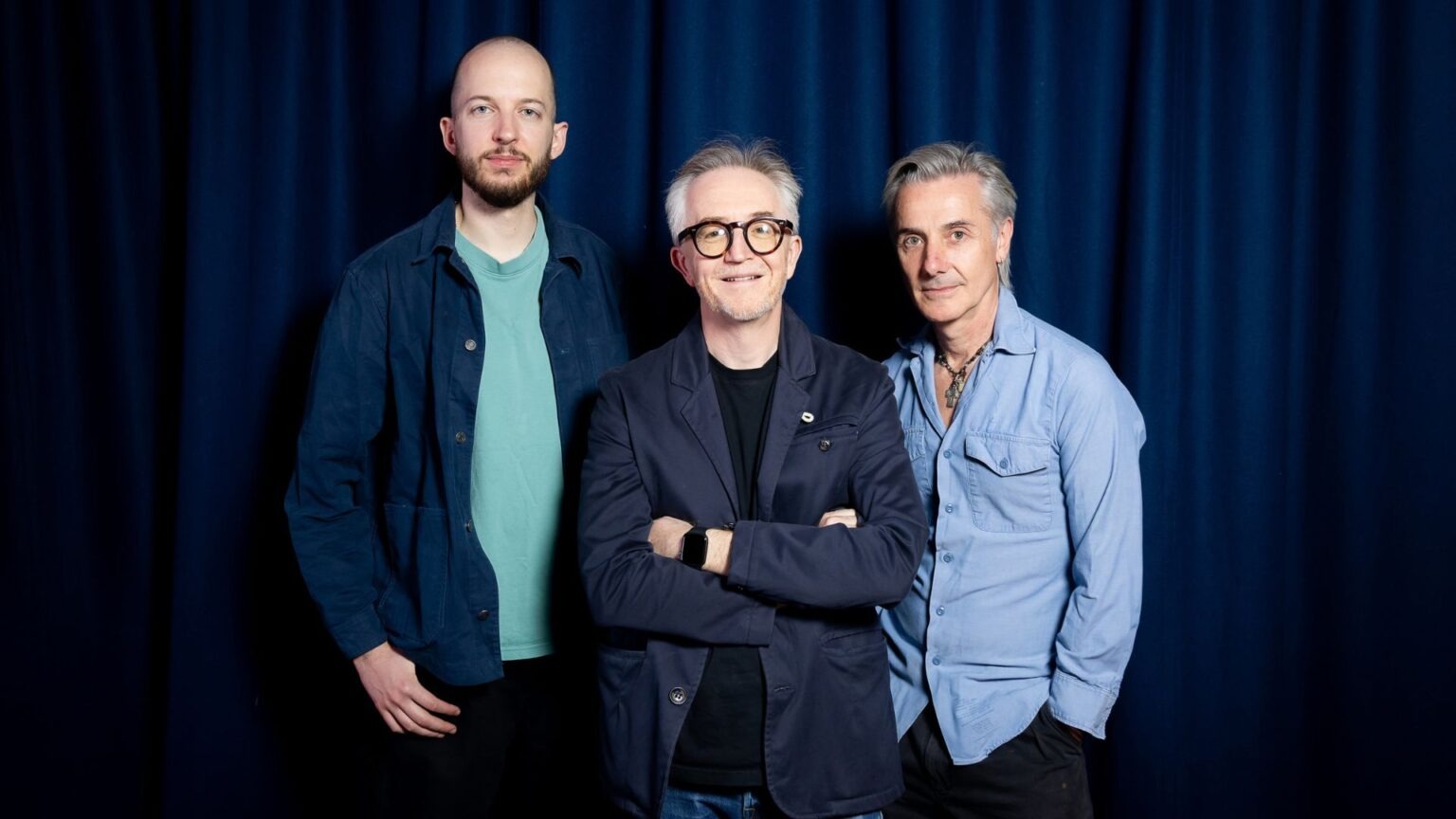
A team spanning music, theatre, visual effects and gaming
Unit1 is led by Wragg, whose previous roles include work with Andrew Lloyd Webber’s Really Useful Group, now LW Entertainment, as well as AEG, EMI and Universal Music Group.
He is joined by Creative Director Jonathan Butterell, known for Everybody’s Talking About Jamie, and Technical Director Pavle Mihajlovic, a co-founder of video game studios Electric Saint and Flavourworks.
The company has also brought in hyper-real avatar specialists Greg Meeres Young, whose credits include work on Planet of the Apes and Lord of the Rings, and Sefki Ibrahim, who worked on ABBA Voyage.
Former Universal Music UK and IFPI Chairman and CEO John Kennedy has joined Unit1’s board as a non-executive director.
That combination of music, live entertainment, visual effects and interactive technology reflects the different disciplines required to produce a convincing avatar concert.
The four-day relocation could be the more important test
The €23.3 million financing gives Unit1 the capital to expand, but the company’s four-day relocation of the KT Tunstall demonstration show offers a more concrete look at the problem it is trying to solve.
If Unit1 can repeatedly move and replicate full productions without the cost and complexity traditionally associated with avatar concerts, its model could support shows that operate in more than one market rather than relying on a single permanent venue.
For now, that broader strategy is still being built out. Unit1 has not named its upcoming artists or disclosed the locations of future productions.
The direction is clear: use new financing, a larger creative and technical team, and a more portable production system to turn avatar concerts from isolated large-scale projects into shows designed to travel and replicate.
Also Read: Samara Capital Invests Rs 1,200 Crore in ARC-Calyx Logistics Platform