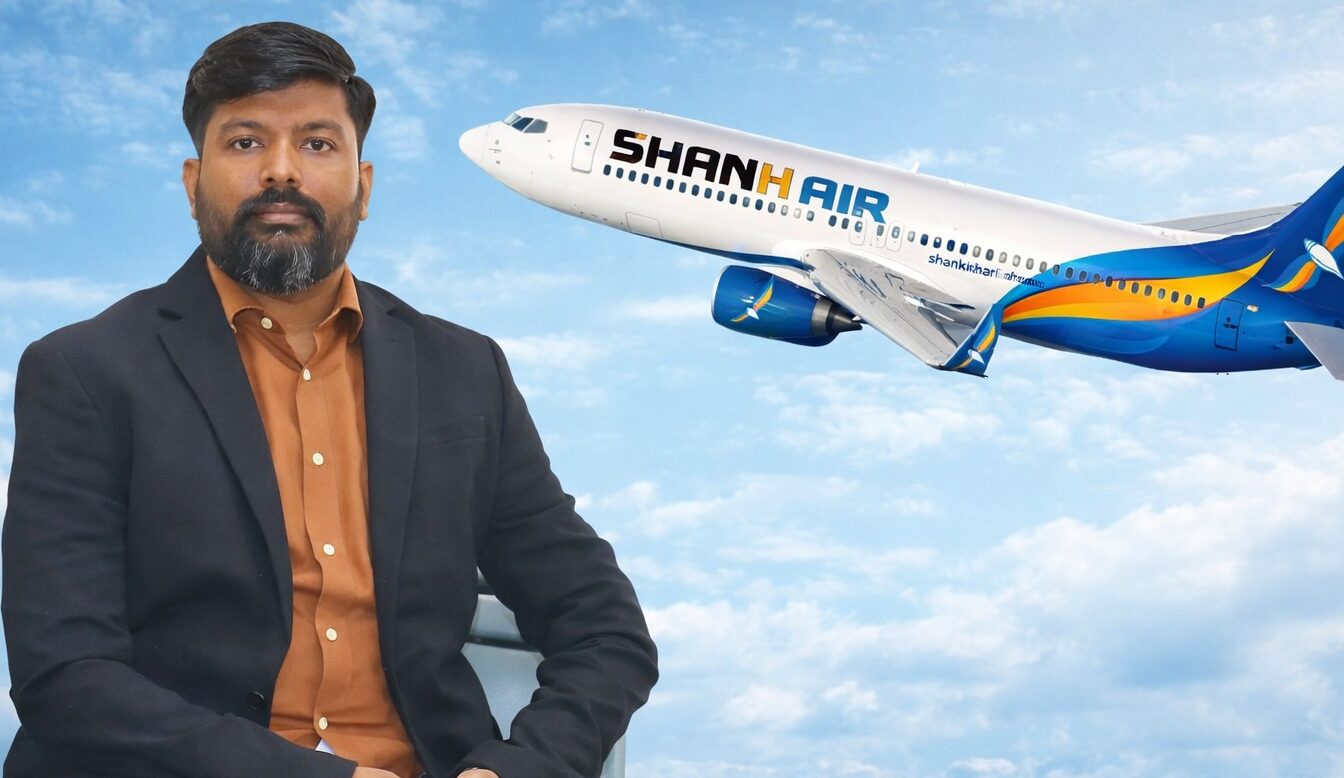
Lucknow | Shankh Airlines is preparing to take to the skies in the first half of January, marking the entry of a new domestic carrier aimed at improving air connectivity from Uttar Pradesh to major Indian cities. The airline will begin operations with an initial fleet of three Airbus aircraft, focusing on routes connecting Lucknow with Delhi, Mumbai, and other metro destinations, according to Chairman Shravan Kumar Vishwakarma.
Alongside metro routes, the airline plans to operate flights to multiple destinations within Uttar Pradesh during its first phase. Vishwakarma said the fleet will expand soon, with two additional aircraft expected to be inducted within the next one-and-a-half months.
Gradual Expansion With a National Vision
While the initial scale of operations is modest, Vishwakarma said the airline has long-term plans for nationwide coverage. As the fleet grows, Shankh Airlines intends to expand its network across India. International operations are planned at a later stage, with a tentative timeline of 2028 or 2029.
For now, the focus remains firmly on domestic routes and building a reliable operational base. The chairman emphasized that growth would be steady and aligned with the airline’s capacity and preparedness.
Making Flying More Accessible
At the heart of Shankh Airlines’ strategy is the goal of making air travel accessible to middle-class passengers and first-time flyers. Vishwakarma said the airline wants to challenge the perception that flying is only for a privileged few.
He described air travel as a basic mode of transport rather than a luxury, comparing an aircraft to everyday vehicles used for commuting. According to him, affordability and approachability will be central to the airline’s identity, particularly in regions where air connectivity is still limited.
Also Read: Comet Snicker’s revenue surges over 300% in FY25
From an Idea to an Airline
Vishwakarma said the idea of entering the aviation sector first occurred to him about four years ago. Once the idea took shape, he began learning about the regulatory framework, including the process of obtaining a no-objection certificate and understanding aviation rules and systems.
What started as a concept gradually evolved into a functioning airline. He described the journey as one of learning and persistence rather than quick decision-making, noting that it took years of groundwork before the project became a reality.
A Journey Rooted in Modest Beginnings
Coming from a middle-class background, Vishwakarma said that dreaming big was not always considered practical in the environment he grew up in. He recalled that simply earning a stable livelihood was often seen as sufficient, while ambitions beyond that were viewed as unrealistic.
He also spoke candidly about his limited formal education and lack of interest in academics. Early in his working life, he drove autos with acquaintances and experimented with several small businesses, many of which did not succeed.
Building Businesses Step by Step
Vishwakarma said his entrepreneurial journey gained momentum in 2014 when he entered the cement trade. Over time, he expanded into TMT steel, mining, and the transport sector. These ventures grew gradually, without what he described as grand planning.
Today, his transport business operates a fleet of more than 400 trucks. He attributed this growth to organic expansion and adapting to opportunities as they arose, rather than following a rigid business blueprint.
Aviation, Funding, and Operational Approach
Describing aviation as one of the fastest-growing sectors, Vishwakarma highlighted strong cash flow as one of its key strengths. He said aviation operations do not function on a credit-based system, which, in his view, helps reduce risks that often affect other industries.
Shankh Airlines has the backing of its parent company, and the aircraft have been acquired through leasing and financing arrangements with external firms. Vishwakarma said the airline does not face funding constraints and is not focused on competitors’ market share, choosing instead to concentrate on internal improvement.
Naming, Fares, and Employment Plans
The airline derives its name from Vishwakarma’s existing trading firm, which is also called Shankh. He said the name carries cultural significance and continuity with his earlier ventures.
On pricing, Vishwakarma said Shankh Airlines will not increase ticket fares during festival seasons. Business-class fares, however, will be priced higher than those of competitors. He also said the airline is expected to generate employment opportunities for young people as operations expand.
A Message for Aspiring Entrepreneurs
Sharing advice for youth, Vishwakarma said the biggest barrier is often the fear of social judgment. He said his own journey, from driving a tempo to running an airline, shows that progress depends largely on mindset rather than background.
According to him, confidence and persistence can open doors that once seemed unreachable.
Also Read: Truva Secures $6.3 Million in Series A Funding at Over $30 Million Valuation