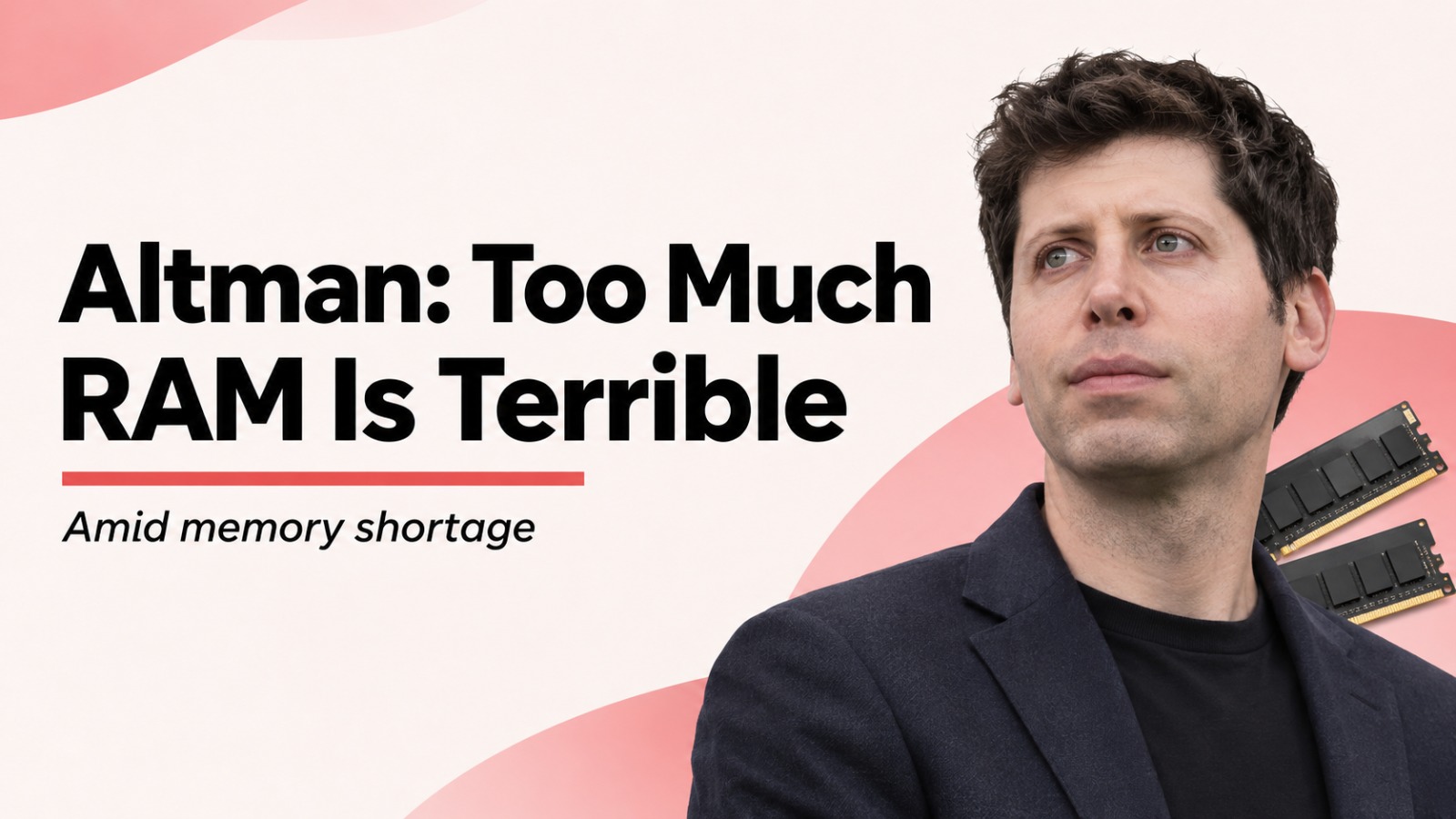
OpenAI CEO Sam Altman has sparked an online debate after suggesting that the global allocation of memory chips could be better managed if fewer people kept large amounts of DRAM in their personal computers. His comments have attracted attention at a time when the growing demand for AI computing is putting pressure on the global memory supply and making electronic devices more expensive.
Altman made the remarks during an interview on Cheeky Pint, a YouTube show hosted on the Stripe channel. The discussion turned to the ongoing memory shortage, with Altman offering an unusual perspective on how the world’s limited supply of dynamic random-access memory (DRAM) is being distributed.
“From a global allocation perspective, actually it’s quite terrible to have everybody have a bunch of the world’s limited DRAM supply sitting in their own computer,” Altman said during the conversation, around the 29-minute mark.
The comment quickly became a talking point, particularly among computer enthusiasts and consumers who have been dealing with rising memory prices.
Sam Altman’s RAM Comment Sparks Internet Reactions
Altman’s observation was made in the context of a broader discussion about the availability of memory chips. However, its timing made the remark particularly noticeable.
DRAM is an essential component in computers, smartphones and tablets. It allows devices to temporarily store data that their processors need to access quickly. As demand for AI infrastructure expands, large technology companies require substantial amounts of memory to support increasingly powerful computing systems.
This growing appetite for computing resources has added pressure to an already constrained memory market. Consumers, meanwhile, are facing the consequences when purchasing devices or upgrading existing machines.
Altman’s suggestion that large quantities of memory sitting in individual computers could be considered inefficient from a global allocation perspective did not go unnoticed.
Social media users responded with humour, with many questioning why ordinary consumers should have to give up the memory they paid for while major AI companies continue expanding their computing requirements.
The 16GB RAM Debate Takes Centre Stage
One recurring theme in the online reactions was the frustration of consumers who have already paid higher prices for relatively modest memory configurations.
The reference to 16GB of RAM became particularly relatable for PC users, many of whom feel that even a standard memory configuration has become increasingly expensive.
The contrast between individual consumers trying to afford memory upgrades and AI companies requiring enormous computing resources provided plenty of material for memes.
While Altman’s comment was part of a wider discussion about resource allocation, internet users largely interpreted it through the lens of the ongoing affordability problem facing everyday technology buyers.
Why the Memory Shortage Matters Beyond AI Companies
The growing demand for memory is not limited to data centres. RAM is used across a wide range of consumer electronics, meaning supply constraints can affect multiple product categories.
For everyday buyers, the concern is straightforward: if memory becomes more expensive or harder to source, upgrading a computer or purchasing a new device could cost more.
Altman’s remarks have therefore struck a nerve beyond the AI industry. They highlight a growing tension between the computing resources required by large-scale AI development and the hardware that ordinary consumers depend on.
His comments may have been delivered casually during the interview, but the reaction shows how sensitive the subject of memory availability has become.
Some of the best memes we’ve seen are below.
Also Read: From JEE Setback to SamanNow: Kuldeep Rathore’s Unconventional Startup Journey