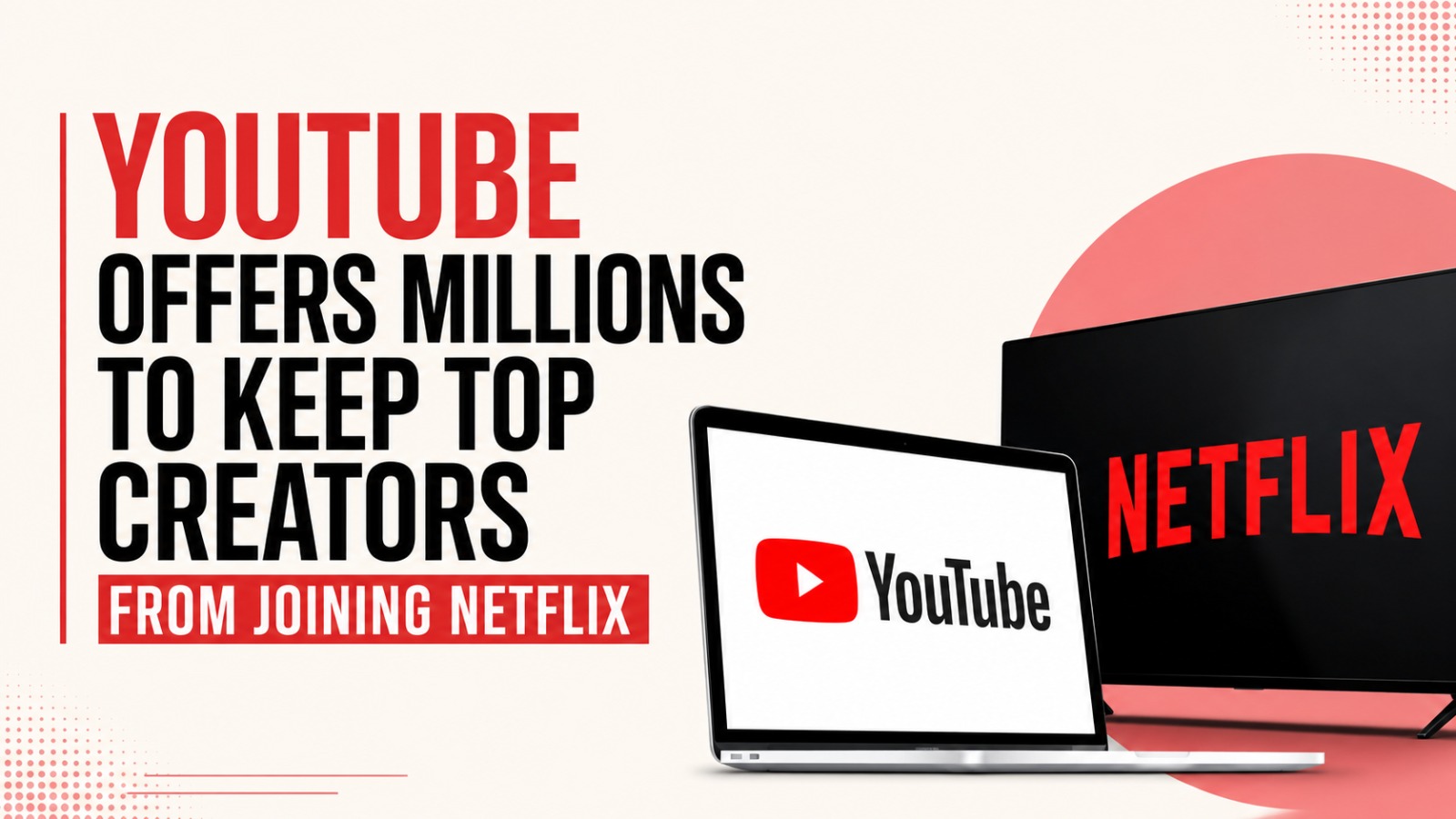
YouTube is reportedly preparing a major push to keep some of its biggest creators from sharing their videos with Netflix. The Google-owned video platform depends heavily on creators to attract and retain viewers, with some channels reaching tens of millions of subscribers. Now, YouTube appears ready to spend millions of dollars to protect its position as the primary home for those creators.
According to a Bloomberg report, YouTube is in discussions with select creators about offering them millions of dollars in exchange for keeping their videos exclusive to the platform for an agreed period. The proposed deals are aimed at countering Netflix’s efforts to bring some of YouTube’s biggest names onto its streaming service.
The reported move comes shortly after YouTube announced changes to the way it counts views on videos, adding another layer to the platform’s recent efforts to reshape its creator ecosystem.
Big Money Could Be Used to Keep Creators on YouTube
The proposed financial support could reportedly come through direct funding for creator programmes as well as a share of major brand deals. However, the strategy may not rely entirely on incentives.
Creators who choose to release the same videos on Netflix and YouTube could potentially lose access to some opportunities on YouTube. According to the report, the platform may be less likely to feature such creators in campaigns or include them in proceeds from certain large advertising programmes.
YouTube has reportedly not finalised agreements with the creators involved. However, discussions are said to be progressing with several potential partners. The terms are also expected to differ from one creator to another, while it remains unclear which specific creators have received offers.
Also Read: The Architect Who Reworked Homework: Inside Neha Kolhe’s QikWorksheet Story
Netflix Wants YouTube Stars on Its Platform
Netflix has been increasingly pursuing partnerships with prominent YouTubers, offering them an opportunity to distribute their existing content to a much larger streaming audience.
The streaming company has already worked with creators including Alan Chikin Chow and Nick DiGiovanni, allowing their videos to appear on both YouTube and Netflix. Netflix is also reportedly in discussions involving other creators, channels and programmes, including the celebrity interview show Hot Ones.
For creators, these arrangements can be attractive because they provide another source of revenue from content they are already producing. Netflix also gives creators access to its large subscriber base, which exceeds 325 million subscribers.
However, not every creator has chosen to participate. Netflix’s requirements can sometimes clash with the fast-moving way YouTube creators produce content. Reports have indicated that Netflix may require videos to be delivered several days before release. The company has also asked some creators to remove certain brand sponsorships from their videos.
YouTube Sees Cross-Posting as a Growing Problem
YouTube has reportedly told creators that distributing the same content on Netflix and YouTube can affect viewing on its own platform. The company also wants creators to treat YouTube as their main distribution outlet.
The competition has become more significant as the traditional differences between YouTube and Netflix have narrowed. YouTube has expanded its presence on television screens and has become a major destination for TV viewing. It is also pursuing television advertising and has secured rights to major live events, including the Academy Awards and National Football League content in the US.
Netflix, meanwhile, has historically used YouTube to promote its shows and has licensed popular programming such as CoComelon and Ms. Rachel. The company is now also looking at YouTube creators as a way to attract younger viewers and increase engagement on its streaming service.
YouTube Has Used Similar Tactics Before
YouTube has previously taken steps to prevent emerging competitors from pulling creators away from its platform. The company once offered financial incentives to creators who chose not to sign with Vessel, a startup co-founded and formerly led by Jason Kilar that sought to persuade social media creators to publish content first on its own service.
The company is also competing with other short-form video platforms through YouTube Shorts, particularly against Instagram Reels.
YouTube CEO Neal Mohan has previously argued that creators working with competing platforms can still bring audiences back to YouTube. However, the growing number of creators simultaneously distributing their content on Netflix appears to have prompted the platform to reconsider how far it should go to protect its creator ecosystem.
For YouTube, the concern extends beyond audience numbers. The company reportedly believes advertisers may see less value in videos on its platform when identical content is also available on Netflix. That could make creator exclusivity an increasingly important part of the battle between the two streaming giants.