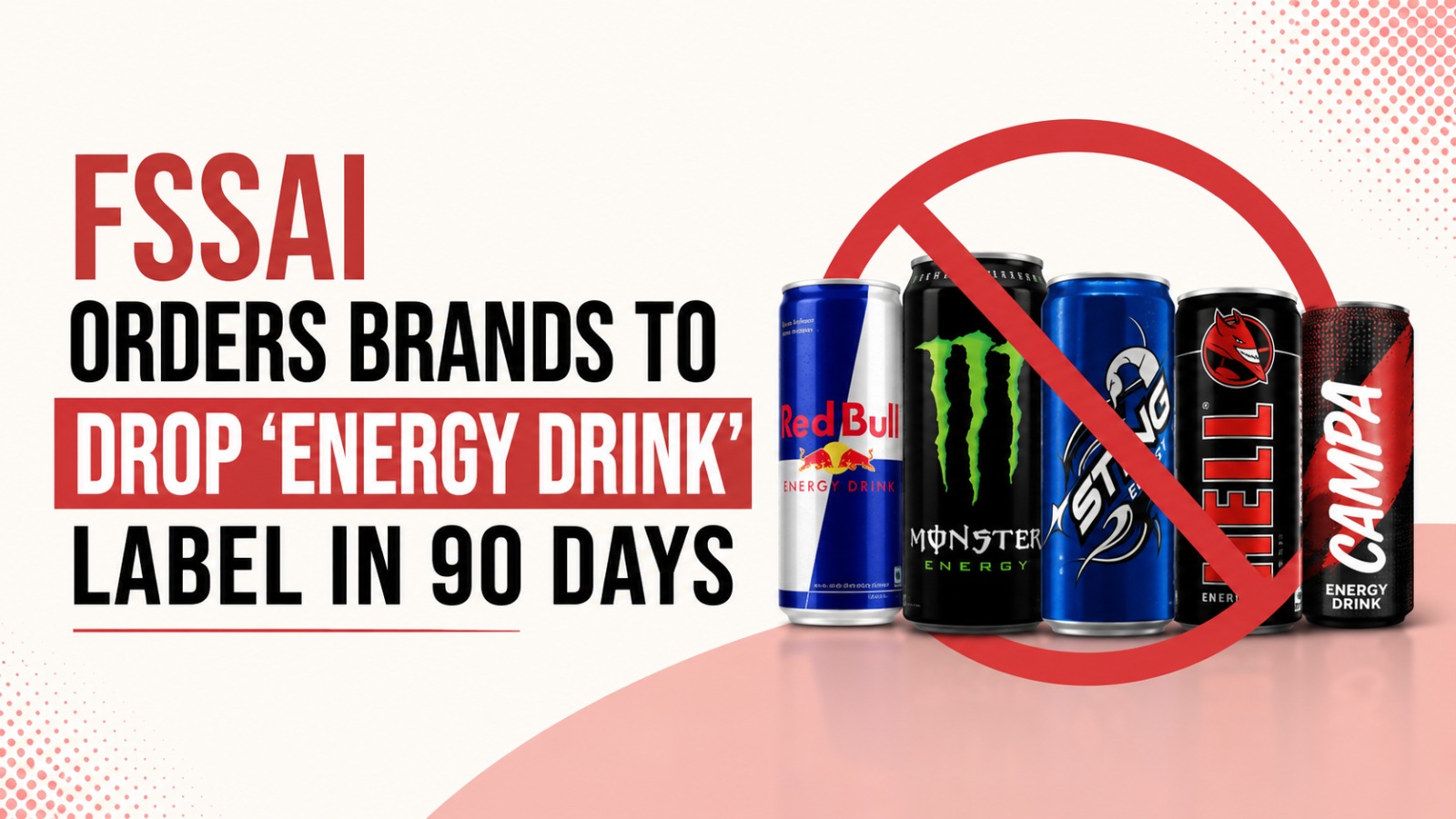
India’s food safety regulator has directed manufacturers of high-caffeine beverages to stop using the term “energy drink” on product labels, giving companies 90 days to comply with the new requirement. The decision affects several leading brands, including products from PepsiCo, Red Bull, Monster Beverage, Reliance Consumer Products and Hell Energy.
The Food Safety and Standards Authority of India (FSSAI) said there are currently no Indian food standards that officially define or recognise products marketed as “energy drinks.” As a result, the regulator has instructed companies to discontinue the use of the term and similar descriptions on product packaging.
FSSAI Says Existing Claims May Mislead Consumers
Earlier this month, FSSAI stated that certain marketing claims commonly used on high-caffeine beverages, such as “vitalises body and mind” or “helps in general weakness,” could create a misleading impression among consumers.
According to the regulator, such statements may not be appropriate in the absence of specific standards governing products sold under the “energy drink” category. The move is aimed at ensuring labels remain consistent with India’s food safety regulations and prevent potentially misleading product descriptions.
Industry Asked to Remove Labels Within Three Months
The regulator has instructed beverage companies to remove the words “energy drink” and other similar references from product labels within 90 days.
During a meeting with industry representatives, FSSAI Chief Executive Rajit Punhani reportedly rejected concerns raised by companies that the decision could negatively affect their businesses. He also informed participants that they were free to challenge the regulator’s decision through legal channels if they chose to do so.
Following the discussions, companies agreed to comply with the new directive and were given a three-month timeline to complete the required changes.
Also Read : Hybe Moves to Liquidate Supertone as AI Audio Unit’s Losses Deepen
Beverage Industry Calls for Greater Consultation
The Indian Beverage Association, which represents several major beverage manufacturers, has urged the regulator to adopt a more consultative approach before implementing significant regulatory changes.
In a letter sent to FSSAI on July 6, the association said that making regulatory notices public without sufficient consultation could affect company reputations, disrupt business operations and create confusion among consumers.
The industry body also requested regular engagement between regulators and manufacturers to help shape science-based policies while ensuring compliance with government regulations.
At the same time, the association reaffirmed its commitment to following government rules and working with authorities on regulatory matters.
Rapidly Expanding Market Faces Regulatory Oversight
India’s market for high-caffeine beverages has expanded significantly in recent years. Growth accelerated after Pepsi introduced Sting in 2017, with the product gaining popularity among teenagers, young adults and consumers in smaller towns and rural areas due to its affordable pricing.
According to market research firm Euromonitor, India’s energy drinks market is projected to reach $1.6 billion by 2028, supported by an expected annual growth rate of 12.6 percent. The report also noted that sales volumes nearly doubled every year between 2018 and 2023.
The growing popularity of these beverages has been linked to consumer perceptions that they help improve alertness and sustain energy during work or daily activities. Some consumers have also acknowledged consuming them frequently.
Rajasthan Begins Enforcement Against Non-Compliant Products
Regulatory action has already begun in Rajasthan, where authorities have launched an enforcement drive targeting products marketed as “energy drinks.”
As part of the campaign, officials have reportedly seized thousands of bottles of products including Sting, Campa Energy and Red Bull.
Separately, on July 8, the Rajasthan government instructed major e-commerce platforms such as Amazon, Flipkart, Blinkit and Swiggy Instamart to ensure that products are not promoted using the term “energy drinks.”
The latest directive marks a significant regulatory step in India’s packaged beverage sector as manufacturers prepare to update product labels in line with FSSAI’s requirements while continuing to sell high-caffeine beverages under revised descriptions.
Also Read: JK Lakshmi Cement Appoints Aniruddha Sinha as Head of Marketing