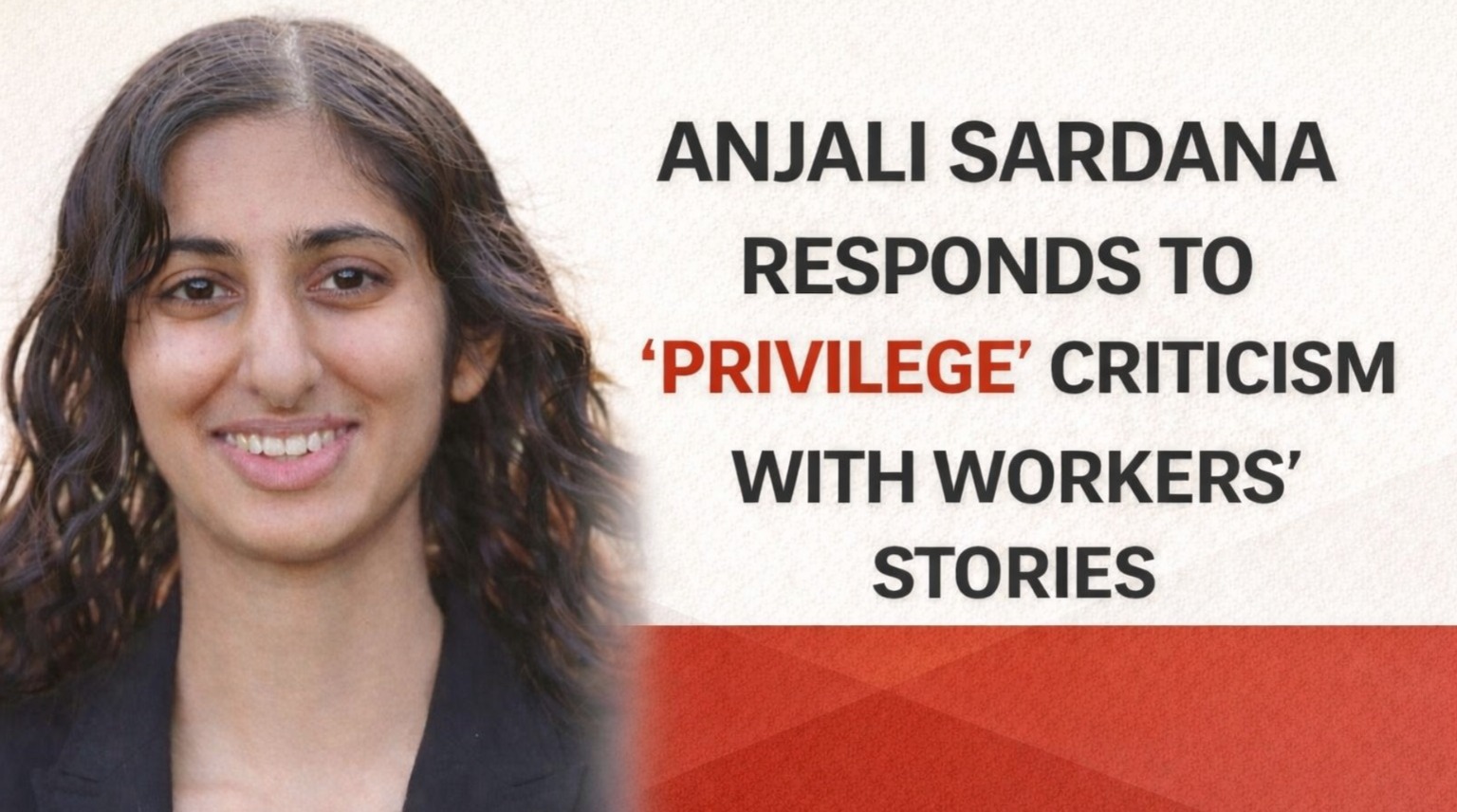
A month after being described online as a “privilege” business, Pronto is attempting to shift the conversation away from perception and back to the people working on its platform.
In a recent post, founder and CEO Anjali Sardana said the company was built on a very different understanding of India’s unskilled labour market: that its informality and disorder leave almost everyone worse off. Workers, she said, often face chronic underemployment, unstable income, poor safety, and a lack of dignity. Customers, on the other side, are left dealing with inconsistent services and frustration.
That, Sardana wrote, was the original thesis behind Pronto when it launched last year.
Today, the company says it has more than 5,000 professionals on its platform and is serving over 22,000 customers a day. But scale is not what sat at the centre of Sardana’s latest message. The trigger, instead, was criticism.
Last month, some people began attaching the word “privilege” to Pronto, to its services, its customers, and to Sardana herself. The suggestion, as she framed it, was that Pronto is a company built by and for the privileged, and one that is disconnected from the realities of the workers who power it.
Rather than answer that charge with a corporate rebuttal, the company says it went back to its hubs and asked its professionals a single question: what does privilege mean to you?
The answers, as shared by Sardana, did not read like a branding exercise. They read like fragments of hard-won change.
For Purnima, privilege appears to mean not dependence, but responsibility with dignity. Sardana says Purnima once relied on others, but now supports her mother, siblings, and even covers her brother’s PG rent. She has also brought her younger brother into Pronto.
For Puja, the meaning is more personal. After spending seven years as a live-in caretaker, where she says she was not permitted to speak to anyone, joining Pronto is something she describes in a single word: freedom.
Bakul’s story is tied to first earnings and what they make possible. Sardana says Pronto was the first place where Bakul ever earned professionally, and that the income she now makes has helped her put her daughter in school.
Then there is Chabira, whose story is perhaps the most striking in economic terms. She earlier worked alongside her husband to support their home. After joining the platform, Sardana says, Chabira began earning enough for the household to run entirely on her income. She is also described as the highest earner across Pronto.
Not every account is centred on money.
Radha, who worked at a hospital before joining Pronto, speaks first not about earnings but about safety. Sardana’s framing here is telling: in a labour market where wages often dominate the conversation, safety itself becomes a marker of what workers value and often do not get.
For Chunmun, work is tied to aspiration beyond herself. She is working, Sardana says, to help fund her sister’s dream of becoming a teacher. When her mother saw that she rides to work and wears a uniform, her response was simple: “Proud.”
And then there is Ratnamma, only three months into the platform, but already being requested by name by customers, a detail that suggests not just demand, but recognition.
Taken together, these stories form the heart of Pronto’s defence. Sardana’s argument is not that criticism of startups and service platforms is misplaced by default. It is that the word “privilege,” when used too casually, can flatten the lived realities of the very workers such platforms are trying to serve and organize.
That is a significant distinction.
The debate around new-age service businesses in India often gets trapped between two extremes: celebration of convenience on one side, and suspicion of class bias on the other. What Pronto is trying to do in this moment is insert a third frame, one where formality, regular work, safety, and pride are part of the story, not footnotes to it.
There is also a deeper point embedded in Sardana’s post. In many parts of India’s labour economy, dignity is not discussed enough as an economic outcome. Stable work matters. Income matters. But so do uniform, mobility, being known by name, being able to support a sibling’s ambition, or no longer being socially isolated inside someone else’s home. These are not abstract ideas. They are the small but meaningful markers of professional identity.
Pronto’s latest response does not attempt to settle the broader argument around class, privilege, or platform labour in India. Nor does it claim to. Instead, it narrows the lens to the voices of workers themselves.
And in doing so, it asks a question that is harder to dismiss than a company statement: when workers describe privilege in terms of freedom, safety, income, and pride, should the debate begin there instead of ending before it reaches them?
For now, Pronto’s answer to criticism is not a slogan. It is a set of names, a set of stories, and an insistence that the people often spoken about should also be heard directly.
Also Read: Pronto in Gurgaon: The Human Touch Behind a Laundry Service