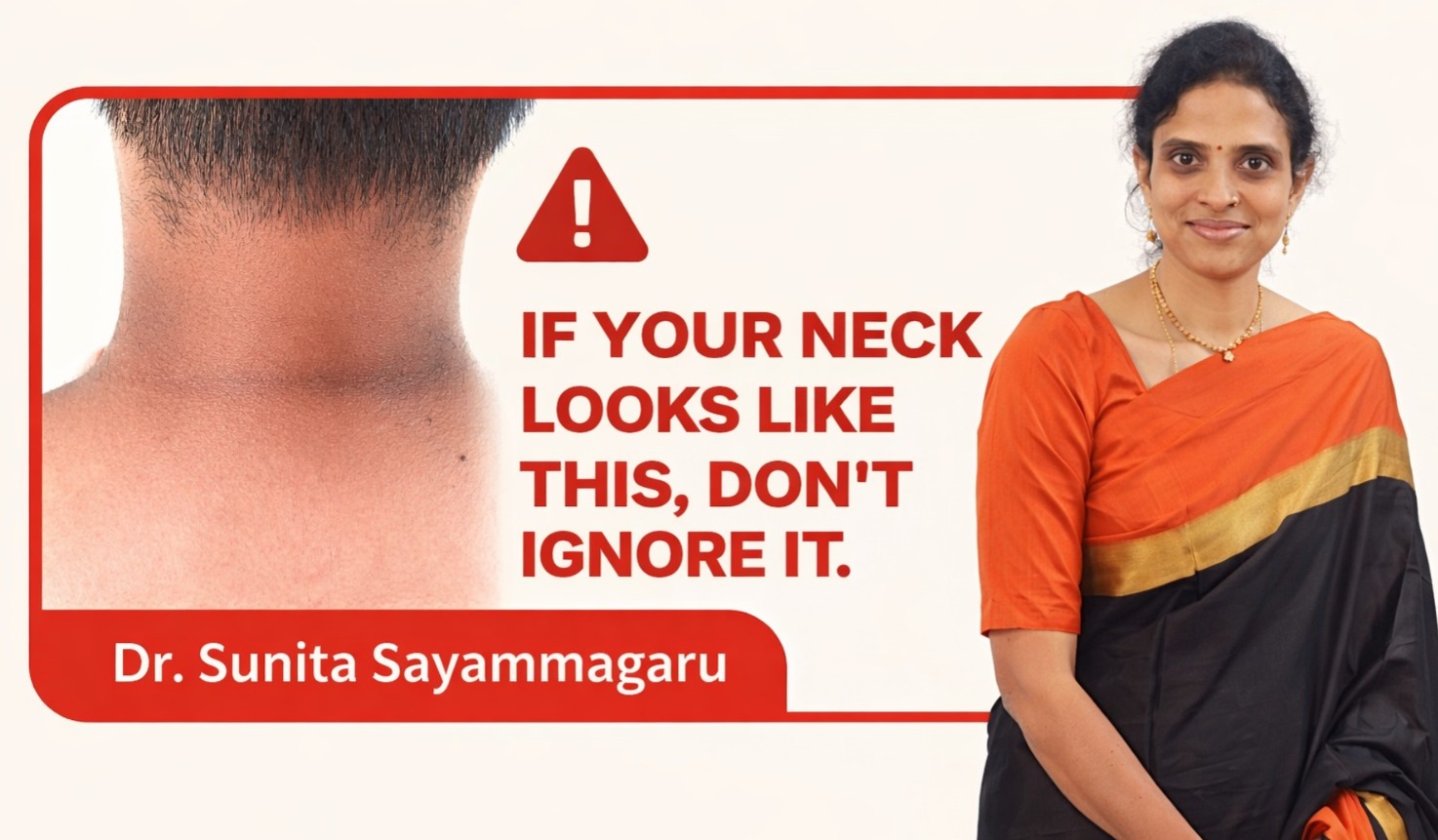
A routine metro ride turned into a public health observation this week after Dr Sunita Sayammagaru posted on X about what she says she noticed in her compartment: dark, velvety-looking patches on the backs of many commuters’ necks, a skin change known as acanthosis nigricans.
In her post, she spoke about observing the same trend in people of various ages and gender, beginning with teens and moving on to senior citizens. The spots had varying levels of clarity, light, and dark spots too. In addition, she found those who looked slimmer in the back still looked as if they had abdominal adiposity once they turned around, which, in her opinion, is a tale of metabolic risk in view.
Along with her note, she shared an image collage showing typical acanthosis-like changes on the neck: thickened skin in the folds with visible darkening.
Sunita Sayammagaru’s Post
“Dr. Sayammagaru’s story about the metro is not a survey, and he could not possibly prove the incidence of the condition in the city or the country as a whole,” yet it illustrates the point that dermatologists have long referred to: the skin functions as an “early warning system.”
Acanthosis nigricans is commonly seen as darkened, slightly thickened, “velvety” skin, most often on the back of the neck, armpits, groin, and other skin folds. It can be associated with insulin resistance, a state in which the body’s response to insulin becomes less effective, increasing the risk over time for metabolic problems, including type 2 diabetes.
That association is why Dr Sayammagaru framed it as a red flag worth taking seriously, especially for young people who may otherwise feel “fine” and postpone basic health checks.
“First signs” and the risk of ignoring them
One reason the post resonated is simple: many people still treat visible neck darkening as “dirt,” friction, or poor hygiene and keep scrubbing, hiding, or ignoring it. In reality, acanthosis nigricans isn’t just a cosmetic issue. It can be the body hinting that something internal needs attention.
At the same time, it’s important not to panic or self-diagnose based on a social media post. Skin darkening on the neck can have multiple contributors, including friction and weight-related skin changes, and it should be assessed in context by a clinician.
The doctor’s blunt prescription: lifestyle, now
Dr. Sayammagaru’s counsel was to cut down on junk foods, restrict dietary patterns, up protein intake, shed any extra weight, exercise, move more, sleep better, and lower stress. All these seemed to be directed at young people.
Whether one completely subscribes to each word used, there certainly does seem to be a message getting through here: it takes today’s activities to make tomorrow’s lab results, and young bodies are “not immune” just because they are young.
A practical, no-drama checklist for youth
If you notice persistent dark, velvety patches around the neck or other folds, here’s a sensible next step that doesn’t rely on fear or internet diagnosis:
- Don’t scrub aggressively: harsh rubbing can irritate skin and won’t fix the underlying issue if it’s metabolic.
- Look for the pattern: does it appear in skin folds (neck, underarms, groin) and persist despite normal hygiene?
- Consider a basic check-up: a clinician may suggest screening for glucose-related risk (common tests include fasting glucose and HbA1c) and assessing weight, waist, and family history.
- Make changes you can sustain: more daily movement, fewer ultra-processed snacks/sugary drinks, regular sleep, and steady weight management are realistic starting points.
- See a doctor sooner if the change is sudden, rapidly worsening, or accompanied by other symptoms.
The power of the post isn’t the exact number of necks seen in a metro coach. It’s the uncomfortable idea that visible signs of metabolic strain may be far more normalised than we admit and that youth, in particular, can’t afford to treat early warnings as background noise.
Should a skin patch on one’s neck be enough to spark a conversation that inspires a few teenagers to evaluate their health statistics, diet, and exercise habits, then the purpose of the post has been accomplished, as effective public health communication will often cut through one’s routine before one turns it into regret.
Also Read: Who Is Pratham Mittal? Shark Tank India 5’s New Campus Judge