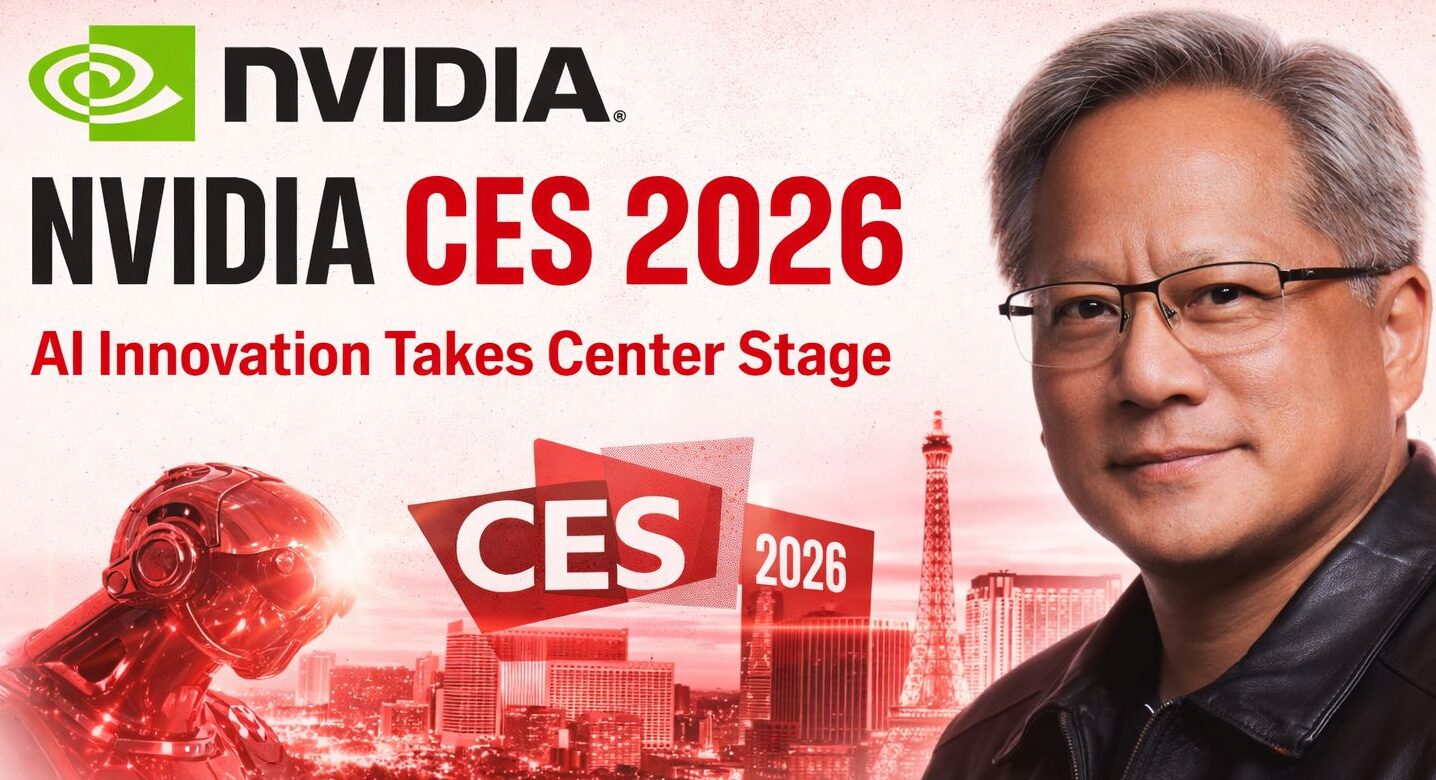
CES 2026 in Las Vegas was buzzing this year, and Nvidia (founded by Jensen Huang) turned that buzz into a roar. What normally feels like a bunch of tech jargon and product slides turned into a story about where tech is really headed and how it could shape everything from the way computers learn to how cars drive themselves. Nvidia didn’t just show off new hardware; they offered a peek into the next decade of computing.
AI Isn’t Just Faster, It’s Being Reimagined
At the heart of Nvidia’s big reveal was the Vera Rubin AI platform, a next‑generation system built to handle the kind of artificial intelligence workloads that are exploding across industries. This is much more than a regular chip upgrade. Instead of just making a slightly better processor, Nvidia rebuilt the entire architecture to work as a tightly connected system of components that communicate faster and more efficiently. Nvidia says this platform delivers up to five times the performance of its last generation while cutting operating costs and energy use dramatically.
What’s special is how Vera Rubin treats a data center like a single, massive engine. Traditional setups had separate chips and networking tools that didn’t always play nice together. With Rubin, Nvidia designed everything from CPUs to GPUs to networking hardware to work as one. The idea is that this seamless teamwork allows AI models to train and run cheaper and faster than before, pushing the boundaries of what AI can do.
During the keynote, Nvidia CEO Jensen Huang said the world’s demand for AI computing is “going through the roof,” and the company is ready with hardware already in full production. This was a rare moment of clarity in tech speak: Nvidia believes we aren’t just speeding up the present; we’re preparing for a future where AI is everywhere.
From Data Centers to the World Outside Your Window
But Nvidia didn’t stop at raw computing power. Another star of the show was Alpamayo, an AI model designed for autonomous driving and real‑world reasoning. Unlike simple pattern‑matching systems, Alpamayo is built to act with awareness of its environment and make complex decisions. Mercedes‑Benz showcased a production car using this model, and Nvidia even hinted at future robotaxi services using the technology. This signals a shift where AI moves from the cloud into physical spaces like roads, robots, and everyday life.
There’s also a broader push toward what Nvidia calls “physical AI”, software that doesn’t just live in data centers but interacts with the physical world. This includes smarter robots, tools for industrial automation, and AI that can simulate and react to complex environments in real time. The idea is not just to crunch numbers faster but to make machines that understand and act more like humans do.
Gamers and Creators Got Their Share Too
CES wasn’t all back‑end tech and supercomputers. Nvidia also gave a nod to everyday users with updates in its GeForce lineup. They announced DLSS 4.5, a major game‑boosting feature that brings significant quality and performance improvements to hundreds of titles right now, with more coming soon. New G‑SYNC Pulsar monitors with better refresh rates and adaptive lighting tech were also unveiled, showing that Nvidia still cares about graphics and smooth visuals for gamers and creators. It wasn’t just future‑tech for data centers; it was tech you can enjoy today.
Those gaming features might feel more familiar, but they matter a lot because they bring real value to usual users while connecting everyone to Nvidia’s broader vision of powerful, accessible computing.
What This Means Going Forward
A big part of what Nvidia showed at CES is that AI isn’t just an add‑on anymore. It’s becoming a foundation for almost every kind of technology we use. By combining hardware and software in tightly linked platforms, Nvidia is pushing toward a world where AI isn’t just smarter; it’s smarter everywhere. That includes helping autonomous vehicles navigate crowded streets, powering new robotics that can learn and adapt, and improving the way data centers serve billions of users worldwide.
Whether you’re a gamer, developer, or business leader, the message from Nvidia this year was clear: the future won’t just be faster or bigger; it will be more intelligent and interconnected, and 2026 could be the year that shift really took shape
Also Read: India Ends China’s Long Reign as the World’s Largest Rice Produce