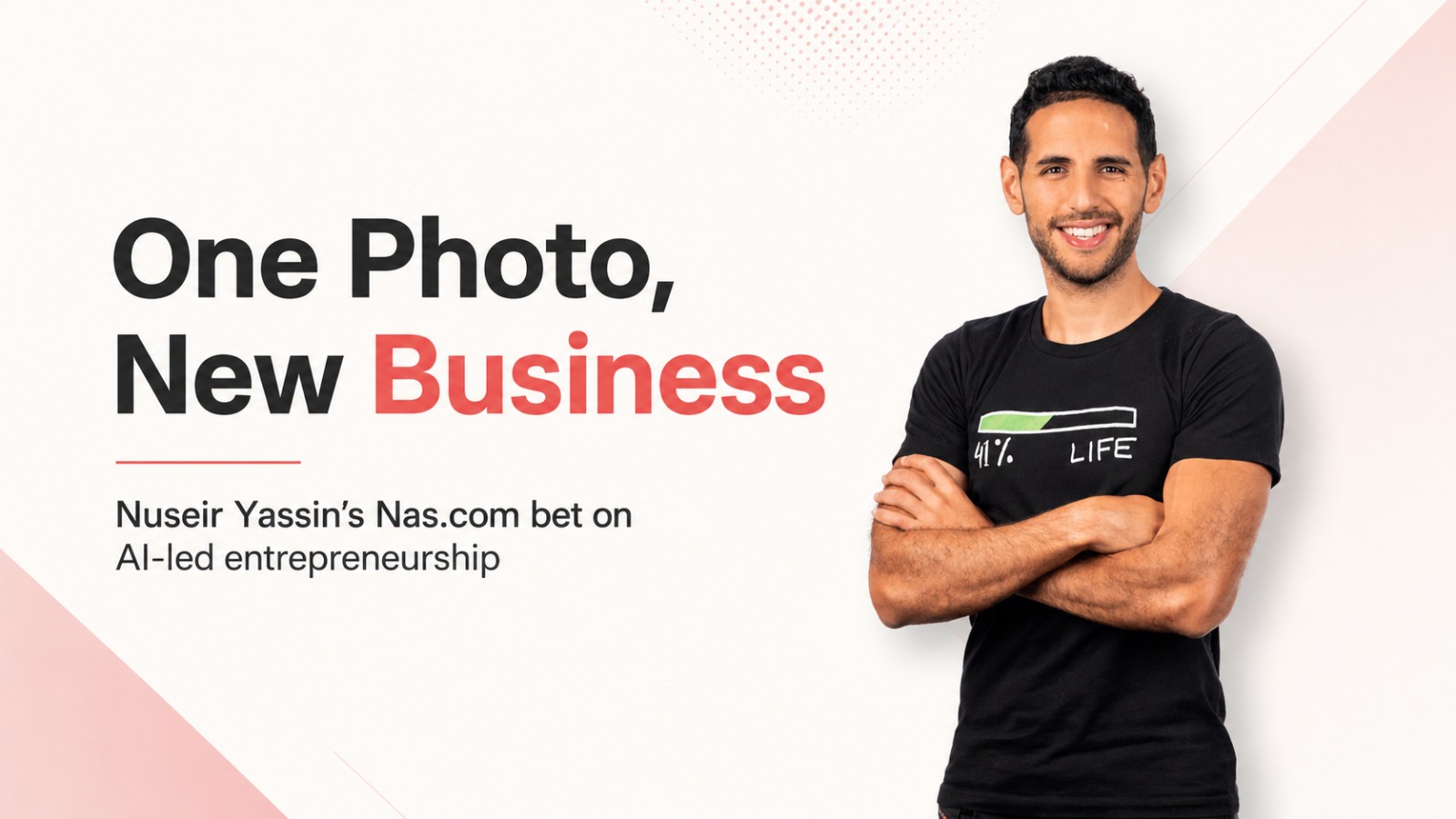
In an interview published by Entrepreneur Media, Nuseir Yassin, the founder and CEO of Nas.com, explained how his new AI-powered startup is trying to make online entrepreneurship simpler for solo sellers who may not know how to code, create ads or build a digital storefront. The idea sounds almost too simple: take one product photo, upload it, and let the platform create the store, marketing content and customer acquisition flow around it.
For Yassin, Nas.com is not a sudden pivot from content to technology. It is the next stage of a journey that began with Nas Daily, the one-minute video series he produced every day for 1,000 days after leaving his software engineering job at Venmo in 2016. That project helped him build a global media presence across languages, platforms and countries. Over time, it also showed him something more personal: many people wanted more control over their work, income and time, but did not know where to begin.
Nas.com is Yassin’s attempt to turn that observation into a product.
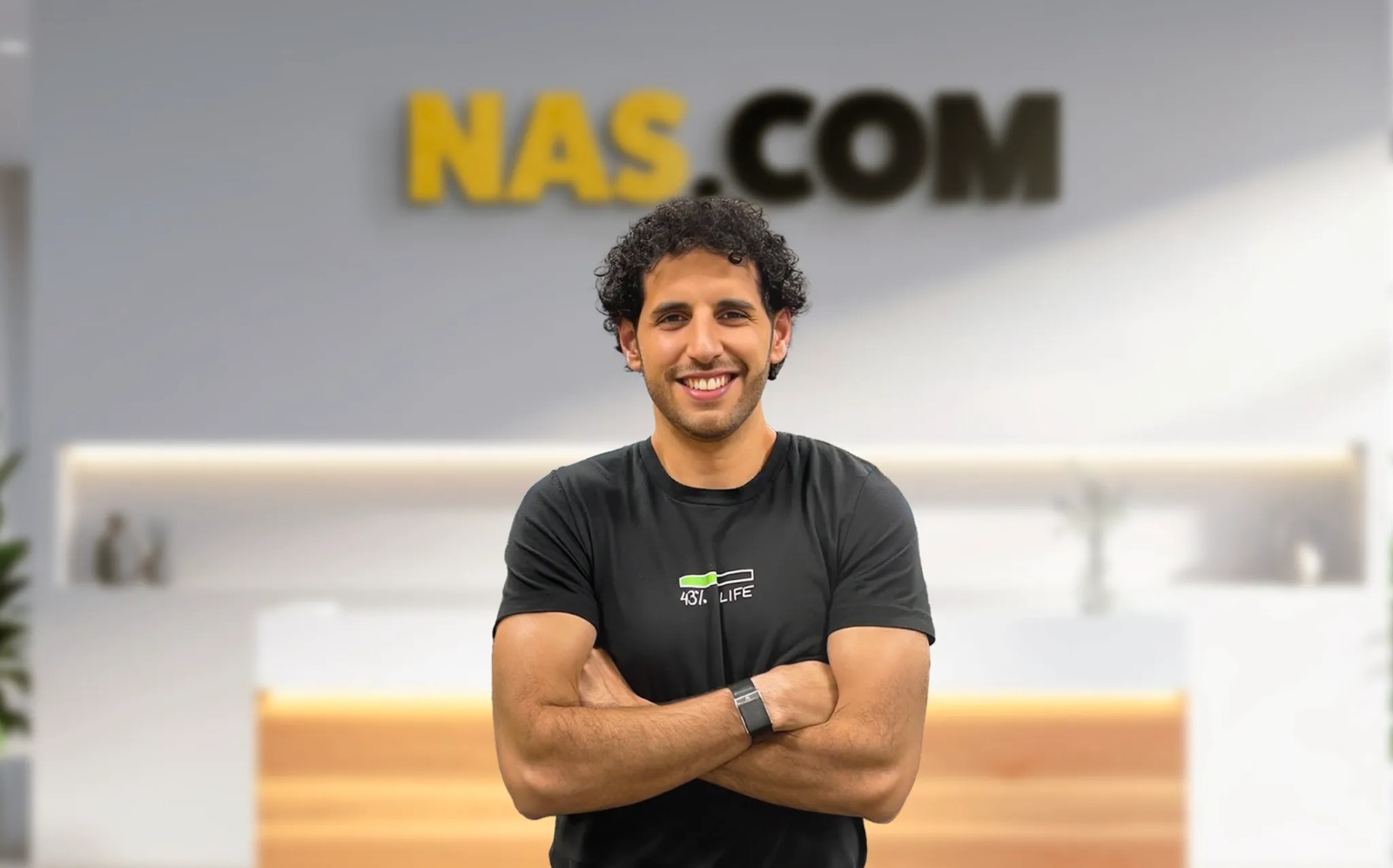
The platform, founded in 2022, is built for creators, small business owners and first-time entrepreneurs who want to sell online without going through the usual maze of website building, copywriting, payment setup and digital advertising. A seller can upload a picture of a product, after which Nas.com uses AI to create a product page, generate content, set options and help market it on platforms such as Instagram and Facebook.
Yassin describes the problem in plain terms. Earlier, starting an online business demanded three difficult skills: building a website, creating content and running performance marketing. Nas.com tries to bring these into one interface. The company’s pitch is not that entrepreneurship becomes effortless. Instead, the claim is that technology can remove some of the barriers that stopped people from even trying.
That distinction matters. Yassin is careful not to sell the platform as a shortcut to easy money. In his view, building a business is still hard. What has changed is the time and skill needed to take the first step. A process that once took weeks or months can now, in his telling, begin in minutes.
The early traction is what gives the story weight. Yassin said Nas.com has drawn interest from hundreds of thousands of people and has tens of thousands of paying users running active businesses on the platform. He also said the platform has already produced four millionaires.
One example is Singapore Budget Babe, a financial education brand run by a woman in Singapore, which Yassin said crossed over a million dollars through the platform. Another is a 60-year-old farmer in Mexico who used Nas.com to teach farming and now earns between $1,000 and $2,000 a month. For Yassin, the second story appears just as important as the first because it reflects the platform’s broader promise: making digital business tools accessible to people who would otherwise be locked out by technology.
The categories are not limited to one type of commerce. Yassin said Nas.com users sell physical products, events, memberships, coaching and educational products. The four millionaire creators, according to him, come from different areas including events, education and fitness.
A major part of the platform’s value lies in marketing. Nas.com does not only help users create a storefront. It also helps them find customers. Yassin gave the example of a Dubai Entrepreneur Networking Night campaign, where a user spent around $200 on ads through the platform. That campaign generated 32,000 views, 971 page visits and 130 ticket buyers.
This is where Yassin’s content background becomes central to the startup’s identity. Nas Daily was built on storytelling, hooks and repeatable formats. Nas.com takes that experience and turns it into programmable marketing templates. For example, if a seller is promoting a candle, the platform might generate a user-generated-content-style video or an unboxing-style video with a script designed around a strong opening idea.
Yassin said the ads are AI-generated and argued that AI advertising has improved rapidly enough that many people can no longer easily tell the difference between a human-made ad and an AI-generated one. Whether that prediction plays out at scale remains to be seen, but the direction of the company is clear: Nas.com wants to become a marketing arm for solo entrepreneurs.
The pricing also reflects that mass-market ambition. Yassin said the platform costs between $10 and $99 a month, with an average of around $30. The company makes money through subscriptions, a small cut of marketing spend and a small cut on some transactions. He said Nas.com takes about $5 when a user spends $100 on ads and about 1 percent on some transactions, while currently charging 0 percent on physical products to stay competitive.
That puts Nas.com in comparison with Shopify, although Yassin frames the difference sharply. Shopify, in his view, is strong at helping businesses create online stores, but it does not solve enough of the marketing challenge for new entrepreneurs. Nas.com is trying to start from a different assumption: a first-time seller does not only need a storefront, but also content and traffic.
The company now has about 40 people, with engineering based in Singapore and marketing based in the United States. It has raised a total of $40 million, including a $27 million round that Yassin said is being announced. Vinod Khosla, known for early investments in companies such as OpenAI, Stripe and DoorDash, is among the backers mentioned in the interview.
Yassin said Nas.com started last year at about $1 million in annual recurring revenue and ended the year at around $8 million in ARR. The company also uses its own platform to grow. In Mexico, for example, it runs ECO Mexico by Nas.com, selling a product called “Build your own e-commerce in 2 hours.” Around 4,000 people signed up and attended events where they were introduced to the platform.
The larger story is not only about one creator becoming a founder. It is about a broader shift in how online businesses may be built in the AI era. For years, creators were told to build audiences first and products later. Nas.com flips that logic for small sellers by asking whether a product, a page, an ad and a customer journey can be assembled almost instantly around a single image.
Still, Yassin’s own advice to founders is far from glamorous. He compares entrepreneurship to doing hard things repeatedly and says people must “choose your hard.” AI may reduce friction, but it does not remove the difficulty of building something real.
That may be the most grounded part of the Nas.com story. The company is built on a bold promise, but its founder is not pretending that technology alone creates entrepreneurs. His bet is narrower and potentially more powerful: if the first step becomes easier, many more people may finally take it.
Also Read: Vaibhav Suryavanshi’s Rise Is Bigger Than a Net-Worth Number