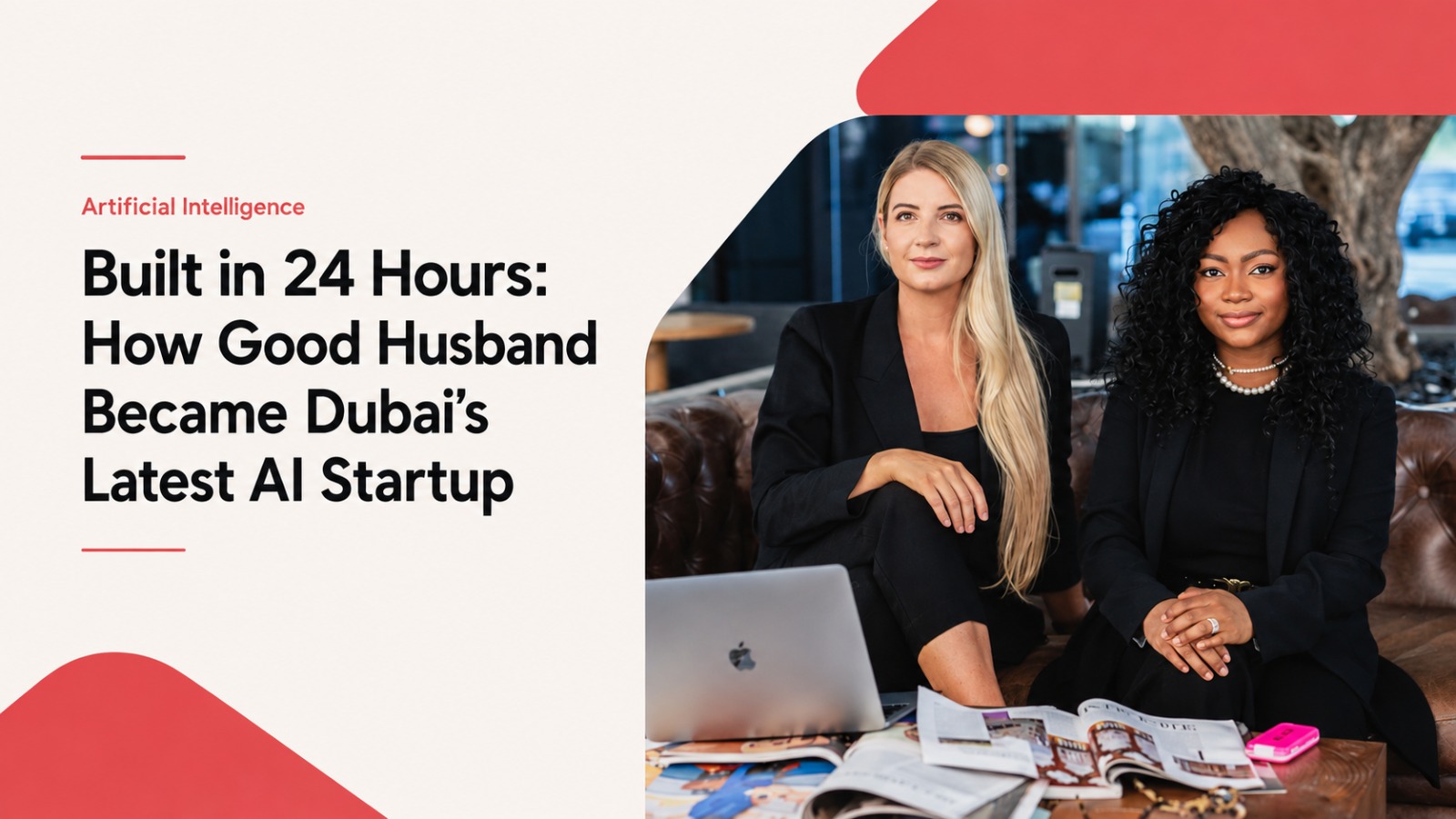
Dubai-based Good Husband grew out of a joke between best friends Zainab Imichi Alhassan and Sarah Curtis. What followed was a rapid experiment in whether AI could help men find better words when conversations become difficult.
Some startup ideas begin with months of planning, a pitch deck and a carefully mapped product roadmap. Good Husband began with a text message that simply did not sound right.
Zainab Imichi Alhassan was with her best friend Sarah Curtis when messages from Alhassan’s husband began arriving. His replies seemed so unlike him that Alhassan immediately noticed.
Curtis joked that perhaps he was using an AI bot to respond.
The explanation was not serious. Alhassan’s husband was simply pulling her leg. But the joke left the two women with a question that proved harder to dismiss: could there be a genuine use for AI in helping people communicate better with their partners?
That question became Good Husband, an AI-powered relationship tool built around a specific problem. Its founders believe there are men who care about their relationships and want to communicate well, but struggle to find the right response when emotions are running high.
For Alhassan and Curtis, the opportunity was not about getting technology to speak instead of a person. It was about helping someone articulate what they already intended to say.
Good Husband: The joke that survived the market research
Rather than treating their initial conversation as little more than a funny business idea, Alhassan and Curtis began researching whether the problem existed beyond their own exchange.
They concluded there was a market gap worth pursuing.
That distinction matters to the way Good Husband is being positioned. The tool is not presented as a substitute for conversations between couples. Its purpose is to help users organise their thoughts, express their intentions more clearly and approach disagreements with greater emphasis on resolution.
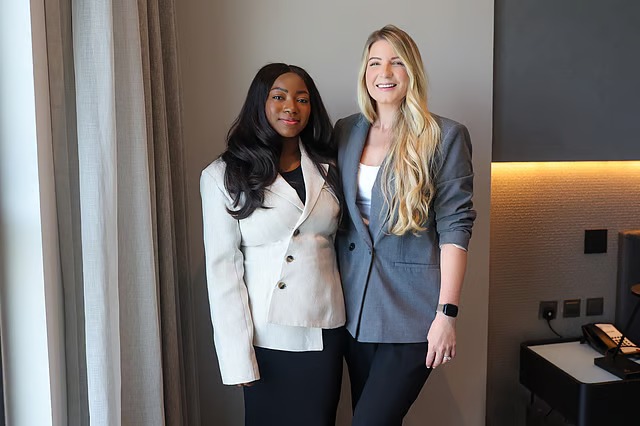
(Founders of Good Husband)
The insight the founders arrived at was also more nuanced than the familiar stereotype that men simply do not want to talk about relationships.
Their view is that willingness and ability are not always the same thing. Someone may care about resolving a disagreement but still struggle to formulate a thoughtful answer at the moment it is needed.
That gap between intention and expression is where Good Husband is trying to build its product.
Then came the 24-hour test
If the origin of Good Husband was unusual, the speed of its first launch was equally striking.
Alhassan and Curtis were already accustomed to working together. They are best friends and, according to Alhassan, have previously built several businesses together. She credits that history with giving them enough trust to assess ideas quickly and make decisions without unnecessary delay.
After researching the concept, they decided to build it.
A live website was running within 24 hours, according to Alhassan.
That detail says a great deal about the founders’ approach to Good Husband. Instead of waiting for a fully developed product before putting the idea in front of users, they chose to move quickly once they believed the concept had been sufficiently tested.
The product is still at an early stage, and the founders are already talking about where it could go next.
What Good Husband actually sells?
Good Husband currently has three pricing tiers.
There is a free option, a Good Husband plan priced at $9 a month, and a Better Husband plan at $19 a month.
The paid offering extends beyond suggesting replies to difficult messages.
Features described for the premium product include reminders for birthdays and anniversaries, prompts encouraging thoughtful gestures such as flowers or date nights, and a Coaching Mode intended to provide more detailed guidance around conversations and relationship challenges.
It gives the product a broader proposition than simply asking AI, “What should I text back?”
Good Husband is attempting to move from reactive assistance, helping with a conversation already under way, towards proactive prompts around the everyday maintenance of a relationship.
Curtis has described the product’s intended personality using three words: “Supportive. Trustworthy. Unbiased.” She has also likened it to a wingman users did not realise they needed.
Privacy becomes part of the product
There is an obvious complication when applying AI to relationships: the conversations involved can be intensely personal.
Good Husband is placing privacy near the centre of its proposition.
Alhassan said that individual conversations are private and that the company does not have visibility into how specific users are interacting with the platform or into particular conversation trends at this stage.
That limitation also means there is information the startup itself does not currently claim to have.
For example, while Alhassan cited research suggesting 42.8 per cent of people use general AI for emotional support, the figure was presented by her as evidence of broader behaviour around AI rather than usage data generated by Good Husband itself.
It is an important distinction for an early-stage product operating in a category where trust could become as important as functionality.
The bigger ambition is not another website
The current product may live on the web, but Curtis sees that as a starting point rather than the final form.
The longer-term plan is to develop Good Husband into a dedicated app. Beyond that, the founders would like to integrate it with WhatsApp as a chat assistant, allowing users to access help closer to the moment a difficult conversation is actually happening.
That ambition reveals the larger bet behind the startup.
Good Husband is not merely asking whether people will use AI for relationship advice. People already use general-purpose AI for personal questions. The founders are asking whether there is room for a product built specifically around communication between partners and designed to be available at the exact point when someone’s words fail them.
But who is really speaking?
The most interesting question surrounding a product like Good Husband is also the least technical.
If AI helps write a message to a partner, is the message still genuine?
Curtis’ answer is that authenticity rests in the intention behind the communication, not necessarily in whether every sentence was composed without assistance.
Her position is that AI should support communication and decision-making rather than replace human judgement. Empathy, context, emotional intelligence and personal judgement remain essential to the relationship itself.
That boundary could ultimately prove more important to Good Husband than any individual feature it launches.
The company is not presenting AI as a replacement partner, friend or counsellor. Its proposition is narrower: give someone a private place to work out what they want to say before they say it.
For Alhassan and Curtis, all of that began with one husband sending messages that sounded strangely unlike himself.
Twenty-four hours after deciding the idea was worth building, they had a website.
Now the larger test begins: whether a joke between two friends can become a lasting business by solving one of the most ordinary human problems of all, knowing what you mean, but not always knowing how to say it.
Also Read: iPhone 18 Pro vs 15 Pro, 16 Pro & 17 Pro: Is It Worth Upgrading?