In the global rush toward AI adoption, companies are discovering an uncomfortable truth: having large amounts of data is not enough. What matters is whether teams actually understand, trust, and can safely use that data.
This is the gap Atlan, a fast-growing data and metadata platform founded in 2018, is trying to bridge. The company is positioning itself not merely as a data catalog or governance tool, but as the infrastructure layer that helps enterprises make data usable and trustworthy for analytics and AI.
Atlan’s rise is closely tied to the journey of its founders, whose earlier work exposed them to the real-world chaos of large-scale data operations.
Founders who built Atlan out of real data chaos
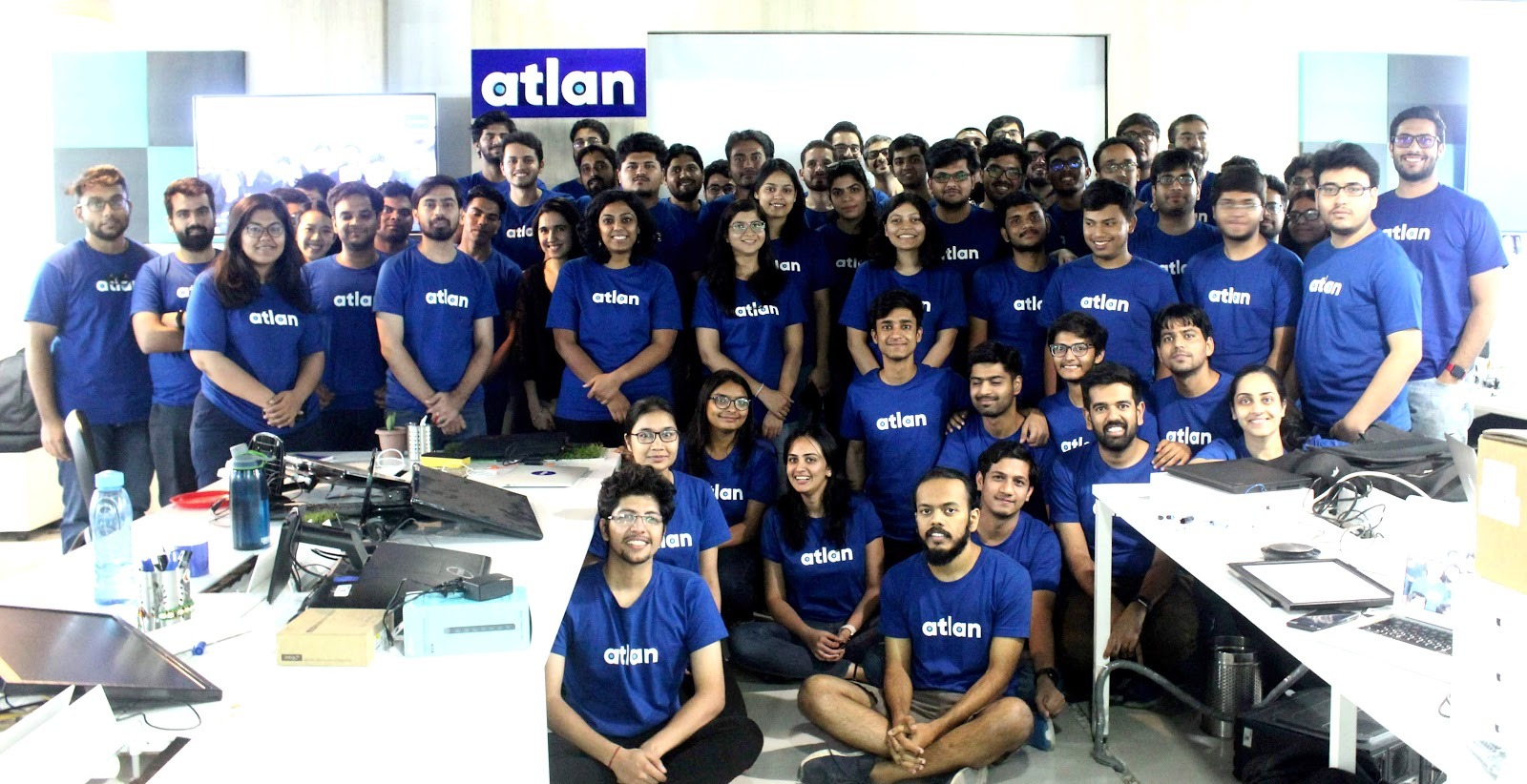
Atlan was co-founded by Prukalpa Sankar and Varun Banka, who previously launched SocialCops, a data-for-good startup focused on using data to solve large-scale social and development challenges.
The two met while studying at Nanyang Technological University (NTU) in Singapore, where they bonded over building technology solutions and experimenting with startups. Their entrepreneurial partnership began early, eventually leading to SocialCops in 2012.
At SocialCops, they worked on large data projects in collaboration with governments and development organizations, including institutions such as the World Bank, using data to address public policy and social impact challenges.
But this work exposed them to a persistent problem: data teams everywhere were struggling with fragmented systems, undocumented datasets, and repeated manual effort just to understand and reuse information. Valuable insights often remained trapped across departments and tools.
That experience became the foundation for their next venture.
In 2018, Sankar and Banka launched Atlan, initially as a platform aimed at helping modern data teams collaborate, organize, and centralize their data assets so businesses could use them more effectively for analytics and decision-making.
Why Atlan matters more in the AI era
In the pre-AI era, data management was largely seen as a backend problem handled by IT and analytics teams. But AI systems have changed the equation.
AI models magnify data issues. If the underlying data is incomplete, outdated, or poorly governed, AI outputs become unreliable. This raises risks not just in analytics, but in automation, customer decisions, compliance, and operations.
Atlan’s platform focuses on helping companies answer critical questions:
• What data exists across the organization?
- Where did it come from?
- Can it be trusted?
- Who is using it?
- Is it compliant and governed?
By providing metadata management, governance, collaboration tools, and now data quality capabilities, Atlan aims to make data understandable across teams rather than locked inside technical silos.
Expanding from catalog to trust infrastructure
Over time, Atlan has moved beyond basic cataloging to position itself as a broader collaboration and governance platform for data teams.
A major recent step has been its expansion into data quality and AI readiness, especially in environments using cloud data platforms such as Snowflake.
These capabilities allow teams to track whether datasets are fresh, complete, and reliable before being used for analytics or AI applications.
The company increasingly frames its platform as a trust engine, a system where context, lineage, quality, and compliance signals are visible across data assets so teams can confidently deploy AI systems.
Growing enterprise adoption
Atlan today counts large global enterprises across sectors such as automotive, finance, consumer goods, media, and technology among its users. This reflects a broader shift where enterprises are investing more heavily in governance and collaboration platforms as data ecosystems grow more complex.
For many organizations, metadata management has moved from being optional infrastructure to becoming central to digital transformation and AI strategies.
Funding and growth trajectory
Since its founding, Atlan has raised over $200 million across multiple funding rounds, attracting backing from major global investors. The funding has supported product development, international expansion, and hiring as demand for data governance tools increases worldwide.
The company now operates globally while maintaining deep product and engineering roots in India, reflecting the increasingly global nature of enterprise SaaS startups emerging from the region.
Competition and the road ahead
Atlan faces a competitive market with a number of established global players in the data cataloging and governance space. In the future, Atlan needs to ensure that it is differentiated as more players move towards the AI position.
Nevertheless, the emphasis placed by Atlan on collaboration, embedded governance, and trust signals, as opposed to dedicated doc tools, seems to strike a cord with the needs of the modern data teams.
Where Atlan stands today?
Atlan’s journey mirrors a broader shift in enterprise technology: the focus is no longer just on collecting data, but on ensuring data is understandable and trustworthy before it powers decisions or AI systems.
As companies accelerate AI adoption, platforms that help them trust their data may become as critical as the AI models themselves. And that is precisely the future Atlan is building toward.
Also Read: Adda247 Secures $35M to Expand Govt Exam Edtech Platform