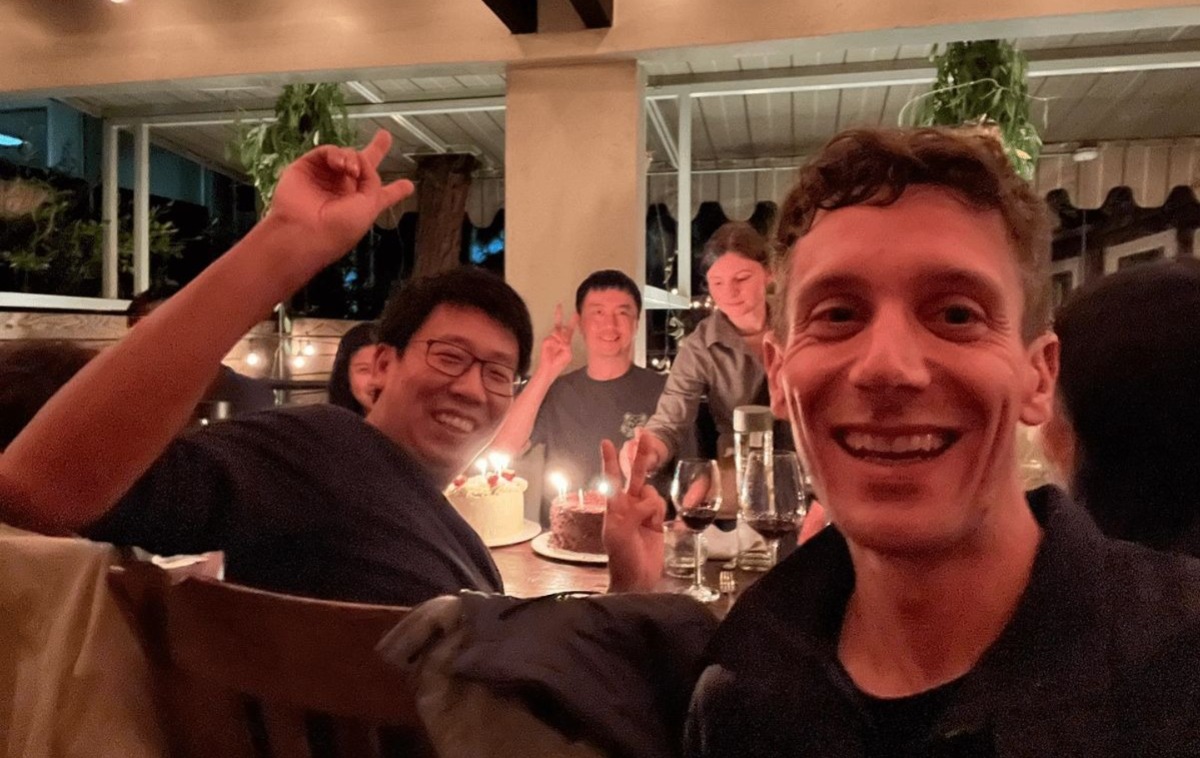
In a rare public account of Airwallex’s rise, founder and CEO Jack Zhang has revealed how a teenage struggle for survival eventually shaped one of the world’s fastest-growing fintech companies and why he once turned down a $1.2 billion acquisition offer from Stripe despite earning only $2 million in revenue at the time.
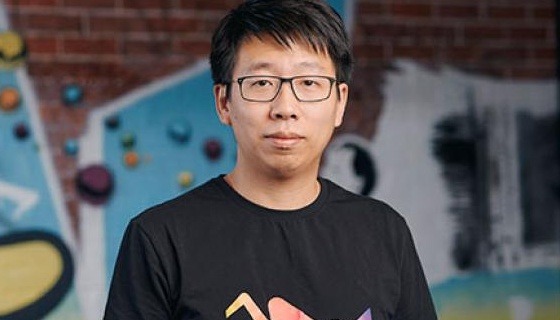
Zhang, who had maintained a near-total public silence for a decade, shared the journey that took Airwallex from a coffee-shop idea to a company now touching $1 billion in annual recurring revenue (ARR), raising $330 million at an $8 billion valuation and processing $235 billion a year in payments.
Teenage Struggle Laid the Groundwork
Zhang said the Airwallex story begins long before the company existed.
At 15, he moved to Australia. A year later, his family “lost everything”, leaving him to fund his own education, roughly $24,000 a year.
To stay afloat, he worked what he describes as “every job possible”:
- 12-hour shifts in a lemon factory in 40°C heat
- Bartending till midnight
- Overnight duty at a petrol station
All while attending computer science classes during the day.
“I never stopped coding,” Zhang said. That persistence would later shape Airwallex’s engineering-first culture.
A Coffee Shop, a Payments Problem and a $1 Million Bet
The idea for Airwallex emerged from a small business Zhang was running out of a coffee shop. Paying overseas suppliers was slow and expensive. Money, unlike data, still moved at a glacial pace.
The question that triggered everything:
“Why does money take days or weeks to move, when data moves in seconds?”
In the same café, Zhang met Lucy, an early believer who offered $1 million for 20% of Airwallex before the company was even incorporated. She was 24 and had never made an investment before.
That early conviction became the foundation for what Airwallex would become.
Years of Survival: Pulled Term Sheets & Missed Volumes
The first phase of building Airwallex was anything but glamorous.
- 2016: A term sheet was signed, only for the VC to pull out a week later. “We almost ran out of money,” Zhang said.
- 2017: Mastercard and Tencent, according to Zhang, promised massive transaction volumes. Airwallex built for them. The actual volume that came through: less than 1% of what had been committed.
For a young infrastructure startup, these setbacks were enough to derail momentum. Zhang says they simply held on.
The Stripe Offer: A 600x Multiple, Turned Down
In 2018, Stripe, founded by Patrick and John Collison, offered to acquire Airwallex for $1.2 billion. With only $2 million in revenue, the offer represented a nearly 600x revenue multiple.
For Zhang personally, he says, the deal would have meant a payout north of $2 billion.
But the team decided to continue independently.
Zhang recalls Patrick Collison telling him:
“I’m building Stripe for the next 20, 30, 40 years.”
That vision resonated. When Airwallex put the offer to a vote, 90% of employees opted to stay the course.
COVID-19: Another Close Call
In 2020, as Airwallex was closing its Series D round, the pandemic hit. Markets fell 30% in a week. Revenue plunged 40% overnight.
The company “almost died again,” Zhang said.
Yet once again, Airwallex held on.
The Takeoff: 2021–2025
What followed, Zhang says, was the company’s breakout phase.
- Revenue soared from $100 million to $1 billion ARR in just four years.
- North America and Europe became the strongest growth engines, clocking 250%+ revenue CAGR.
- Payment volume grew to $235 billion a year.
- Airwallex raised $330 million at an $8 billion valuation.
- The product evolved from transaction infrastructure to full-stack software and, more recently, AI-driven financial automation.
Why Zhang Is Speaking Now?
For 10 years, Zhang avoided the spotlight, something he attributes to an Australian instinct to “keep your head down.”
But he now admits staying quiet had a cost:
- Harder to recruit world-class talent
- Lower brand visibility
- Competitors with smaller scale attracting disproportionate attention
To change that, Airwallex recently partnered with McLaren F1 and Arsenal, signalling a shift towards global brand-building.
Airwallex’s New Direction: Autonomous Finance
Zhang now describes Airwallex not as a cross-border payments firm, but as a company building the “financial operating system for global business.”
The roadmap he outlines moves across four layers:
- Infrastructure
- Software
- AI agents
- Fully autonomous finance
The next decade, he says, is about creating an intelligent system that helps businesses operate and grow globally without friction.
“We’re just getting started,” Zhang wrote.
Also Read: Frex: Can 3 Founders Really Simplify How the World Sends Money?