Instagram has found another way to turn artificial intelligence into a nostalgia machine.
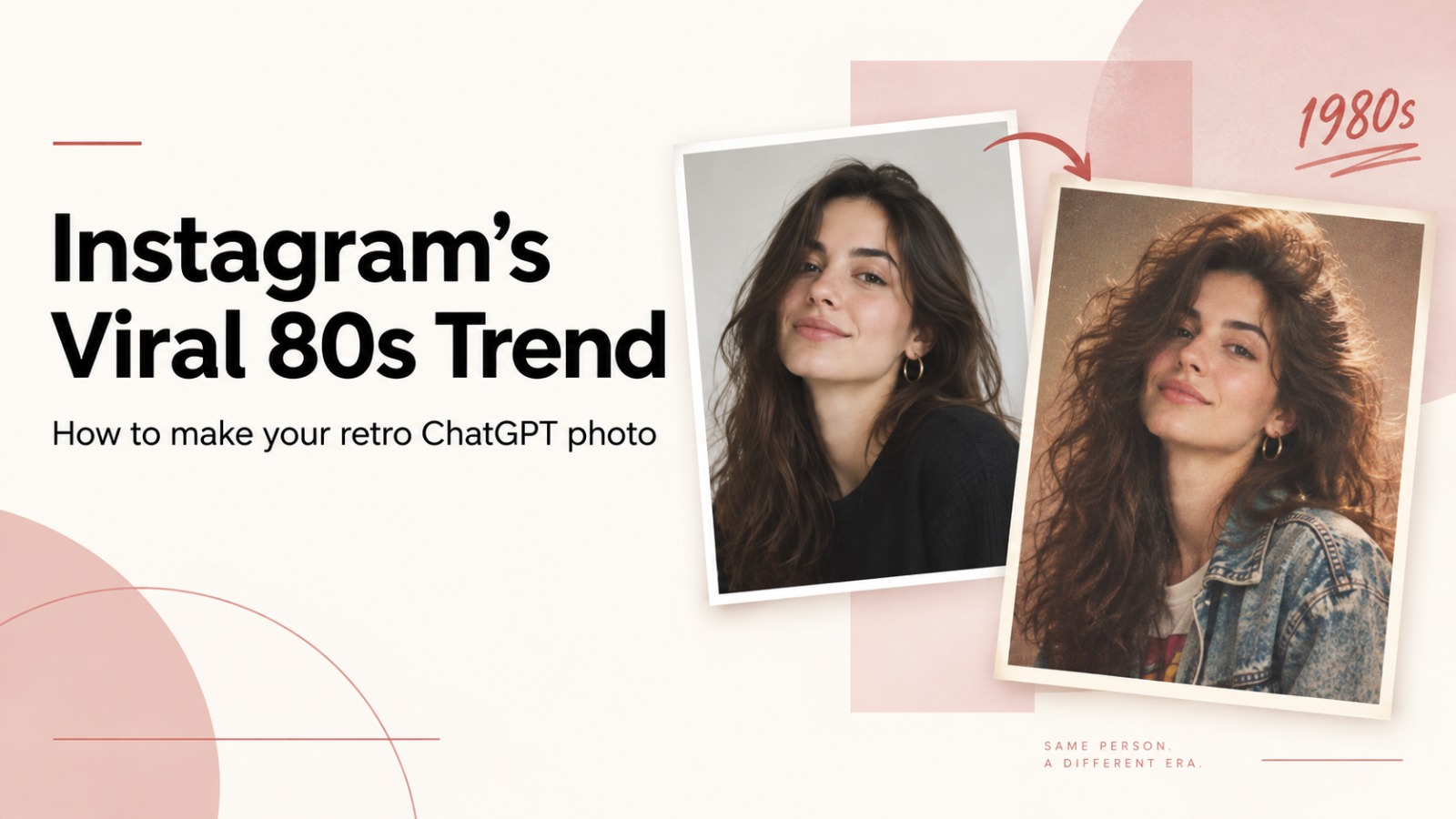
A new photo trend is filling feeds and Stories with portraits designed to look as though they were taken in the 1980s. Instead of simply placing a vintage filter over a modern photograph, users are uploading their pictures to ChatGPT and asking it to rebuild the entire scene around the decade, including the hairstyle, clothing, accessories, background and photographic texture.
One detail is helping the format travel across Instagram: users are sharing versions of the prompt through Stories and pairing them with the platform’s “Add Yours” sticker, inviting friends and followers to create their own 1980s portraits.
The result is less about making a photograph look old and more about asking a simple question: What might I have looked like if this picture had been taken four decades ago?
The appeal is in rebuilding the decade, not just changing the colour
The images appearing online cover a surprisingly wide visual range.
Some resemble glamorous Bollywood portraits. Others look closer to formal studio photographs, grainy film stills, vintage magazine covers or photographs pulled from an old family album. Warm lighting, stronger colours, soft-focus photography and faded textures are among the details being used to create the retro effect.
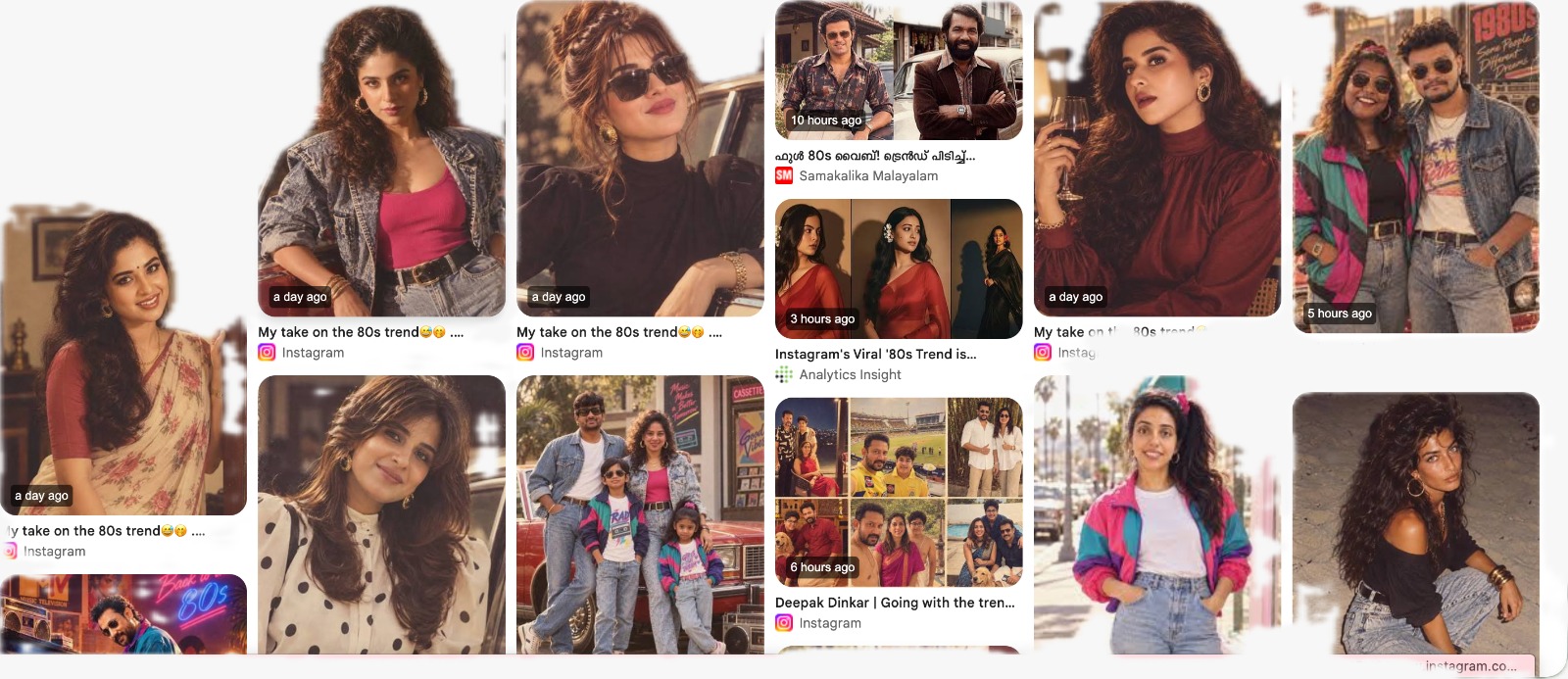
For Indian-inspired portraits, the styling frequently draws on recognisable elements of the period. Women are being pictured in colourful sarees, curled or voluminous hairstyles and statement jewellery, while men’s portraits can include loose or tailored shirts, high-waisted trousers, moustaches and carefully styled hair.
That distinction matters to the trend. A successful image is meant to appear closer to a photograph that could plausibly have existed in the 1980s, rather than a present-day selfie with an ageing effect placed on top.
One of the detailed approaches being shared asks for analogue-style film grain, slightly faded colours, soft focus, natural skin texture and a believable period setting, while deliberately excluding smartphones, contemporary clothes, modern cars and other obvious present-day objects.
Keeping the face recognisable has become part of the prompt
The transformation is not necessarily about turning the person into someone else.
A recurring instruction across examples of the trend is to preserve recognisable facial features, skin tone and overall identity while changing the visual world surrounding the subject. Users can therefore keep their face and expression relatively close to the original photograph while experimenting with different clothing, hairstyles and backgrounds.
That request is especially important because an AI-generated portrait can otherwise drift away from the person in the uploaded photograph.
Some prompts go further, asking the system not to unnecessarily change facial structure or face shape and to keep the final person recognisable.
The effect is what gives many of the images their hook. The person remains familiar, but the photograph around them appears to belong to another era.
Users are getting increasingly specific about their imagined 1980s
The trend also shows how much the final image can change depending on the instructions.
Rather than simply asking ChatGPT to “make this look like the 1980s,” users can specify whether they want an Indian studio portrait, Bollywood styling, a family-album photograph, a vintage wedding picture, a disco setting, a magazine-cover shoot or the appearance of a photograph captured on film.
Other variations can push the scene in a different direction entirely. Suggested customisations include moustaches, different hairstyles, period accessories and background details, along with settings such as a disco, arcade, 1980s gym, beach or birthday party.
That flexibility is turning a single trend into dozens of personal interpretations of the decade.
A photograph can be styled like a glamorous film portrait in one attempt and like an ordinary family snapshot in the next. The underlying idea stays the same, but the nostalgia being created can be cinematic, fashionable or deliberately everyday.
How people are creating the ChatGPT ’80s photographs
The basic process is straightforward. Users select a clear photograph, upload it to ChatGPT and describe the kind of 1980s transformation they want.
A front-facing or slightly angled photograph with the face clearly visible is recommended, although a professional portrait is not required and a regular selfie can also be used.
The instructions can then cover the person’s clothes, hairstyle, accessories, location, lighting and photographic texture.
If the first generation does not look convincing, users can continue refining the same image rather than starting again. Individual elements can be adjusted, and a picture that looks too polished can be pushed towards a less modern, more period-appropriate finish.
That iterative process is part of what separates these creations from a fixed photo filter. The image can be revised one detail at a time.
The tiny mistakes can still give the AI away
The retro styling may be convincing at first glance, but the photographs still need scrutiny before they are posted.
AI-generated portraits can change facial details, jewellery, fingers, clothing patterns or background text. Users are advised to inspect the final image closely and not present an AI creation as an authentic archival photograph.
There is also a privacy consideration. Photographs containing sensitive documents or private surroundings should be avoided, as should pictures of other people who have not agreed to have their images transformed.
The generated pictures themselves should also be treated as creative interpretations rather than precise historical reconstructions. AI can produce inaccuracies in fashion, hairstyles, environments and facial details, meaning the finished portrait may capture the idea of the 1980s without being a perfect record of the period.
From a current selfie to a photograph that never existed
The fascination behind the trend is easy to understand.
A modern photograph already tells users what they look like today. The 1980s trend offers something less literal: an imagined photograph from an alternative personal history.
It might resemble a studio portrait that was never taken, a family photograph from an album that never existed or a cinematic version of a decade the subject knows only through films, fashion and inherited photographs.
For now, Instagram’s latest AI nostalgia wave is making that imagined past unusually easy to create. One photograph, a carefully written prompt and a few rounds of revisions can place a familiar face inside an entirely different visual decade.
Also Read: Meet the Indian-Origin CEOs Leading Some of the World’s Biggest Companies