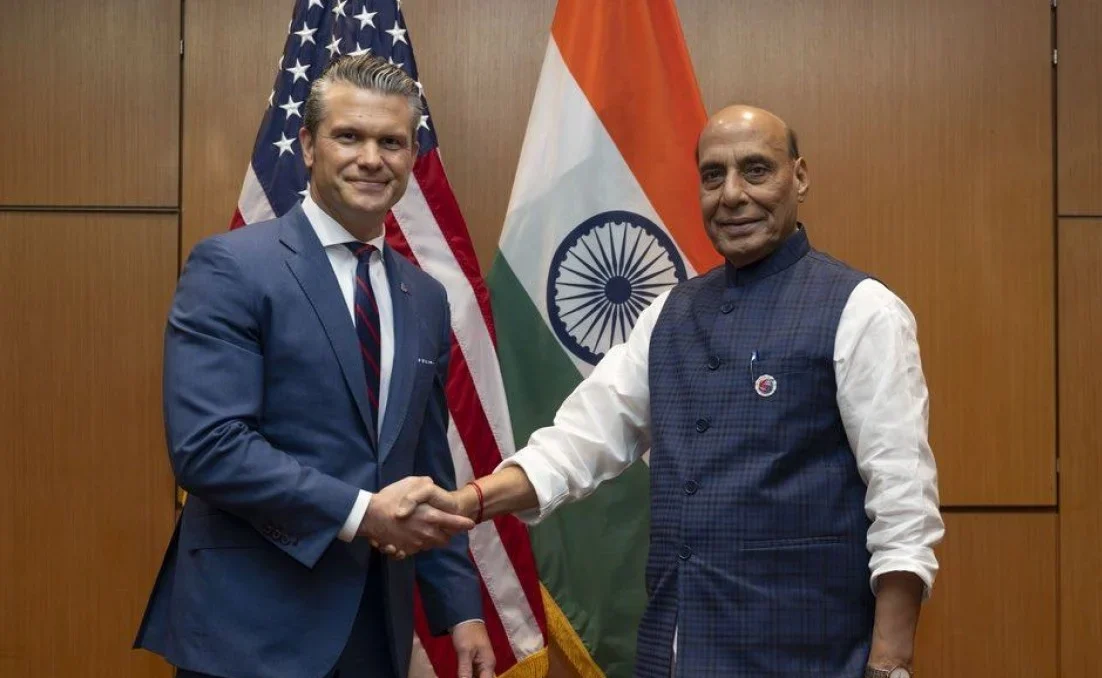
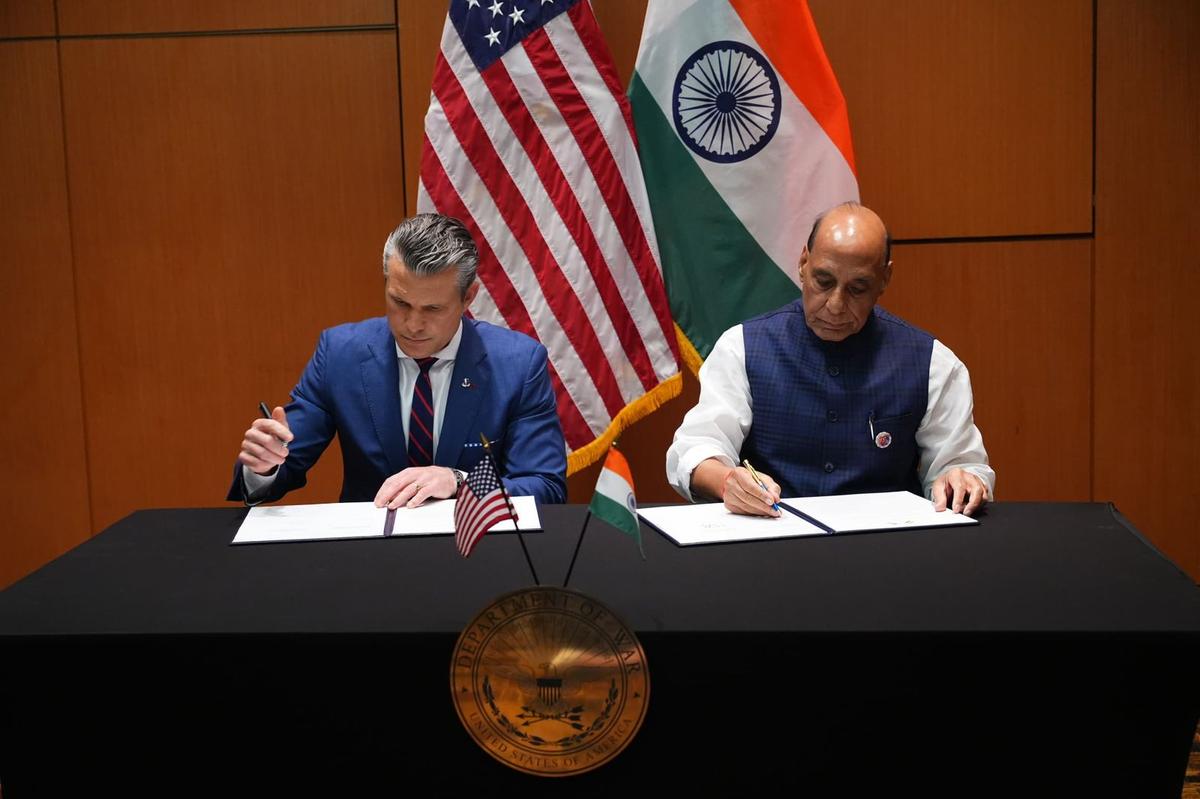
India and the United States have agreed on a Defence Framework Agreement for 10 years, which is a significant upward move for the bilateral relations, and it also reaffirms their long-term strategic partnership, even when there are trade tensions. The agreement signed on October 31, 2025, was a joint effort between Defence Minister Rajnath Singh and U.S. Secretary of War Pete Hegseth. It replaces the 2015 framework and charts the course for collaboration in military technology, joint operations, and logistics.
Essential Foundations of This Collaboration
Among the goals of the accord, the foremost is the co-development and co-production of advanced defence platforms, which would involve Unmanned Aerial Vehicles, Air Defence Systems, and Maritime Surveillance Technologies. The agreement provisions also include increasing the number of joint exercises, which will lead to better interoperability and thus growth of logistics cooperation as a result of the mutual permission granted to each other’s military bases for repairs and refuelling.
This new basic understanding aims, through improved sharing of information and operational readiness, to extend security cooperation anywhere within the Indo-Pacific region, which is inexorably affected by a struggle for influence and access.
Also Read: The Millionaire Plumber Debate: Are Blue-Collar Workers the Next Wealth Creators?
A Strategic Move Amid Trade Turmoil
The pact arrives amid ongoing trade and tariff tensions between US and India. The U.S. recently imposed steep tariffs on select Indian exports, citing energy and market-access concerns. Yet, both sides have demonstrated a pragmatic approach by separating strategic cooperation from economic disputes. Signing the pact at a time of trade uncertainty signals that defence and security collaboration remain top priorities for both governments, irrespective of short-term economic friction.
Strategic Significance for Both Nations
India sees the agreement as an important move in the direction of making its defence production sector self-reliant in line with the Atmanirbhar Bharat initiative. India’s military modernisation can be quickly paced by U.S. cutting-edge technology and the joint industrial ventures, at the same time creating opportunities for the local defence startups and manufacturers.
It is the deal that the United States is making to benefit most from consolidating a key partnership in the Indo-Pacific and enhancing India’s role as a strategic counterweight to the regional challenges. The agreement is a guarantee for a deeper, institutionally grounded collaboration between the two largest democracies of the world in an increasingly uncertain global order.
Implications and What to Watch
The real test will lie in execution, how quickly both sides set up joint working groups, initiate co-production, and translate intent into action. Regional responses will also be telling, especially from China and Russia, which view growing India-U.S. alignment with unease.
Observers will be watching whether this strengthened defence partnership helps de-escalate trade tensions or whether the two countries continue managing economic and security ties on separate tracks.
Why This Matters to India?
This agreement has ramifications for India’s economy, innovation ecosystem, and industrial base in addition to defence corridors. It facilitates technological cooperation, investment, and the creation of jobs, particularly in high-tech industries like electronics and aerospace.
For citizens and investors alike, the deal represents more than a military handshake, it’s a symbol of India’s rising global stature. As the nation shifts from being a buyer to a builder and co-developer of strategic technologies, this pact reflects how modern diplomacy now blends security, economics, and innovation into a single, forward-looking partnership.
In a nutshell
The 10-year India-US defence framework is probably the most significant upgrade in bilateral strategic relations. In a way, it looks like the new agreement was intentionally timed to send a message that strategic cooperation remains at the top of the agenda, notwithstanding that economic trade friction is happening at the same time. For India, it opens the door to industrial manufacturing, deterrence capabilities, and access to advanced technologies. For the United States, it enhances India’s role as a key Indo-Pacific ally. The interaction between trade and defence diplomacy in this case is interesting to me, especially.
Also Read: Goyaz Raises ₹130 Crore to Scale Gold-Plated Silver Jewellery Business Across India