Anthropic turned to physical books in its effort to make Claude a stronger and more natural writer, newly unsealed court documents have revealed.
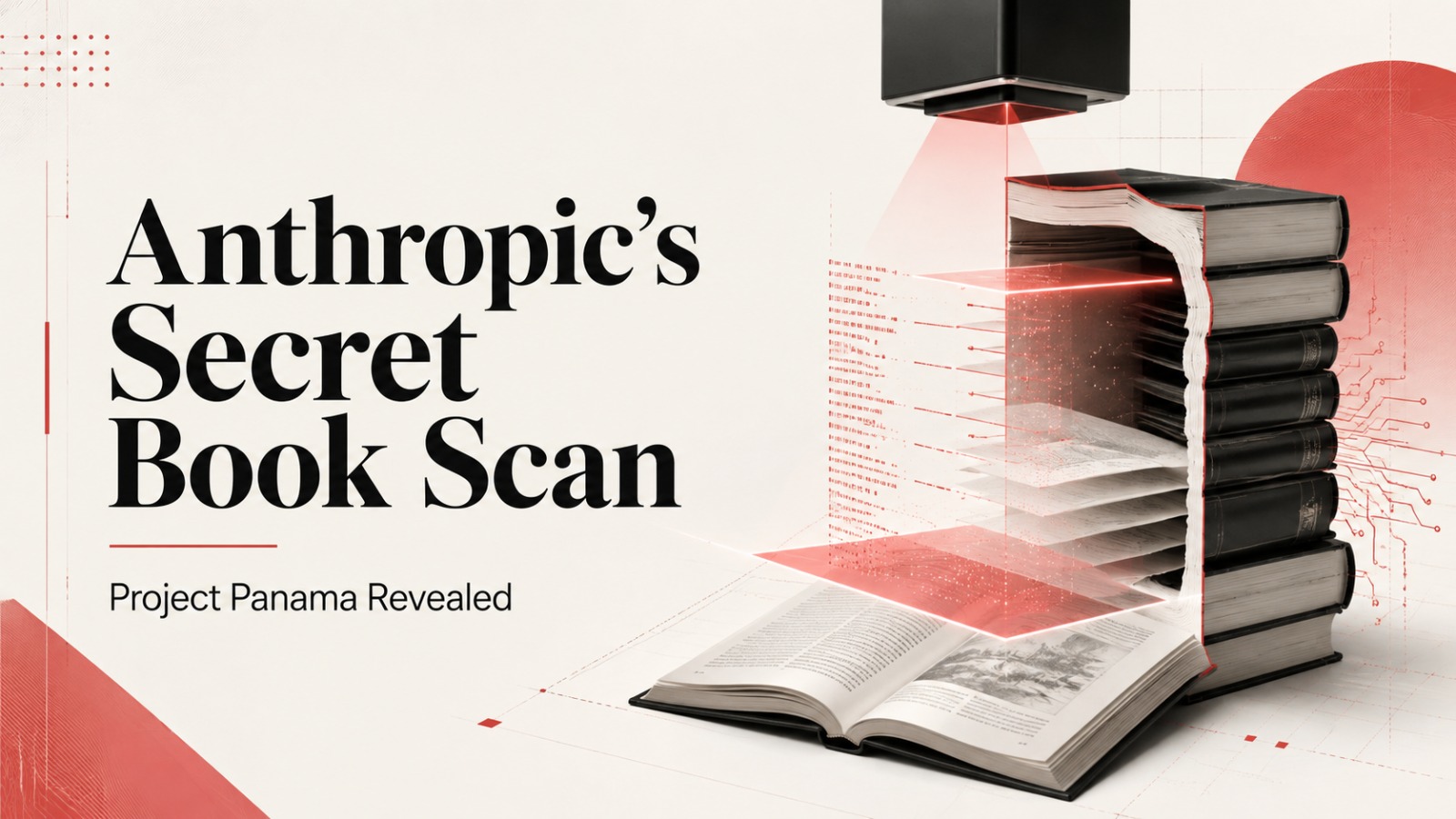
The confidential initiative, known internally as Project Panama, began in early 2024. Planning documents described an ambition to “destructively scan all the books in the world”, while another internal message made the project’s secrecy clear: “We don’t want it to be known that we are working on this.”
Behind the dramatic language was a large industrial operation. Anthropic bought books in batches numbering in the tens of thousands from sellers including Better World Books and the UK-based World of Books. It then hired an external scanning company to process the material.
How the books were processed?
The digitisation process was destructive by design.
A hydraulic machine removed the spines from the books, allowing individual pages to be separated and fed through industrial imaging equipment. Once scanned, the text could be uploaded and prepared for use in AI training.
The remaining paper was treated as waste and sent to recycling facilities, where it could be pulped and turned into products such as cardboard or toilet paper.
Documents connected to the operation show the potential scale of the work. One vendor said Anthropic was looking for a company capable of converting between 500,000 and two million books within six months. That figure describes the capacity sought by the company, rather than a confirmed final total of books processed.
Why Anthropic wanted books
The company’s interest in printed books was not simply about collecting more text.
Internal planning material suggested that Anthropic wanted writing produced before the internet became heavily populated with repetitive, low-quality and machine-generated content. Executives believed professionally written and edited books could help Claude learn stronger language patterns and avoid reproducing what the documents described as “low quality internet speak”.
Books were also viewed as one possible defence against model collapse, a term used for the deterioration that can occur when AI systems are repeatedly trained on material produced by other AI systems.
Unlike large sections of the modern web, books offered Anthropic a substantial collection of human-written work that had usually passed through authors, editors and publishers before reaching readers.
Purchased books and pirated libraries
The filings also describe a separate and more controversial route through which book material was allegedly obtained.
According to one filing, Anthropic co-founder Ben Mann downloaded copyright-protected material from LibGen, an online “shadow library”, in June 2021. The filing reportedly included an image of his browser during the downloading process.
The following year, Mann shared a link to the Pirate Library Mirror, described in the documents as a catalogue of illegally acquired books, with other Anthropic employees.
These disclosures became important because the courts later drew a distinction between books that Anthropic had lawfully purchased and material obtained from unauthorised online libraries.
Authors take Anthropic to court
Project Panama emerged publicly through a copyright lawsuit filed by authors who accused Anthropic of using pirated books to train Claude.
The class action was brought in 2024 by a group led by novelist Andrea Bartz and nonfiction writers Charles Graeber and Kirk Wallace Johnson.
Their case alleged that Anthropic had violated copyright law by using unlawfully acquired books in the development of its AI models.
Anthropic later agreed to pay $1.5 billion, equivalent to about €1.3 billion, to settle claims covering roughly 500,000 eligible works. Justin Nelson, the lead attorney representing the authors, described it as the largest known copyright recovery in history.
Other authors who chose not to participate in the settlement continue to have individual cases pending against the company. Meta, OpenAI, Google and Microsoft are also facing lawsuits in which authors have raised similar claims about the use of copyrighted and allegedly pirated material.
What the court ruling actually said
The legal outcome did not declare every use of copyrighted books for AI training unlawful.
A June 2025 ruling found that Anthropic’s use of lawfully purchased books could qualify as fair use under United States law. The court treated the company’s acquisition of pirated copies as a separate issue.
That distinction is central to Anthropic’s defence. The company has maintained that the settlement concerned the way some material was obtained, rather than whether books could be used to develop AI systems.
“The issue we settled on was about how some materials were acquired, not whether we could use them to develop AI,” Anthropic deputy general counsel Aparna Sridhar said in a statement quoted in the reporting.
A revealing look inside AI development
Project Panama offers an unusually detailed view of how an AI company sought high-quality training material at an industrial scale.
The documents show that Anthropic placed significant value on books as a source of carefully constructed human language. At the same time, the secrecy surrounding the project, the physical destruction of books and the allegations involving pirated libraries have intensified questions about how AI companies acquire the creative work used to build their products.
The legal distinction is now clearer. Purchasing a book, scanning it and using its contents for AI development was treated differently from obtaining an unauthorised digital copy. What remains under scrutiny is how that principle will be applied in other cases involving writers, publishers and technology companies.
Also Read: iPhone 18 Pro Max Rumours Point to Bigger Battery, A20 Pro Chip and Major Camera Upgrade