The Rise Of GEO: When the founder of 24Labs shared a traffic chart showing 338,633 visitors from ChatGPT/OpenAI, far surpassing those from Google and other platforms, the post sent ripples through the marketing world. Beneath the minimalist graphic was a quiet revolution: traditional SEO may no longer be the dominant force behind organic traffic.
The Screenshot That Sparked It
The analytics snapshot the founder posted broke down AI-driven referral traffic like this:
| AI Source | Visitors |
|---|---|
| ChatGPT / OpenAI | 338,633 |
| Perplexity AI | 2,414 |
| Microsoft Copilot | 2,158 |
| Gemini / Bard | 1,356 |
| Claude | 75 |
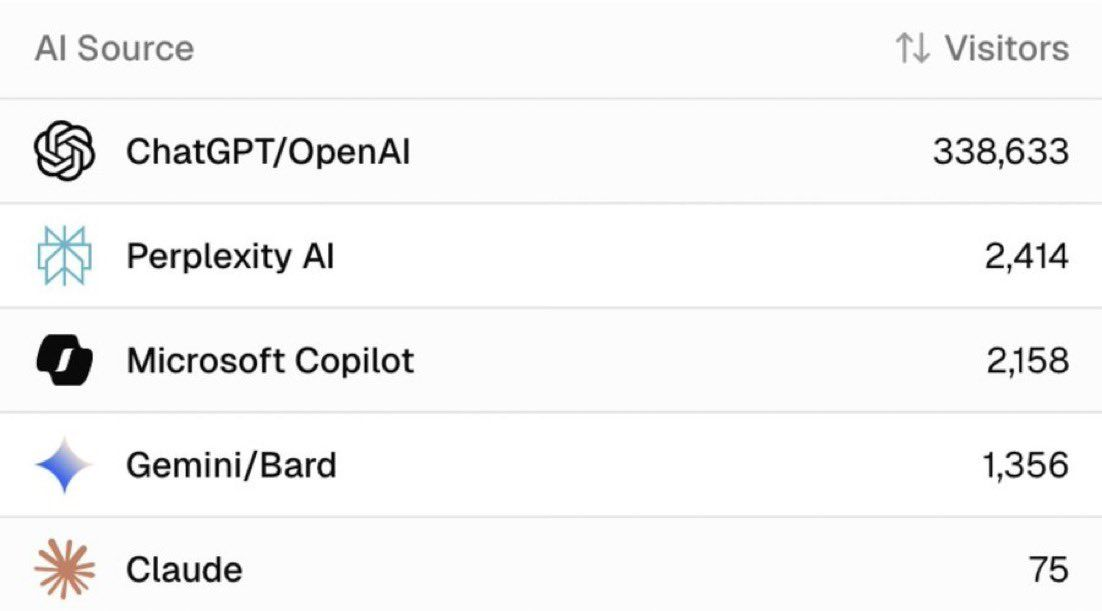
At a glance, it shows one undeniable trend, ChatGPT dominates the new wave of “AI traffic.” While Google Analytics and search console tools have yet to fully integrate LLM referrals, internal analytics platforms and web logs across the industry are beginning to show a similar pattern: users are arriving from AI-powered chat platforms that recommend websites, not search results.
The founder summed it up bluntly:
“We’re getting more clicks from LLMs than Google now. And ranking in ChatGPT and Claude has never been easier.”
The Birth of GEO: Generative Engine Optimization
In a detailed post, the 24Labs founder coined this moment “the Google 2005 moment for GEO.” The acronym stands for Generative Engine Optimization, a discipline focused on making brands discoverable inside AI assistants like ChatGPT, Claude, and Gemini, rather than on traditional search engines.
The comparison to 2005 is intentional. That was the year SEO pioneers first began reverse-engineering Google’s PageRank system to dominate early search results. Now, the game has shifted to a new layer — training data, retrieval systems, and brand recognition inside LLM-generated responses.
“When someone asks ChatGPT or Claude for recommendations, your brand either shows up or it doesn’t,” the founder said.
“Right now, we’re at the earliest stage of the next organic traffic revolution.”
The Significance
For two decades, search defined digital discovery. Companies competed for blue links on page one. Today, AI assistants are becoming the first touchpoint for millions of users.
When someone types, “What are the best SaaS analytics tools?” or “Which startup offers AI-driven marketing automation?” ChatGPT doesn’t serve ten links. It provides a curated, conversational answer, citing just a few names.
In that new world, there is no second page.
If your brand isn’t in the generated response, it doesn’t exist.
What GEO Optimization Might Involve
While LLMs like ChatGPT and Claude don’t publicly disclose ranking algorithms, early patterns are emerging from observed behavior and developer documentation. According to experts and independent marketers, GEO optimization likely includes:
- Consistent, verifiable brand data: AI assistants favor brands with clear “about” pages, media coverage, and strong digital footprints.
- Contextual authority: Being cited or mentioned in reputable sources that LLMs have indexed (news, research, knowledge bases).
- Structured content clarity: Concise product descriptions, readable metadata, and straightforward copy that models can quote without ambiguity.
- Cross-platform presence: Profiles on trusted directories (Crunchbase, LinkedIn, Product Hunt) help models verify identity and legitimacy.
- Semantic strength: Using descriptive, human language that aligns with natural query phrasing rather than keyword stuffing.
These principles don’t replace SEO; they evolve it. Instead of optimizing for search crawlers, GEO optimizes for AI cognition.
Why Most Brands Are Still Missing the Shift
Despite rising evidence, most marketing teams are still fully committed to old-school SEO: backlinks, keyword clusters, and page authority. But user behavior is shifting rapidly toward chat-first discovery.
Per data from Similarweb, ChatGPT surpassed 2 billion monthly visits in 2025. Platforms like Perplexity, Copilot, and Gemini are also gaining traction, while Claude continues expanding its enterprise base. Together, they form an ecosystem of “generative engines” — new intermediaries between content and audience.
The 24Labs founder warned:
“Most companies are still obsessing over traditional SEO while the game has completely changed.”
The Founder’s Playbook: A Glimpse Into the Future
In the viral post, the founder said they had compiled a full “GEO Playbook”, a guide explaining how to rank inside ChatGPT, Claude, and similar LLM ecosystems. While the playbook itself wasn’t released publicly, the offer to share it with those who comment “GEO” reflects a growing demand for clarity in this space.
As the founder wrote: “This is the earliest you’ll ever be to a traffic revolution this big.”
The Big Picture: AI Assistants Are the New Gatekeepers
This data point, 338,633 visits from ChatGPT, may be anecdotal, but it encapsulates a tectonic shift in user behavior. LLMs are no longer novelty tools; they’re recommendation engines, research portals, and decision assistants rolled into one.
As 24Labs’ founder puts it, this is not just about new technology; it’s about a new hierarchy of influence.
In the same way early adopters of SEO built enduring online empires, brands that learn to speak the language of AI assistants may define the next decade of digital visibility
The screenshot may look simple, just a few traffic numbers, but it tells a much bigger story. The center of gravity in organic discovery is moving away from search engines toward generative intelligence systems. The age of GEO has begun.
Also Read: Peyush Bansal, India’s Next Self-Made Billionaire?