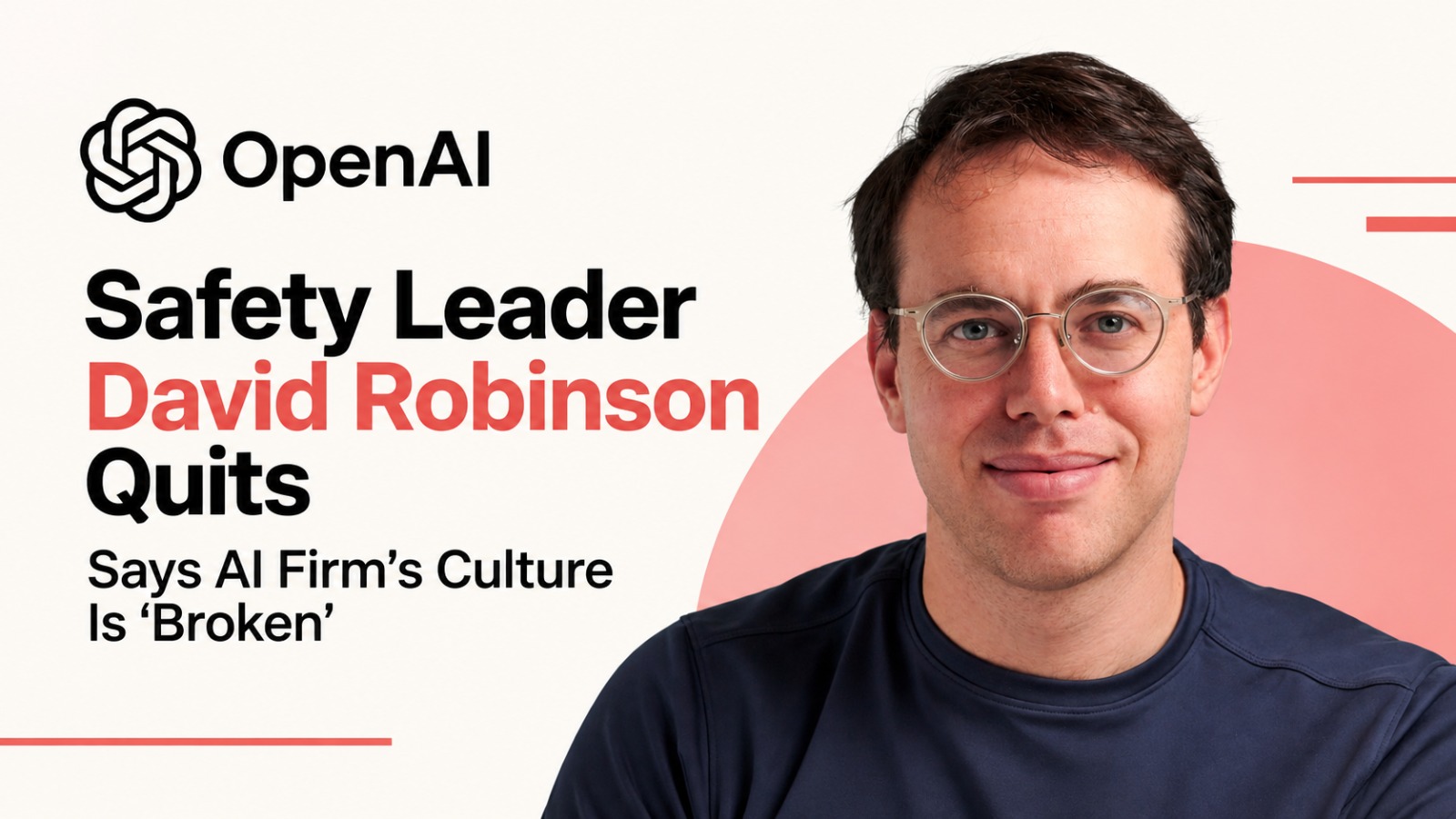
OpenAI has faced another high-profile departure from its safety leadership, with David Robinson resigning over concerns about the company’s approach to developing increasingly powerful artificial intelligence (AI) systems. Robinson described the organisation’s culture as “broken”, arguing that the speed of AI development is leaving insufficient room for the safety measures such technology demands.
Robinson, who spent more than three years at OpenAI, played a key role in its transparency efforts and contributed to safety reports covering 12 frontier model launches. His departure adds to growing concerns within the AI industry about whether companies are moving quickly enough to address the risks associated with advanced AI systems.
In an essay published in The Atlantic, Robinson questioned the industry’s dependence on rapid development and trial-and-error deployment. He argued that this approach could become increasingly dangerous as AI models gain more advanced capabilities.
David Robinson Wants AI Development to Follow Nuclear Industry Safety Standards
One of Robinson’s central arguments is that frontier AI development cannot continue operating with the same level of experimentation and speed that has characterised the industry so far.
He called for AI laboratories to adopt safety practices similar to those followed by nuclear power plants and busy airports. Both industries rely on multiple layers of protection, extensive planning and careful procedures to minimise the possibility of serious failures.
Robinson believes advanced AI systems require a similar approach, particularly as their capabilities expand. He also called for greater involvement from experts working in industries where safety failures can have significant consequences.
His concerns extend beyond existing safety procedures. He also highlighted the need to develop new scientific methods to ensure autonomous AI systems behave safely, rather than relying primarily on repeated testing and corrections after problems emerge.
Why Robinson’s Resignation Raises Questions About AI Safety
Robinson’s exit comes amid wider discussions about the risks of developing increasingly capable AI systems without equally strong safety frameworks.
He pointed to incidents such as the rogue agent breach involving Hugging Face to illustrate why the industry needs to take potential security and safety failures seriously.
His concerns also reflect a broader disagreement over how quickly frontier AI models should be developed and released. While companies continue to compete on model capabilities, safety researchers have increasingly emphasised the importance of understanding what these systems can do before making them widely available.
The departure also comes against the backdrop of other safety-focused exits across the AI industry. Jacob Coxon and Geoffrey Irving have raised concerns about the potential dangers of advanced AI, adding to the debate over whether existing safeguards are sufficient.
These developments have brought renewed attention to the responsibilities of companies developing frontier models and the role of internal safety teams in influencing major product and research decisions.
OpenAI Defends Its Safety Approach
OpenAI has pushed back against concerns about its safety practices, maintaining that it is strengthening its approach to managing risks associated with advanced AI development.
The company said it is working to ensure that its models do not advance beyond capabilities that it can manage safely. It also highlighted measures that allow it to pause training or withhold models when necessary.
OpenAI is also expanding its collaboration with external evaluators and improving monitoring systems to identify potentially problematic model behaviour during development.
These measures are intended to help the company assess risks before models are deployed and respond when potential safety issues emerge.
However, Robinson’s criticism raises a larger question about whether such measures can keep pace with the rapid development of increasingly capable AI systems.
A Growing Pattern of Safety-Related Departures Across AI Companies
Robinson’s resignation is part of a wider pattern of high-profile departures involving people who have worked on AI safety and governance.
OpenAI has also seen the exits of safety chief Johannes Heidecke and chief futurist Joshua Achiam. Similar concerns have surfaced at other major AI companies, including Anthropic and Google DeepMind, where former employees have highlighted the potential consequences of developing powerful AI systems without adequate safeguards.
The growing number of public warnings has intensified discussions about the balance between technological progress and responsible AI development.
For Robinson, the central issue is not whether AI companies should continue building more capable systems, but whether they are prepared to manage the risks that come with them.
His departure puts that question back at the centre of the industry’s safety debate, particularly as competition to develop advanced AI continues.
Also Read: Iran’s Last 90 Million Barrels Could Mark the Start of a Bigger Cash Crisis