India is preparing to roll out its first indigenous Large Language Model (LLM) by the end of this year, backed by a national push to make high-performance compute affordable and AI development safer, more inclusive, and locally grounded.
What’s new?
- Launch target: Year-end 2025 for India’s first LLM.
- Compute at scale: 38,000 GPUs made available at Rs 65 per hour to lower the cost of training and inference.
- Model pipeline: 12 companies are currently building foundation models.
- Mission focus: Affordable compute, a national data platform, support for foundation models, AI skilling, and trusted, safe AI.
These initiatives sit under the IndiaAI Mission, approved last year, which aims to reduce reliance on foreign AI systems and catalyse a domestic ecosystem spanning academia, startups, and the public sector.
Policy and ecosystem signals
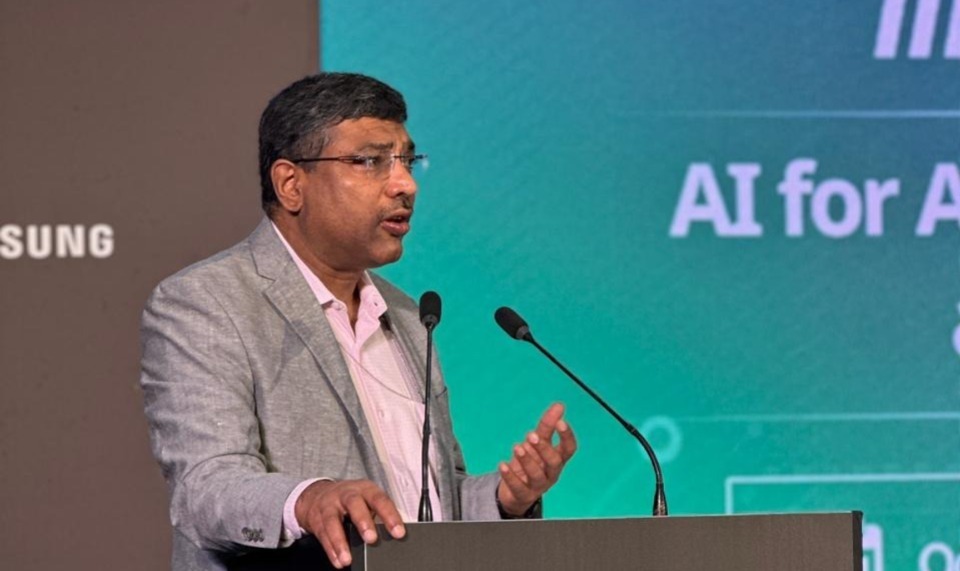
At pre-summit events hosted by the Ministry of Electronics and Information Technology (MeitY) during IMC 2025, officials underlined a frugal, partnership-first architecture: public-private collaboration that keeps access open for the public sector while preserving a level playing field for multiple providers.
MeitY Secretary S. Krishnan emphasised building “viable projects and products” by learning from global experience, and highlighted a model that stretches limited resources to ensure wide availability. The approach has drawn interest from international agencies for potential adoption across the Global South.
Abhishek Singh (Additional Secretary, MeitY; CEO, IndiaAI; DG-NIC) outlined how the Mission is closing critical gaps: low-cost compute, a national data platform, targeted support for model builders, scaled skilling programmes, and a governance framework to anchor safe and trustworthy AI.
Why iThe Significance
- Cost breakthrough: Slashing compute costs to Rs 65/hour meaningfully reduces barriers for Indian labs and startups training frontier-class models.
- Strategic autonomy: A homegrown LLM helps localise capabilities for Indian languages, public-sector workloads, and regulated use cases.
- Inclusive innovation: The open access posture is designed to expand AI benefits across agriculture, healthcare, education, and manufacturing, sectors where productivity gains compound at national scale.
The road to 2026
This week’s activities also set the stage for the India-AI Impact Summit 2026 at Bharat Mandapam, New Delhi, on February 19-20, 2026. The convening will connect policymakers, industry, and academia under the banner “From Action to Impact”, guided by the sutras of “People, Planet, and Progress.”
India’s LLM push marries affordable compute, domestic model development, and safety-first governance. If the year-end launch lands on schedule, it will mark a pivotal step toward AI infrastructure and models that are built in India, for India, while remaining open enough to contribute to global AI progress.
Also Read: Surat Gets Its First Major Innovation Centre