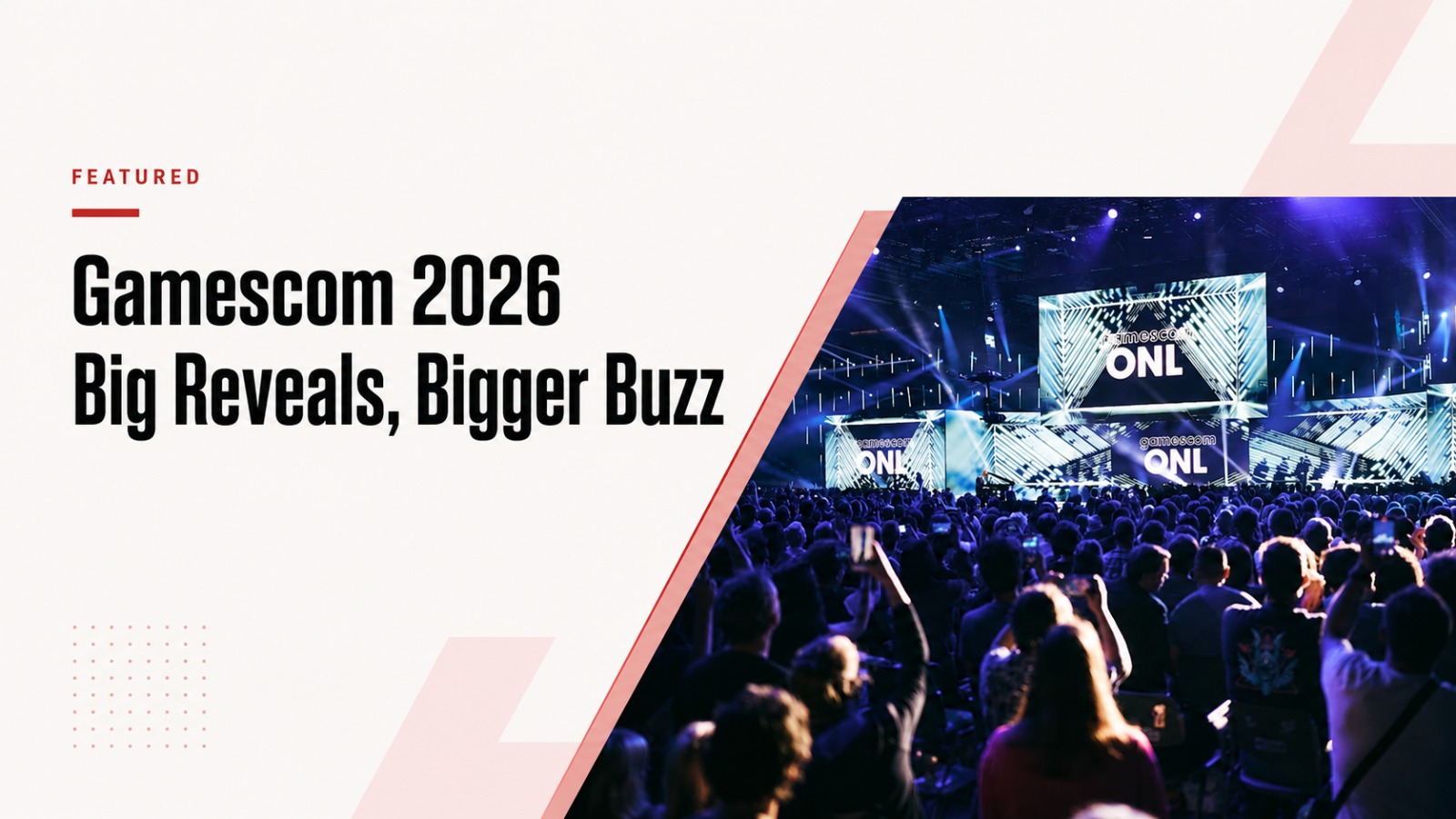
Cologne: Gamescom 2026 is now in full swing, and the first days of the show have already delivered the mix that makes the event unusually difficult to reduce to a single headline. Major franchises are returning, new games are fighting for attention, playable and behind-closed-doors previews are filling schedules, and the debate around artificial intelligence is following the industry straight onto the show floor.
Running in Cologne from August 26 to 30, Gamescom brings together thousands of exhibitors and developers while drawing an audience that can approach half a million visitors. Millions more follow the announcements online. This year, the scale of the gathering is being matched by a particularly crowded slate of releases and reveals.
Opening Night Live provided the first concentrated look at that pipeline. Gears of War: E-Day received a new story trailer, while Silent Hill: Townfall returned with gameplay from its remote Scottish island setting. Townfall is scheduled for September 23, giving the horror title one of the closest release dates among the games being pushed prominently at the show.
Square Enix also used the showcase to put Final Fantasy VII Revelation back in front of players. Director Naoki Hamaguchi appeared on stage for a trailer centred on the Weapons, the enormous guardians familiar from Final Fantasy VII. The footage also pointed toward appearances by Ruby, Emerald and Ultimate Weapons.
Then came an unexpected return to one of gaming’s most enduring RPGs.
The Witcher 3 is getting another life
The Witcher 3: Wild Hunt is returning in remastered form, with the upgrade scheduled to arrive free on September 29. The version shown during Gamescom includes improved traversal, enhanced monster behaviour and new finishers.
That is not the end of CD Projekt’s decade-old RPG at the event. Songs of the Past, new content for The Witcher 3, is set to arrive next year. The Gamescom presentation also indicated that the first two DLC campaigns will be available to play for free.
For a show built around the next wave of games, the continued prominence of The Witcher 3 is one of Gamescom 2026’s more unusual threads. Alongside entirely new projects and sequels, publishers are still finding room to extend games with audiences built over many years.
Control Resonant brings one of Gamescom’s strangest previews
Away from the main-stage trailers, Control Resonant is providing a much stranger glimpse of what visitors and media are seeing in Cologne.
A Gamescom preview showed protagonist Dylan Faden moving through a Manhattan-inspired area overtaken by blue mold. Remedy Entertainment is not recreating real named Manhattan locations. Instead, the environments are designed to evoke the city while giving it the studio’s distorted supernatural treatment.
The demonstration went further than simply showing another environment. Dylan has to consume the mold to learn more about the Resonant he is hunting. Nearby characters appear dead but are instead left paralysed in a euphoric state after eating it themselves.
Combat is built around aggression. Dylan can shift gravity to move across walls, build a damage-enhancing effect called Dominance by defeating enemies and use abilities including Ignite, Barrage and Push. Remedy has also removed traditional blocking and parrying from the combat described in the preview. Players dodge instead, while health is recovered from enemies they defeat.
The boss encountered in the demonstration, called the Collective, is a mass of mold formed into multiple frowning faces. Rather than attacking it directly, Dylan has to use gravity shifts to reach tentacles attached to the arena walls before exposing weak points.
It is the kind of specific, slightly bizarre encounter that shows what Gamescom offers beyond polished trailers. Control Resonant is due on September 24.
Metro, Path of Exile and Crazy Taxi widen the show
The announcements are not limited to the biggest names at the top of the billing.
4A Games brought Metro 2039 to the event, presenting it as a new mainline entry in the series after the studio’s move into VR. Gameplay footage was shown during Opening Night Live, with the developer also acknowledging the difficult development circumstances created by war.
Path of Exile 2 also returned with news around its full 1.0 release, while Frictional Games, the studio behind Soma, revealed more of Ontos, a science-fiction horror game scheduled for 2027.
Cinder City appeared as a cinematic third-person shooter set in a near-future Seoul. Like or Die was introduced as a team-based survival FPS. Pony Island 2: Panda Circus, meanwhile, continued Gamescom’s strong horror and experimental streak.
And Sega’s Crazy Taxi revival is not simply leaning on nostalgia. Crazy Taxi: World Tour is being built with multiplayer and remains targeted for next year.
That game also brought the wider industry’s AI debate directly into the Gamescom conversation. Sega said artificial intelligence had been used for background assets during development, a detail that immediately became part of the discussion around the revival.
AI anxiety is sitting beside industry growth
That tension matters because Gamescom 2026 is taking place while the games business is growing financially but becoming harder to navigate.
The global games market is valued at $213.9 billion, representing year-on-year growth of 6.1 percent. Growth is spread across mobile, console and PC, while the worldwide gaming audience has reached about 3.7 billion people.
Yet the mood is not uncomplicated.
Generative AI remains deeply unpopular with a large section of players. A Quantic Foundry survey cited in coverage surrounding Gamescom found that 85 percent of respondents held a less-than-neutral view of generative AI.
AI infrastructure is creating another problem that has little to do with what appears on screen. Demand for chips and memory from data centres is putting pressure on component prices. That feeds into the cost of PC upgrades, consoles and smartphones at a time when the gaming market is already dealing with intense competition and slower growth in new users.
There is a counterargument inside the industry. AI tools are also being used for repetitive pre-production and coding work, with companies hoping they can reduce development time and costs.
Gamescom therefore finds the sector in an unusual position. Gaming is larger, more valuable and more culturally embedded than ever, but the companies competing for players are operating in an increasingly crowded market where hardware is getting more expensive and attention is harder to win.
Gamescom 2026 is becoming a test of what players actually want
The opening days in Cologne suggest there is no single formula winning that battle.
Established series such as Final Fantasy, Gears of War, Silent Hill, Metro and The Witcher are taking up major space. Crazy Taxi is being rebuilt for a new generation. Control Resonant is pushing an existing universe into melee combat and RPG systems. Smaller and stranger projects are appearing beside them.
That variety may be the most useful way to read Gamescom 2026.
The event is not simply a parade of trailers. It is a five-day snapshot of an industry trying several things at once: reviving old favourites, stretching successful games into new forms, introducing original projects, experimenting with AI and trying to convince billions of players that the next game deserves their time.
And with Gamescom continuing through August 30, Cologne still has several days left to change that picture again.
Also Read: TrucksUp Raises $8.2 Million as Co-Founders Increase Stake in Growth Round