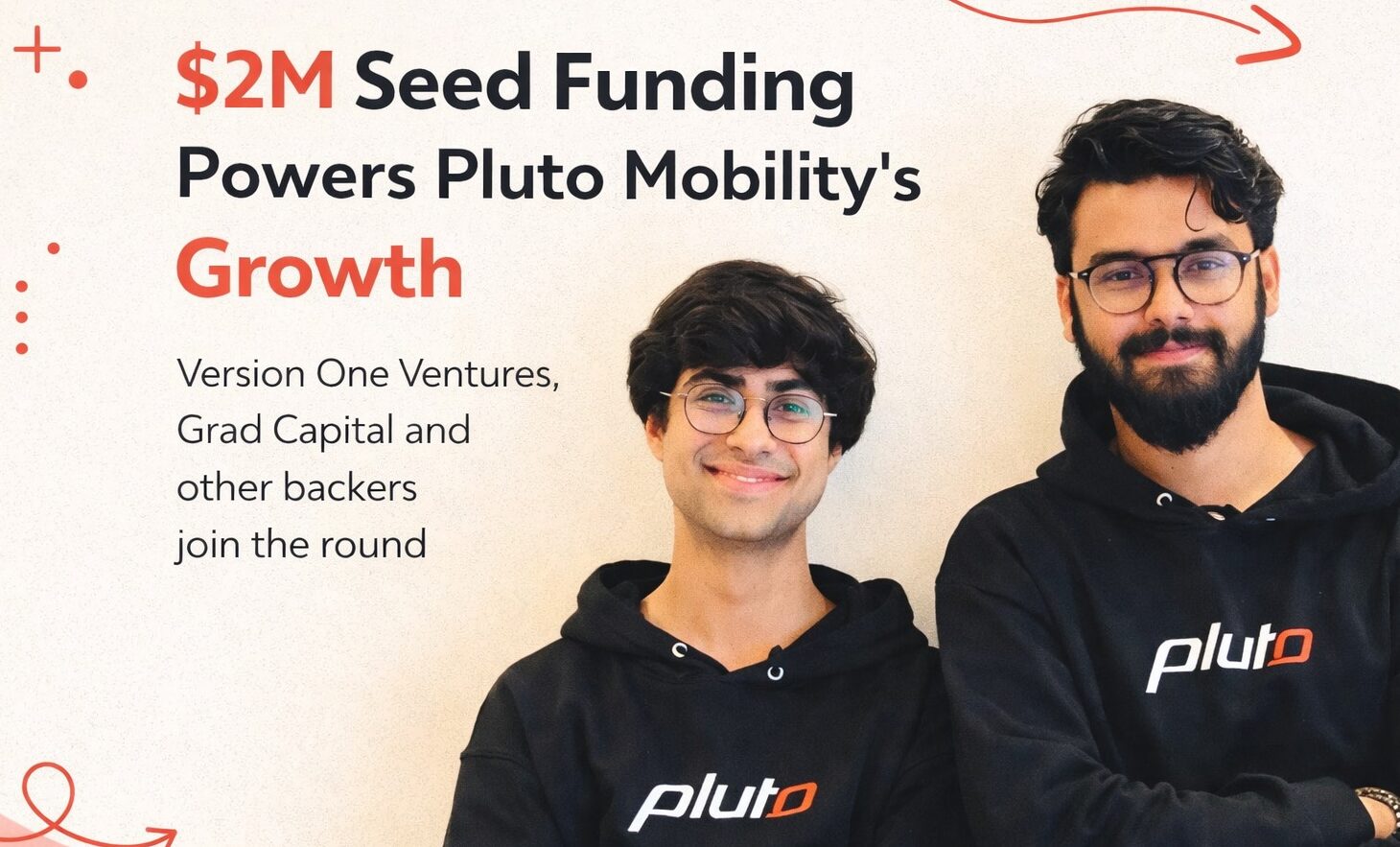
Delhi-based electric vehicle startup Pluto Mobility has raised $2 million in a seed funding round led by Version One Ventures, with participation from Grad Capital. The round also drew backing from founders and senior executives associated with companies such as Delhivery, OfBusiness, Pixxel and Boom Supersonic.
The fresh capital will be deployed to strengthen the company’s engineering and product development capabilities, expand its team and initiate pilot deployments in key urban markets.
Purpose-Built EVs for Delivery Operations
Founded by Akshat Bhatia and Himanshu Panda, Pluto Mobility is focused on building electric vehicles tailored specifically for last-mile logistics. The company is designing its vehicles to meet the demands of delivery fleets, where reliability, capacity and operational efficiency are critical.
Unlike conventional two-wheelers that are retrofitted for delivery use, Pluto Mobility is developing scooter-sized, fully covered electric delivery vehicles engineered from the ground up. These vehicles are intended to operate in harsh weather conditions while offering greater load-carrying capability. According to the company, the vehicle can carry up to twice the number of orders compared to a standard two-wheeler, potentially improving route productivity for delivery partners.
Also Read: Kana Raises $15M to Reinvent AI-Driven Marketing Campaigns
Built for Throughput and Durability
Pluto Mobility’s product strategy centers on throughput, durability and cost efficiency. By designing vehicles specifically for delivery workloads, the startup aims to enhance operational performance without increasing fleet complexity.
The approach reflects a growing shift in urban logistics, where electric mobility is being adopted not only for environmental reasons but also for cost savings and efficiency gains. Vehicles that can withstand intensive daily use, variable road conditions and high order volumes are increasingly important for e-commerce and quick-commerce platforms.
Pluto Mobility’s focus on a fully covered design also addresses the challenges faced by delivery riders during extreme weather. By improving rider comfort and protecting goods in transit, the startup is positioning its product as a practical solution for dense urban markets.
Preparing for 2026 Pilot Launch
With the seed funding secured, Pluto Mobility plans to move into pilot deployments in 2026. The pilots will target e-commerce and quick-commerce operators, sectors that rely heavily on efficient last-mile delivery networks.
Urban logistics has emerged as one of the fastest-growing use cases for electric vehicles in India, particularly in the two- and three-wheeler segments. Companies operating in this space are seeking vehicles that can reduce operating costs, improve delivery density per trip and maintain uptime across long shifts. Pluto Mobility’s upcoming pilots will test how its purpose-built vehicles perform in real-world fleet conditions.
The company’s immediate priorities include scaling engineering efforts, refining product performance and building a team capable of supporting deployment and operations. By focusing on core product development at an early stage, Pluto Mobility aims to create a differentiated offering in the competitive EV logistics market.
Strengthening India’s EV Startup Ecosystem
The participation of venture capital firms and operators from established companies underscores growing investor interest in electric mobility solutions designed for commercial use. As logistics networks continue to expand across major cities, demand for specialized electric vehicles is expected to increase.
Pluto Mobility’s seed round marks an early but significant milestone in its journey to commercialize a new category of delivery-focused EVs. With pilots planned for 2026 and a clear emphasis on engineering and product development, the startup is positioning itself to address evolving needs in last-mile logistics.
As urban commerce continues to scale, the success of purpose-built electric delivery vehicles could play a key role in shaping the next phase of India’s mobility transformation.
Also Read: Pasqal goes for a €200M raise as neutral-atom quantum race heats up