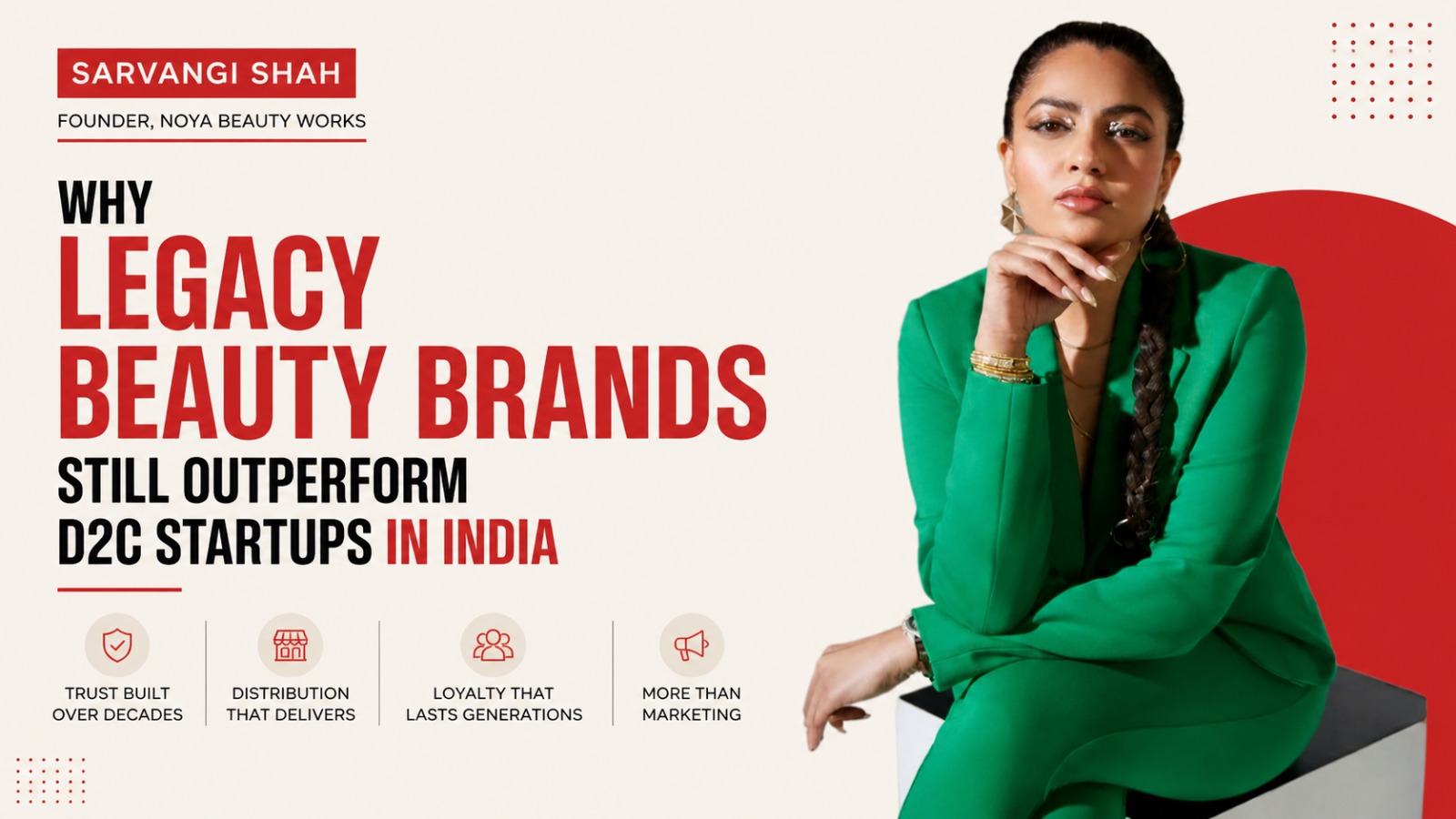
Sarvangi Shah, founder of Noya Beauty Works, recently highlighted a reality that often gets lost in India’s fast-moving beauty market. Some of the most powerful brands in the country were built long before influencer campaigns and digital ads became the default way to grow.
Take Boroline. It has stayed almost unchanged since 1929. The same green tube, the same elephant logo, and the same antiseptic formula. It has never relied on trends or viral marketing. Yet it continues to hold a strong position, driven by something far simpler and harder to replicate. Habit.
That is where legacy brands quietly win.
Vicco Laboratories built its identity around turmeric and a jingle that generations still remember. Shahnaz Husain started with a ₹35,000 loan from her father in 1971 and went on to build a brand with hundreds of Ayurvedic formulations, a presence in over 100 countries, and deeply loyal customers who rarely switch.
These brands did not grow by chasing attention. They grew by staying consistent and becoming part of everyday life.
Now compare that with many new-age D2C beauty brands.
Over the past few years, several of them have scaled rapidly using influencer marketing, performance ads, and social media visibility. But that growth often comes at a cost. Staying visible means constantly spending. Customer acquisition becomes a recurring expense, not a one-time effort.
This is where the gap becomes clear.
Legacy brands focused on building distribution. D2C brands focused on acquiring customers online. One built presence in stores across the country. The other built presence on screens that require continuous spending to maintain.
A kirana store stocks Boroline because people walk in and ask for it. If it is missing, someone notices. That kind of demand is built over decades, not quarters.
Trust like that does not show up on marketing dashboards. It shows up in medicine cabinets and dressing tables.
Many D2C brands tried to remove intermediaries and go directly to consumers. But in doing so, they became heavily dependent on ad platforms. Visibility turned into a constant battle, and growth started to depend on how much they could spend.
The deeper issue is not about technology or channels. It is about what gets built over time.
Attention can be bought. Loyalty cannot.
The takeaway for India’s beauty market is straightforward. Strong brands are not just seen. They are remembered, repeated, and relied upon. That takes time, consistency, and presence beyond the screen.
Which is why, even today, a simple tube sitting in a household drawer can outperform brands with bigger budgets and louder campaigns.
Also Read: Kartik Sharma Net Worth: The Story Behind CSK’s ₹14.2 Crore Young Star